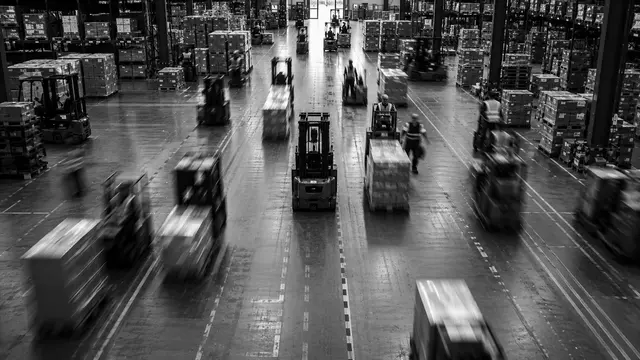
Logistics operations are constantly looking for ways to work more efficiently. More storage capacity, lower costs, higher productivity and less dependence on staff are topics on the agenda of virtually every organisation.
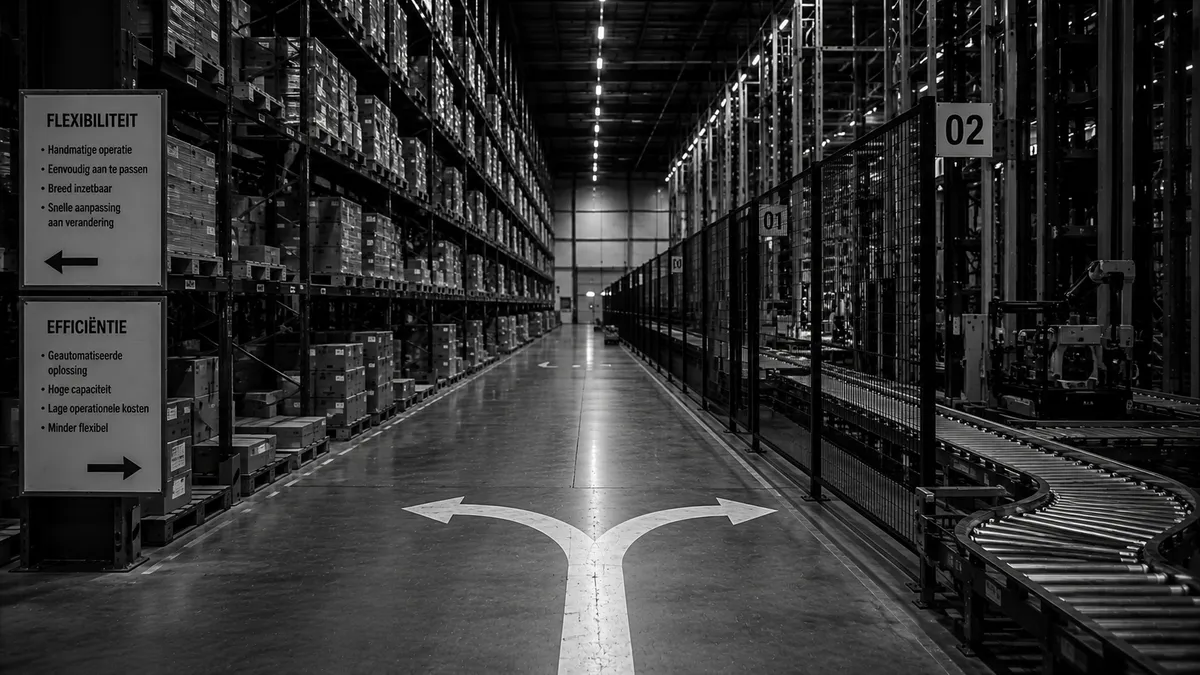
Efficiency and flexibility in a warehouse move along a scale: an operation optimised to the maximum for efficiency often loses some ability to respond quickly to changing volumes or customer demands.
Yet in practice I see that efficiency gets a lot of attention, while another factor is sometimes underestimated: flexibility. At first glance, efficiency and flexibility seem to go well together, but in reality higher efficiency often means an organisation makes more deliberate choices and optimises processes further for a specific situation. That is precisely how flexibility can decrease.
Automation imposes demands
Automation is a good example. The possibilities are growing rapidly: AGVs, AMRs, automated storage and order-picking systems and advanced transport systems can deliver enormous benefits, especially in a market where staff are increasingly hard to find. Yet it is sometimes forgotten that automation also imposes demands on the environment in which it has to function: pallets must stay within certain tolerances, products must be supplied predictably, and overhang, damage, crookedly stacked pallets or deviating packaging can directly affect the performance of the system. Where an experienced driver often easily resolves a deviating situation, an automated system needs clear rules to function reliably.
Automation also frequently requires investments in software, data exchange and process standardisation: warehouse management systems, transport systems and automation solutions must communicate with each other and exchange information correctly. That does not mean automation is the wrong choice, in many situations it can deliver enormous benefits. It does mean that an automated operation is often less easy to adapt than a fully manual one.
The same principle in warehouse design
I see the same principle in choices around warehouse layout. An organisation that wants to realise maximum storage capacity can opt for a very-narrow-aisle warehouse with VNA trucks, for example: this creates more storage capacity per square metre and makes optimal use of the available space. From an efficiency perspective that can be an excellent choice, but at the same time this choice also brings dependencies. When a reach truck breaks down, replacement equipment is often available within a few days. With specialist VNA trucks, things are usually different: the availability of replacement equipment is far more limited, and breakdowns can therefore have a much bigger impact on the operation. That does not mean a VNA solution is wrong, it mainly means that the benefits and risks must always be assessed together.
Two extremes on the same scale
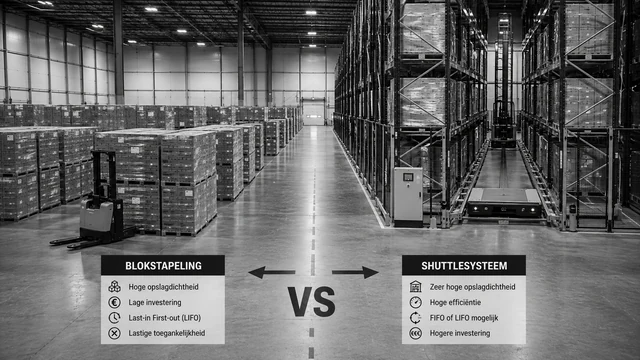
Almost every choice in a warehouse sits somewhere on the scale between maximum efficiency and maximum flexibility. The comparison below shows what that looks like in practice for two opposite layout choices:
| Characteristic | Very-narrow-aisle with VNA | Block storage, standard trucks |
|---|---|---|
| Storage capacity per m² | High | Lower |
| Adaptability to volume swings | Limited | High |
| Dependence on specialist equipment | High | Low |
| Replacement equipment availability | Limited, often days of waiting | Ample, often available immediately |
| Best suited for | Stable, predictable goods flow | Fluctuating volumes, short contracts |
Organisations with a stable goods flow, predictable volumes and a long horizon can often optimise further for efficiency. Organisations dealing with fluctuating volumes, changing customer requirements or short-term contracts often benefit more from flexibility. For logistics service providers, that tension is even a fundamental investment question. That is exactly why one perfect solution rarely exists: those who compare different solution directions objectively make this trade-off explicit.
The more important question
The best choice depends not only on today's situation, but also on what the operation needs to look like in five or ten years. When investments are assessed solely on the basis of capacity, productivity or costs, there is a risk that flexibility is lost from view, while it is precisely that flexibility that often proves valuable the moment the market changes, volumes shift or customer requirements change unexpectedly.
The question should therefore not only be how efficient a solution is. The more important question is how much flexibility an organisation is willing to give up to achieve that efficiency.
Frequently asked questions
Why does warehouse efficiency sometimes come at the cost of flexibility?
Higher efficiency usually means processes are optimised further for one specific situation, which makes the operation less easy to adapt. Automated systems and specialist equipment impose clear demands on their environment and bring dependencies with them. It is precisely that flexibility that often proves valuable the moment the market changes or volumes shift.
What demands does automation place on a warehouse?
Automation requires a predictable environment: pallets must stay within tolerances, products must be supplied predictably and the system needs clear rules to function reliably. It also frequently requires investments in software, data exchange and process standardisation. Where an experienced driver easily resolves a deviating situation, a deviation can directly affect the performance of an automated system.
When should you choose flexibility over maximum efficiency?
Flexibility pays off most with fluctuating volumes, changing customer requirements or short-term contracts. Organisations with a stable goods flow, predictable volumes and a long horizon can often optimise further for efficiency. The best choice therefore depends not only on today's situation, but also on what the operation needs to look like in five or ten years.

Sjef Kerkvliet is the founder of OctaFlow and has more than 15 years of experience in intralogistics, warehouse optimisation and internal transport. Drawing on his hands-on experience, he helps organisations with questions around goods flows, process improvement, warehouse layout, automation and operational efficiency.
Want to talk about your operation?
A logistics or operational challenge? OctaFlow is happy to think along. No fuss, just a good conversation.