When organisations want to solve a logistics challenge, the first step is often to look at suppliers. That is logical. Suppliers have knowledge, experience and products that can contribute to a more efficient operation.
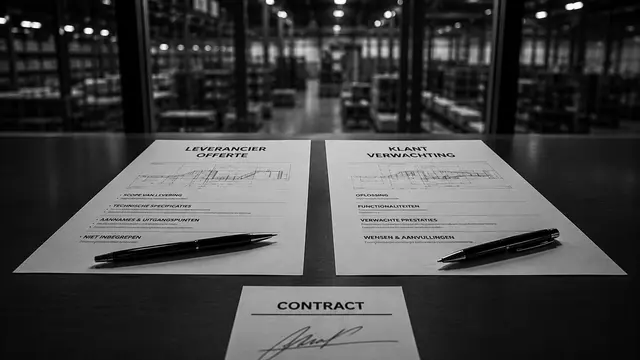
Comparing MHE quotes is not just about lining up prices: a supplier will rarely advise against buying equipment, so the first question should always be which solution actually fits the challenge best.
Yet I regularly see the focus shift to the solution early in the process, while the underlying question has not yet been fully explored.
That is understandable. A problem demands a solution, after all. But this is exactly where the risk arises that an organisation gets answers to a question that has not yet been fully asked.
Every specialist looks from their own field
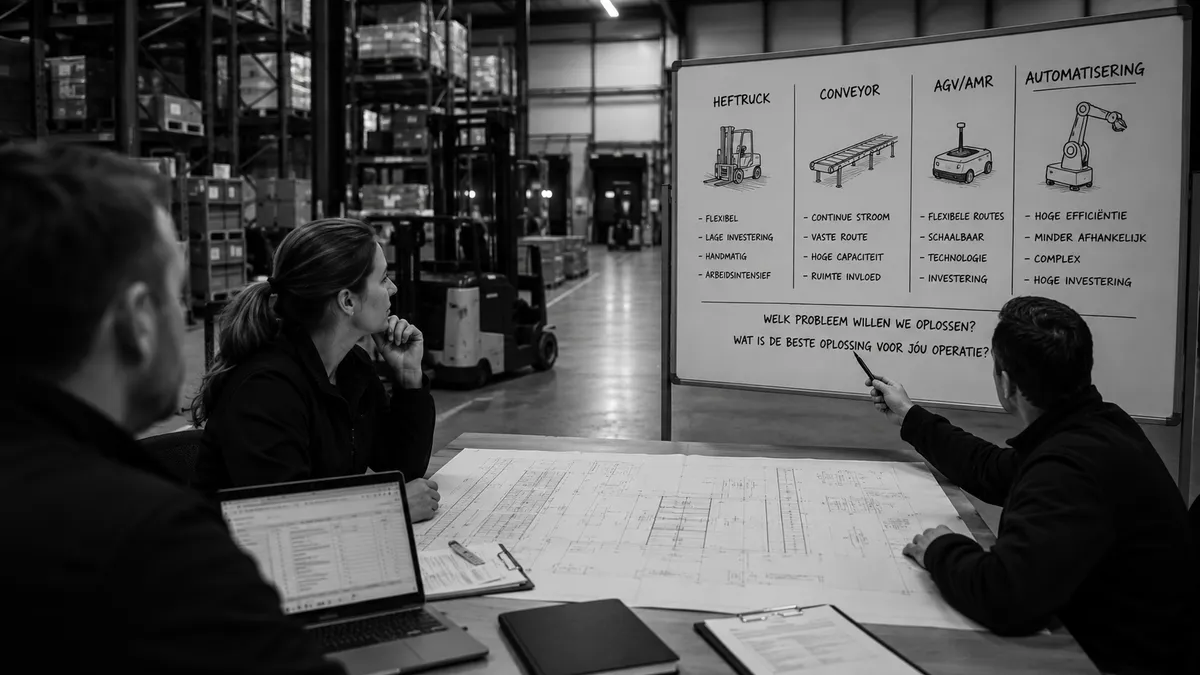
A supplier naturally looks at a challenge from its own expertise. A forklift supplier thinks of material handling equipment. A conveyor supplier looks at conveyor belts. A robotics supplier sees opportunities for automation. A system integrator thinks of systems, software and process integration.
There is nothing wrong with that. In fact, it is exactly why these parties have become specialists in their field.
At the same time, it also means that different suppliers often come up with different solutions to exactly the same problem.
When goods need to be moved from point A to point B, for example, the first thought is quickly a forklift, reach truck or pallet truck. In many situations that is indeed an excellent solution. But it is not automatically the only solution.
Depending on the situation, the same challenge might also be solved with a conveyor, a shuttle system, an AGV, an AMR or another form of automation. Sometimes the solution does not lie in an investment at all, but in an adjustment to the process or the layout of the warehouse.
Are you actually aligned internally? In the free Octagon each role divides 40 points across eight dimensions of an MHE decision separately, and one picture shows you where the priorities diverge.
The operation first, the product second
That is exactly why it is important to look at the operation first, before looking at products.
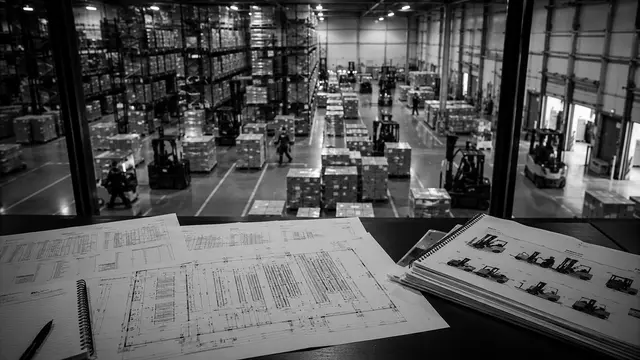
In practice I regularly see organisations investigating an investment while the underlying cause of the problem is not fully clear. A new machine is being sought, while the challenge may not lie with the equipment at all. A delay in the process can be caused, for example, by the layout of the warehouse, the way work is distributed, the available space, the planning or the interdependence of different process steps. When only one element is examined, a large part of the story remains out of sight. That is why it is valuable to understand the full process first, and only then assess where the greatest improvement opportunities actually lie.
The question should therefore not be which solution is best.
The first question should be which problem actually needs to be solved.
That may seem like a small difference, but in practice it makes a world of difference.
When the problem is clearly defined, room emerges to compare different solution directions objectively. Only then does it become visible which investment actually adds the most value to the operation. The same principle applies to drawing up an MHE tender.
Specialisation is not a criticism
This is exactly why I strongly believe in an independent approach. Not because suppliers give bad advice, but because every supplier naturally looks from its own expertise and capabilities.
That does not mean a supplier deliberately recommends an unsuitable solution. It does mean that the proposed solution will almost always lie within their own portfolio. A forklift supplier will rarely advise against buying a forklift. A robotics supplier is unlikely to conclude that a simple process adjustment is sufficient. And a conveyor supplier will usually look at conveyor options first.
That is not a criticism. That is simply how specialisation works.
The challenge for organisations is to determine which solution best fits the total process, and not just one part of it. Trade-offs between efficiency and flexibility also play an important role here.
Start with the full picture
The best solution is therefore not always in the quotation.
Sometimes it lies in a combination of different techniques. Sometimes in an adjustment to the goods flow. Sometimes in automation. Sometimes deliberately not.
But a good decision almost always starts with understanding the operation as a whole.
Only when the full picture is visible does it become clear which solution is truly the best choice.
Frequently asked questions
How do you compare quotations for material handling equipment?
Do not start with the quotations themselves, but with the problem you want to solve. Only when that problem is clearly defined can you compare different solution directions objectively. That is also when it becomes visible which investment actually adds the most value to your operation.
Why do suppliers recommend different solutions for the same problem?
Because every supplier looks at a challenge from its own expertise and portfolio. A forklift supplier thinks of material handling equipment, a robotics supplier of automation and a conveyor supplier of conveyor belts. That is not bad advice, it is simply how specialisation works.
Do you always need new equipment to solve a logistics problem?
No, sometimes the solution lies not in an investment but in an adjustment to the process or the layout of the warehouse. A delay can be caused by the layout, the way work is distributed, the available space or the planning, for example. That is why it pays to look at the full operation first, before looking at products.

Sjef Kerkvliet is the founder of OctaFlow and has more than 15 years of experience in intralogistics, warehouse optimisation and internal transport. Drawing on his hands-on experience, he helps organisations with questions around goods flows, process improvement, warehouse layout, automation and operational efficiency.
Want to talk about your operation?
A logistics or operational challenge? OctaFlow is happy to think along. No fuss, just a good conversation.