Whenever I visit a warehouse for the first time, I often hear the same remark: "As you can see, we're pretty busy here."
Business in a warehouse is not a reliable indicator of efficiency: a lot of movement says little about how much value that movement actually adds to the operation.
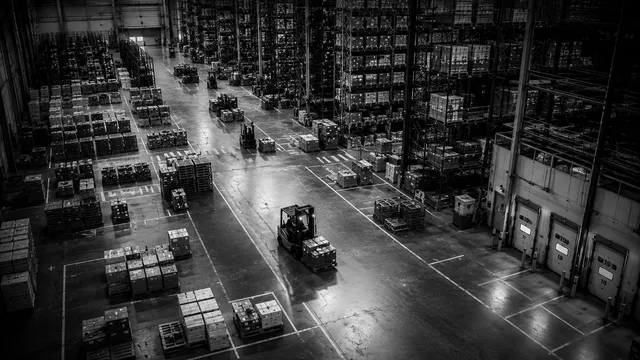
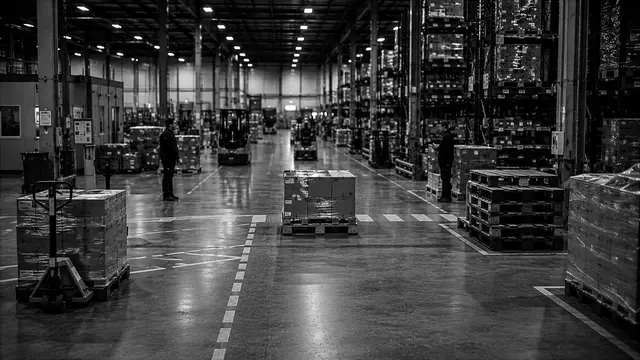
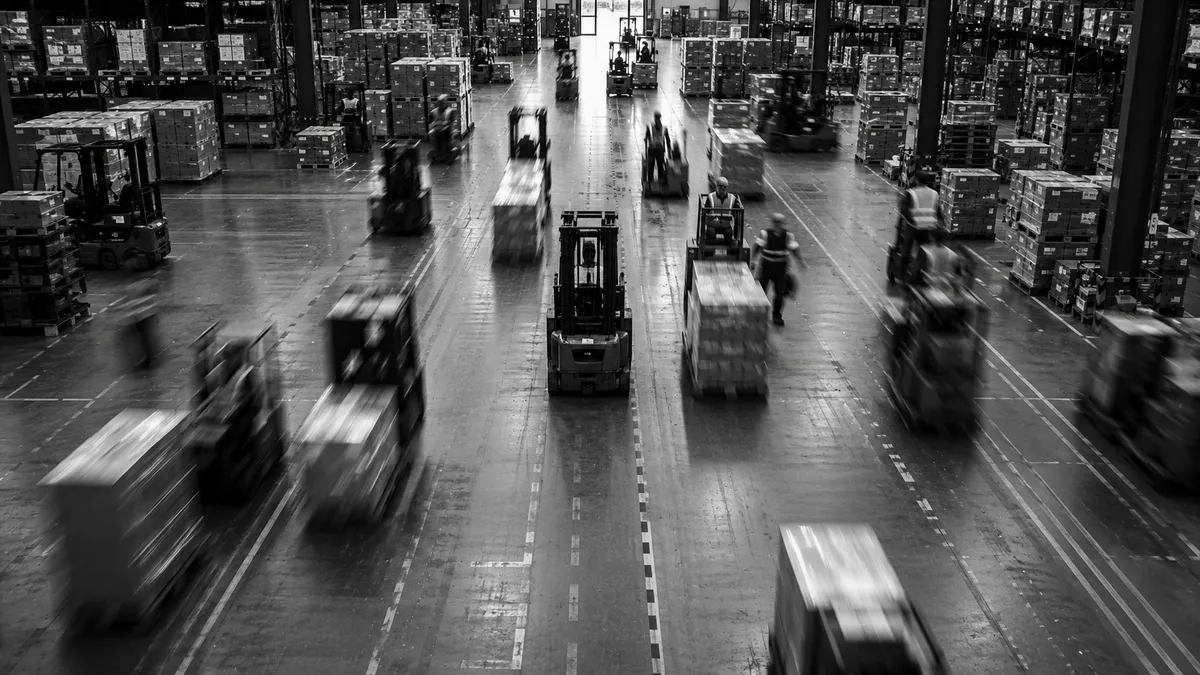
Busyness is often unconsciously taken as a sign that the operation is running well. Forklifts dash back and forth, staff are constantly on the move and work seems to be happening everywhere. At first glance, that looks productive.
Yet busyness is not the same as efficiency.
In fact, some of the most inefficient operations I have come across were also the busiest.
Lots of movement is not the same as lots of work
One of the biggest misconceptions in logistics operations is that plenty of movement automatically means plenty of work being done. In reality, the number of metres driven, the number of forklift movements or the number of people walking around says little about actual productivity.
In the end, what matters is not how much activity takes place, but how much value that activity actually adds.
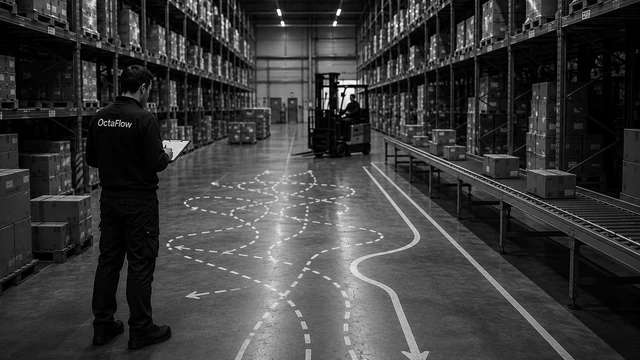
I regularly see drivers who are constantly on the move, while a significant share of their time consists of waiting, searching, taking detours or moving goods that will be moved again later. From a distance, everyone appears maximally productive. When you analyse the work more closely, it often turns out that a large part of the effort does not directly contribute to the end result.
The same applies to material handling equipment. A forklift that drives all day is not automatically deployed efficiently. When a driver has to cover long distances because goods are stored in illogical locations, the number of movements rises while productivity barely improves. Extra equipment then often looks like the solution, while the real problem lies elsewhere.
Historical choices become the norm
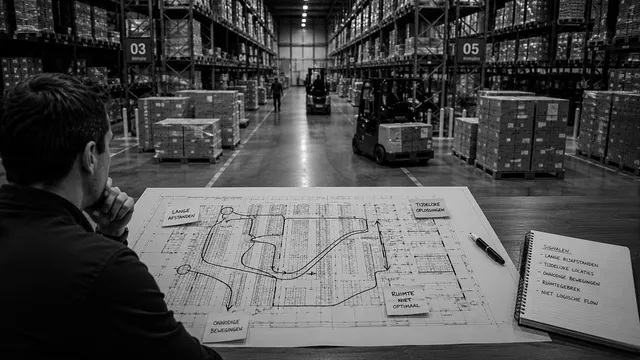
A situation I come across regularly is that organisations have built their operation around historical choices. Product groups have been relocated over the years, storage locations have been added and processes have been adjusted. Each change seems logical in isolation, but the overall picture is rarely reviewed. Quite often, the warehouse is still laid out for a company that no longer exists.
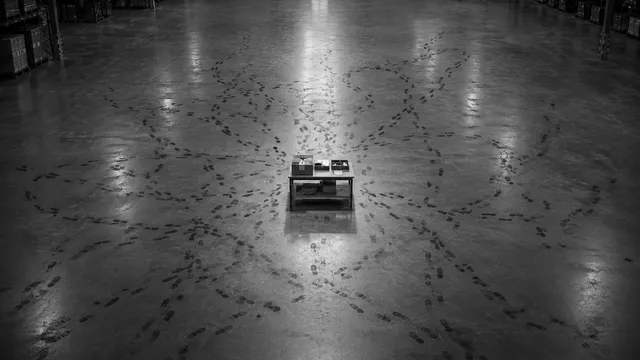
The result is that staff and trucks cover extra metres every day without anyone being aware of it any more. Because this way of working has existed for years, it is seen as normal.
What strikes me is that many of these inefficiencies have become completely normal to the people who work there every day. That is exactly why they are often no longer recognised as opportunities for improvement.
Simple questions, surprising insights
Questions such as why a product sits in a particular location, why a driver has to cross several zones for a single task, or why the same pallet is moved several times before it leaves the building often produce surprisingly valuable insights.
These are usually simple questions nobody thinks about any more. Not because the answers are missing, but because processes have evolved into the standard way of working over the years. A large part of this waste is not even visible in reports or dashboards.
Calm as a hallmark of efficiency
You therefore do not recognise an efficient operation by how much movement takes place. You recognise it by how much unnecessary movement is absent.
That does not mean a quiet warehouse automatically performs well. It does mean that busyness should never be a goal in itself.
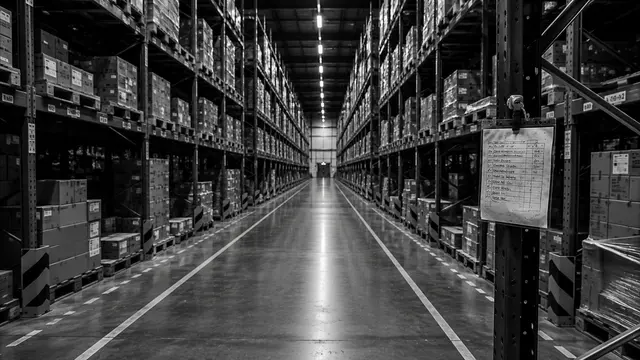
The most efficient operations I have seen were often surprisingly calm. Not because less work was being done, but because processes were logically arranged, goods were in the right place and staff were not constantly engaged in activities that added no value.
So when a warehouse feels busy, it is worth looking not only at what is happening, but above all at why it is happening.
Because only when that question is asked does it become visible how much of the busyness is actually necessary.
Frequently asked questions
Is a busy warehouse a bad sign?
Not by definition. Busyness can be part of a healthy operation. It becomes a risk when busyness is confused with productivity, while much of the movement consists of waiting, searching or unnecessary handling.
How do you recognise an efficient warehouse?
Not by the amount of movement, but by the absence of unnecessary movement. Efficient operations often look surprisingly calm: processes are logically arranged, goods are in the right place and staff mainly do work that adds value.
How do I gain insight into unnecessary movements in my warehouse?
Start with simple questions: why is a product stored in this location, why does a driver take this route, why is a pallet moved several times? An operational quick scan with observations on the shop floor quickly reveals these patterns.

Sjef Kerkvliet is the founder of OctaFlow and has more than 15 years of experience in intralogistics, warehouse optimisation and internal transport. Drawing on his hands-on experience, he helps organisations with questions around goods flows, process improvement, warehouse layout, automation and operational efficiency.
Want to talk about your operation?
A logistics or operational challenge? OctaFlow is happy to think along. No fuss, just a good conversation.