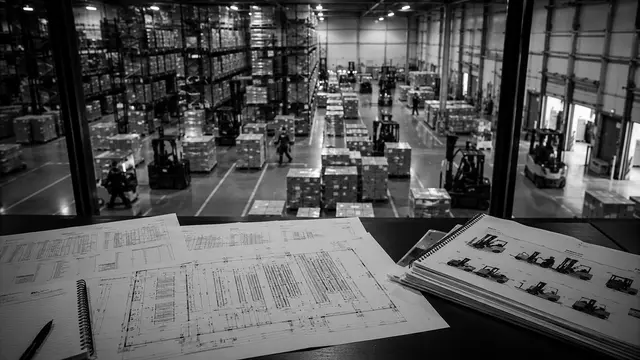
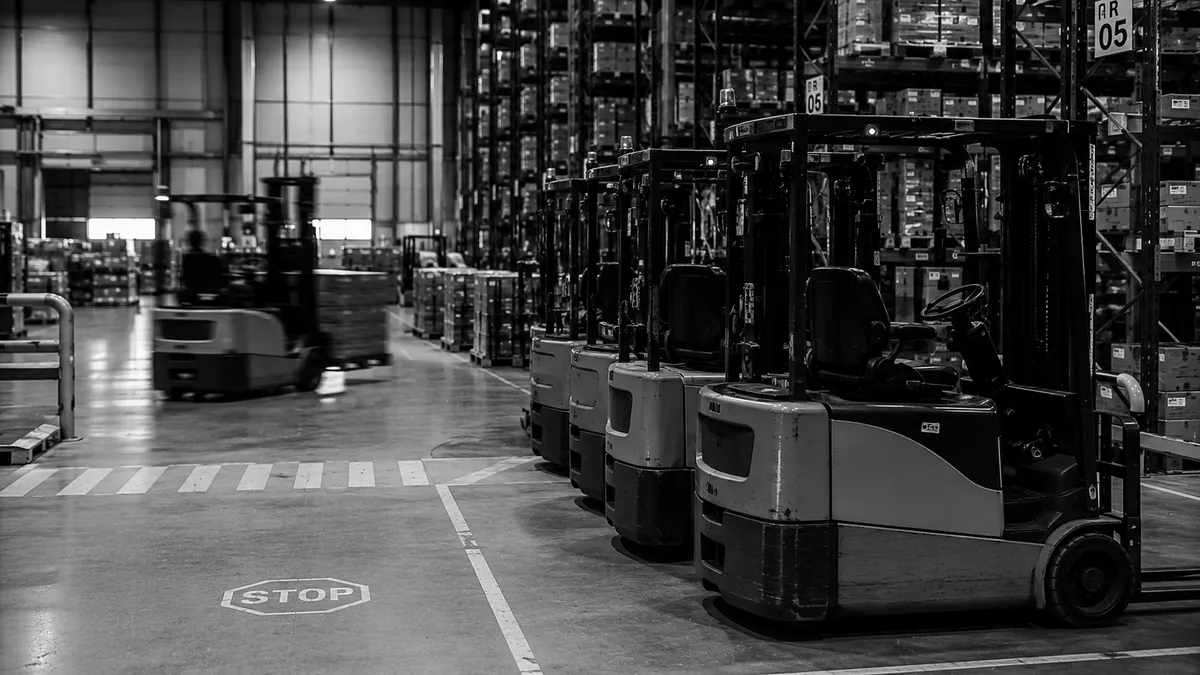
When pressure on a logistics operation increases, the same discussion quickly arises. There are waiting times, staff complain that no equipment is available and productivity falls short of expectations. The conclusion then seems obvious: extra forklifts are needed.
A perceived forklift shortage does not automatically point to too little equipment: waiting times and availability complaints often have another cause, such as an inefficient process or suboptimal deployment of existing trucks.
In practice, that conclusion turns out to be wrong remarkably often.
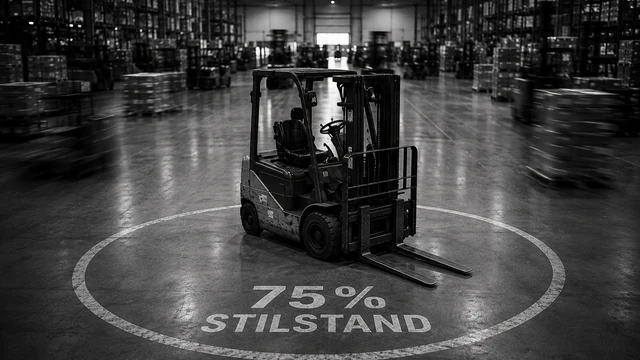
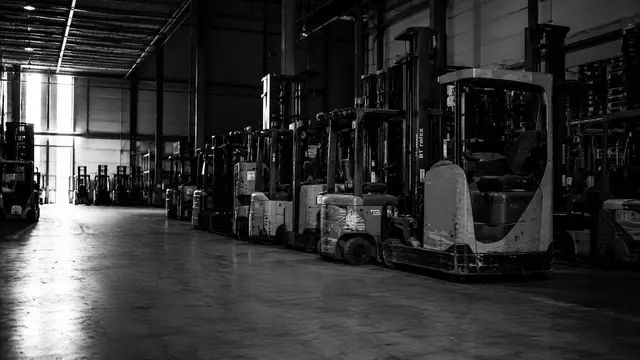
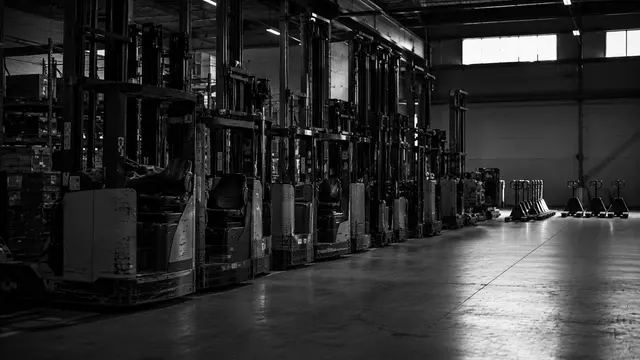
In conversations with operational managers, I regularly hear that an equipment shortage is being experienced. When you then look at how the fleet is actually deployed, a different picture often emerges. Not infrequently, part of the equipment sits idle while shortages are experienced elsewhere within the same operation.
That raises the question of whether there really is a capacity problem, or whether something else is going on.
Inefficient use of existing capacity
One of the most common causes is inefficient use of the available equipment. Drivers cover unnecessarily long distances, wait for goods that are not yet ready or spend a lot of time on work that adds little value. The result is pressure on the operation, while the available capacity is not being used to its full potential. After all, a busy warehouse is not automatically an efficient warehouse.
Peak loads out of habit
Another pattern I regularly encounter is that the entire operation is organised around a narrow time window because "that's how it has always been done". Goods are delivered early in the morning as standard, for example, after which a large share of the internal transport movements has to take place in a relatively short period.
This creates a peak load that makes it look as if there is not enough equipment available. The obvious conclusion is then that extra trucks are needed to absorb the rush.
Strikingly, the question of whether these goods could be delivered at a different time is often never asked. Yet that is sometimes where a simple solution lies. When deliveries are spread more evenly across the day, the operation becomes more balanced. Trucks can be used more often throughout the day, peak loads decrease and the need for extra equipment sometimes turns out to be considerably smaller than initially thought.
In such situations, the capacity problem is not caused by a shortage of trucks, but by the way the work is distributed across the day.
The layout of the warehouse
The layout of a warehouse also plays an important role here. Products stored in illogical locations, long travel distances between processes or junctions where congestion regularly occurs can significantly affect the productivity of an entire fleet.
An extra forklift does not solve these problems. In fact, in some cases it makes the underlying bottlenecks even less visible. The operation keeps running, but the inefficiency remains.
Insight first, investment second
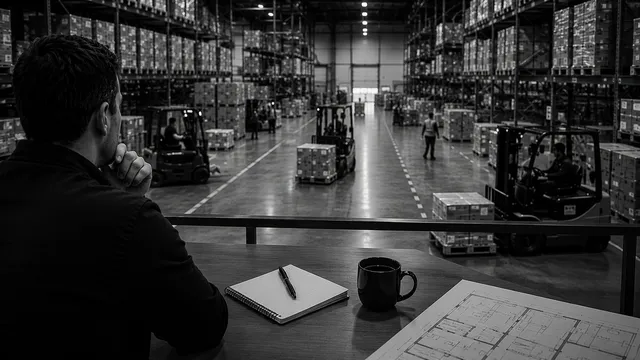
A situation I regularly come across is that organisations invest in extra equipment while no one has ever investigated how the existing fleet is actually used. Once usage data, driving routes and utilisation rates are made visible, it often turns out that the perceived capacity shortages have a different cause than a lack of machines.
That does not mean extra equipment is never needed. Growing volumes, new activities or changes in the operation can absolutely justify expanding the fleet. The risk arises when equipment is purchased as a solution to a problem that has not yet been fully investigated. The opposite happens just as often, by the way: a fleet that has quietly grown too large.
Before investing in extra trucks, it is therefore wise to first establish where the available capacity is actually going. How much time is spent on productive work? Where do waiting times occur? Which processes cause delays? And how are the current machines really being used?
In many cases, optimising processes delivers more results than adding extra equipment. Not because forklifts are unimportant, but because an efficient operation always starts with insight into the cause of the problem.
The question should therefore not be how many extra forklifts are needed, but why the current fleet does not seem to be enough. The answer to that question often delivers more than buying another machine.
Frequently asked questions
How do I know whether my operation really needs extra forklifts?
First investigate how the existing fleet is used: operating hours, driving routes, utilisation rates and waiting times. The perceived shortage often turns out to be caused by peak loads, illogical routing or an uneven distribution of work.
What are alternatives to expanding the fleet?
Spreading deliveries across the day, organising storage locations more logically, shortening travel distances and sharing equipment better across departments. These measures reduce peak loads and increase the utilisation of existing equipment.
When is expanding the fleet the right choice?
With structurally growing volumes, new activities or demonstrable capacity shortages that remain after the deployment of the current fleet has been optimised. The key is that the investment solves an investigated problem, not an assumption.

Sjef Kerkvliet is the founder of OctaFlow and has more than 15 years of experience in intralogistics, warehouse optimisation and internal transport. Drawing on his hands-on experience, he helps organisations with questions around goods flows, process improvement, warehouse layout, automation and operational efficiency.
Want to talk about your operation?
A logistics or operational challenge? OctaFlow is happy to think along. No fuss, just a good conversation.