When organisations invest in new material handling equipment, a great deal of attention usually goes into comparing suppliers. Several parties are invited, quotations are requested and extensive comparisons are made between prices, specifications and terms. The thinking behind this is logical: the more suppliers take part, the greater the chance of finding the best solution.
An MHE tender that uses the current fleet as its starting point is not really comparing solutions, it is mainly extending a historical choice, which is one of the most common mistakes when procuring material handling equipment.
Yet I regularly see tenders start at a disadvantage before the first quotation has even been submitted.
Asking for what was used yesterday
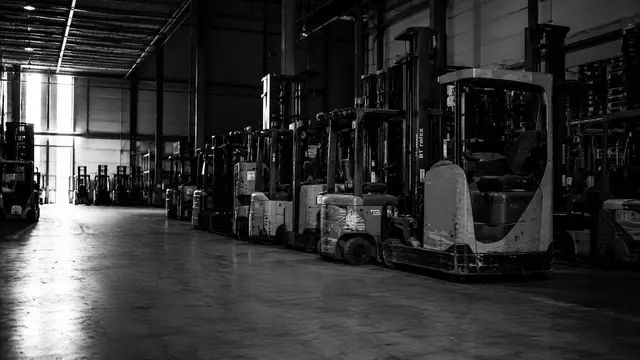
The cause usually lies not with the suppliers, but with the way the request is drawn up. Many organisations use their current fleet as the starting point for a replacement project. On paper, that sounds logical. The existing machines are familiar, have been running in the operation for years and form a concrete reference for what seems to be needed.
In practice, however, this often creates a fundamental problem. Instead of investigating what the operation needs today, the request describes what was used yesterday. That same specification is then sent to several suppliers with the request to submit a comparable offer.
What I regularly see is that the incumbent supplier automatically gains an advantage. The original fleet was, after all, often built around the characteristics of that specific brand. Other suppliers then have to try to offer an alternative within that same framework. The result is not always a comparison between different solutions, but mainly a comparison between different ways of continuing the same historical choice.
Are you actually aligned internally? In the free Octagon each role divides 40 points across eight dimensions of an MHE decision separately, and one picture shows you where the priorities diverge.
Specifications nobody can explain any more
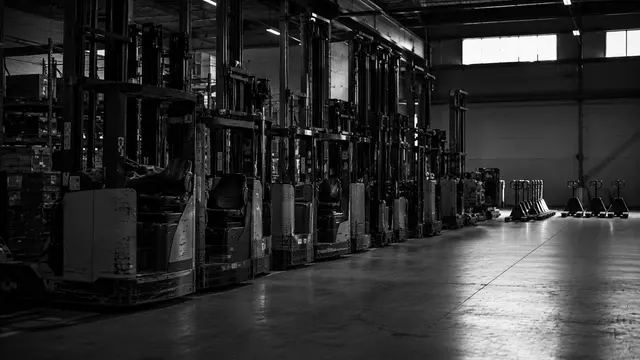
A second pitfall I often encounter is that specifications are carried over for years without anyone asking why they were ever chosen. A 1,600-kilogram reach truck is requested again because a 1,600-kilogram reach truck is in use today. When you then ask why that capacity is needed, it regularly turns out that nobody knows exactly. The specification has worked well for years and is therefore automatically seen as the right specification.
That is understandable, but also risky.
Organisations change constantly. Product flows change, storage methods change, order profiles change and sometimes even the entire business model changes. A machine that fitted the operation perfectly fifteen years ago is therefore not automatically still the best choice. The same applies, incidentally, to the layout of the warehouse itself.
Perhaps even more important is the question of whether the solution that was the best choice fifteen years ago would be chosen again today. Technology has evolved, suppliers have introduced new concepts and the possibilities within internal transport are often considerably greater than when the original investment was made.
I regularly see a practical example of this in work at height. Different manufacturers achieve comparable performance in different ways. Where one brand retains sufficient residual capacity with a relatively light machine, another brand opts for a different construction or a heavier version. When an organisation relies solely on the specifications of the current machine, there is a risk that certain solutions are excluded before suppliers even get the chance to contribute ideas.
In some cases this even leads to requesting heavier equipment than is operationally necessary. That affects more than the investment alone. Larger machines often take up more space, are less manoeuvrable and can affect day-to-day efficiency within the warehouse.
Needs first, suppliers second
This is exactly why I see organisations get a lot of value from an independent analysis before suppliers are involved. Not because suppliers do not do their job well, but because every supplier naturally looks at the solutions available within its own portfolio. After all, the best solution is not always in the quotation.
That does not mean a supplier deliberately recommends the wrong solution. It simply means that every recommendation is made from a particular brand, a particular product line and a particular view of the market. From that reality, it is not always easy for organisations to distinguish between what is operationally the best solution and what fits best within a specific supplier's range.
An independent analysis ensures that what the operation actually needs is established first. Only then is there room to compare suppliers. This shifts the discussion from machines to work, and from specifications to performance.
Room for different solution directions
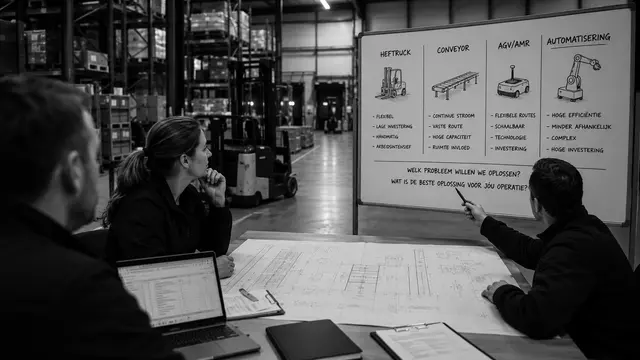
In my view, a good tender therefore does not start with the question of which trucks are used today. The most important question is which work needs to be carried out, what performance that requires and which challenges the operation expects in the coming years.
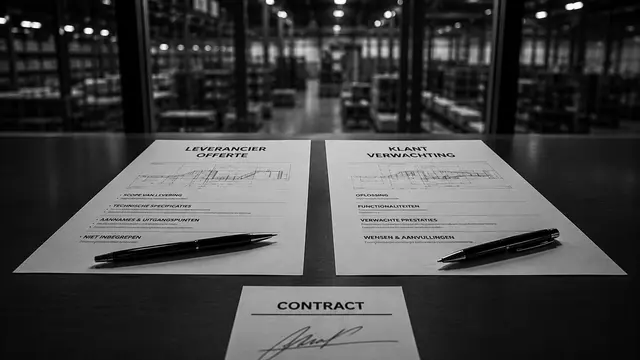
Only when that need is clear is there room for suppliers to come up with the best-fitting solution from their own expertise. That is when a fair comparison emerges. Not by asking five suppliers to deliver the same thing, but by giving five suppliers the opportunity to solve the same problem in their own way.
The best tender is therefore rarely the tender with the longest list of specifications. It is often the tender that most clearly describes what the operation needs while leaving enough room for different solution directions. That not only produces better quotations, but in practice often leads to better decisions too.
Frequently asked questions
What is the biggest mistake in MHE tenders?
Using the current fleet as the starting point. That way you request what was used yesterday rather than what the operation needs today, and you unintentionally give the incumbent supplier a head start.
How do you draw up a good MHE request for quotation?
Describe the work, performance and expected challenges rather than machine specifications. Give suppliers room to solve the same problem in their own way. That creates a fair comparison between solutions.
Why an independent analysis before the tender?
Every supplier naturally advises from its own portfolio. An independent analysis first establishes the operational need, so the tender is based on what the operation requires rather than on what a supplier can deliver.

Sjef Kerkvliet is the founder of OctaFlow and has more than 15 years of experience in intralogistics, warehouse optimisation and internal transport. Drawing on his hands-on experience, he helps organisations with questions around goods flows, process improvement, warehouse layout, automation and operational efficiency.
Want to talk about your operation?
A logistics or operational challenge? OctaFlow is happy to think along. No fuss, just a good conversation.