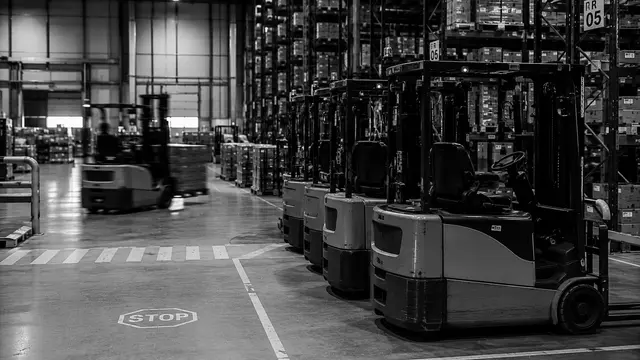
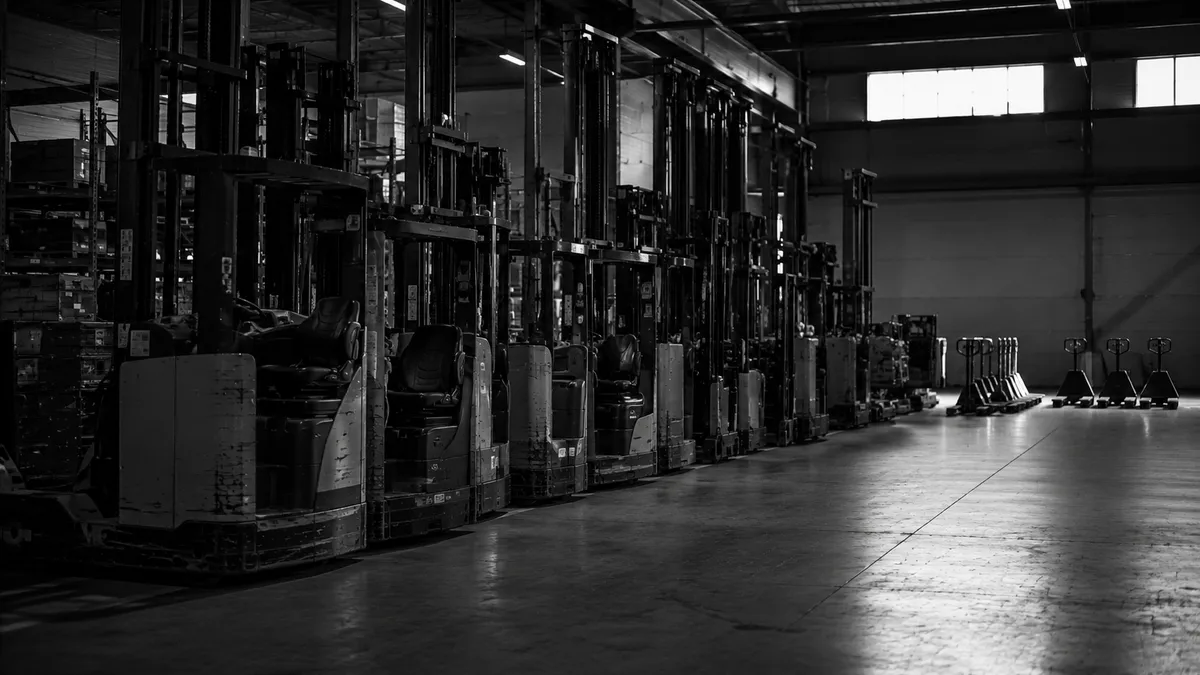
When problems with equipment availability arise within a warehouse or production environment, the first reaction is often predictable. An extra forklift is needed, an extra reach truck or perhaps another pallet truck. The idea behind it is logical. Nobody wants employees waiting because no machine is available.
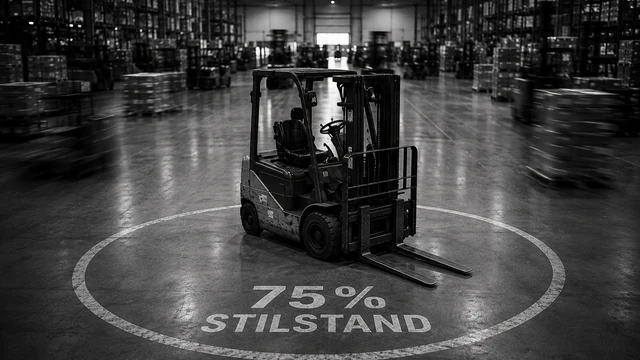
Forklift fleet size is not simply a matter of having enough equipment available: idle equipment feels cheap, but lease, maintenance and inspections continue regardless, so an oversized fleet carries hidden costs.
Yet in practice I regularly see the opposite problem.
Organisations often focus on preventing an equipment shortage, but give far less thought to whether all the machines present are actually needed. This is exactly how situations arise in which a fleet keeps growing over the years, while the actual need barely changes.
The invisible costs of overcapacity
On paper, that does not seem like a big problem. After all, a machine standing still consumes no energy and causes no direct disruption to the operation. Yet surplus equipment often carries considerable costs that are less visible than a capacity shortage.
Every machine represents capital. Whether it is bought, leased or rented, the costs keep running. On top of that there are maintenance costs, inspections, insurance and administrative work that continue to exist regardless of how many hours a machine is actually used. It is a classic example of waste that is not visible.
Specialist equipment in particular lingers
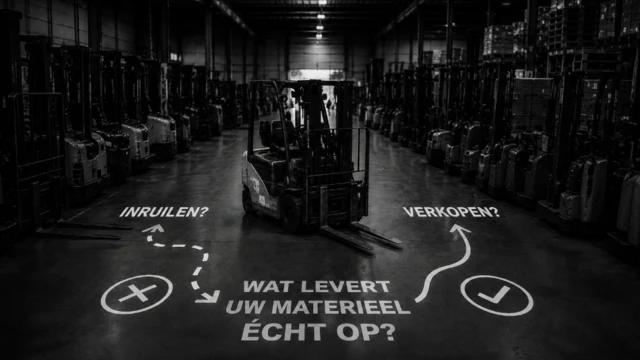
What strikes me is that surplus equipment is by no means always standard forklifts or pallet trucks. It is precisely specialist machines that often remain part of the fleet for years. They were once purchased for a specific customer, a special project or an unusual process. The original reason for the investment was often entirely understandable. But the operation changes over the years, while the machine stays. With machines like these it is hard to say what they are still worth, because few of them change hands. A Residual Value Check gets a price for one from dealers who do know the type.
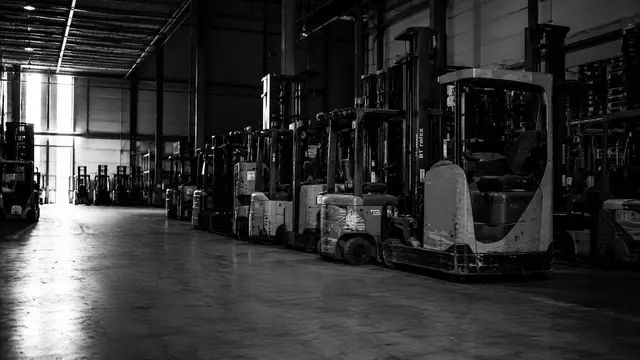
During one analysis I once found dozens of machines that were used for less than a hundred hours a year. These were mainly specialist versions with unusual attachments or specific technical configurations. Because these machines were suitable for only a limited range of tasks, they stood idle for most of the year.
It is precisely with this kind of equipment that a distorted picture of the real costs often arises. A machine that runs little feels cheap, while the lease costs, maintenance costs, insurance and inspections simply keep running. When all these costs are spread over fewer than a hundred operating hours a year, the resulting cost price can turn out surprisingly high.
That often leads to an interesting discussion.
Not the question of what a machine costs, but whether the activity for which that machine is kept still adds enough value today to justify those costs.
In many cases it turns out that nobody has asked that question in recent years. The machine is simply there because it has always been there.
Equipment per department
I see the same thing in organisations where every department has its own equipment. That often originated from practical considerations. As the organisation grows, that structure remains while the work changes. The result is that some machines are used continuously while others stand idle for much of the day.
This easily creates the impression that extra equipment is needed, while the real cause sometimes lies in how existing capacity is distributed.
What makes this question extra interesting is that a large fleet often does not automatically lead to higher productivity. When drivers cover long distances, goods are moved several times or processes are illogically arranged, a need for extra capacity arises by itself. Adding machines then solves the symptom, but not the cause.
Asking the right questions
That is exactly why a good analysis usually does not start with the question of how many machines are present. Far more interesting is the question of how much value each machine actually adds to the operation.
How many hours is the equipment really used? Which machines run continuously and which stand structurally idle? Are peak moments truly structural or merely incidental? And if a machine disappeared from the fleet tomorrow, would the operation really notice?
The answers to those questions often produce surprising insights.
An equipment shortage causes immediately visible problems. An equipment surplus often stays hidden for years. That is exactly why it pays to look critically at the composition of the fleet periodically. Not with the aim of getting rid of as many machines as possible, but to understand which capacity is actually needed. And when equipment becomes surplus, a well-organised disposal is often worth more than expected.
Because in the end, a fleet does not become more efficient by adding more equipment. A fleet becomes more efficient when every machine makes a clear contribution to the operation.
Frequently asked questions
How do you recognise an oversized fleet?
Look at the actual operating hours per machine. Machines that stand structurally idle, specialist versions that are rarely used and departments with their own under-utilised equipment are clear signals.
What does an idle forklift cost?
More than you think: lease or depreciation costs, maintenance, inspections, insurance and administration simply keep running. Spread over few operating hours, the cost per hour turns out surprisingly high.
How often should you review your fleet composition?
Periodically: annually, for example, or whenever the operation changes substantially. The question is always: does the activity this machine is kept for still add enough value to justify the costs?

Sjef Kerkvliet is the founder of OctaFlow and has more than 15 years of experience in intralogistics, warehouse optimisation and internal transport. Drawing on his hands-on experience, he helps organisations with questions around goods flows, process improvement, warehouse layout, automation and operational efficiency.
Want to talk about your operation?
A logistics or operational challenge? OctaFlow is happy to think along. No fuss, just a good conversation.