When organisations invest in new material handling equipment, most of the attention naturally goes to selecting the new machines. Specifications are compared, quotations are assessed and the future composition of the fleet is discussed.
Fleet renewal covers not only the selection of new equipment, but also an often forgotten phase: what happens to the equipment being phased out, where unexpected costs and missed residual value can arise.
Strikingly, another part of the same project often receives far less attention: what actually happens to the equipment being replaced?
That is exactly where unexpected costs, discussions and missed revenues can arise.
With leasing: discussions about return condition
With lease constructions, the answer seems simple. The existing machines are returned to the supplier and the project is complete.
In practice, however, it is not always that straightforward.
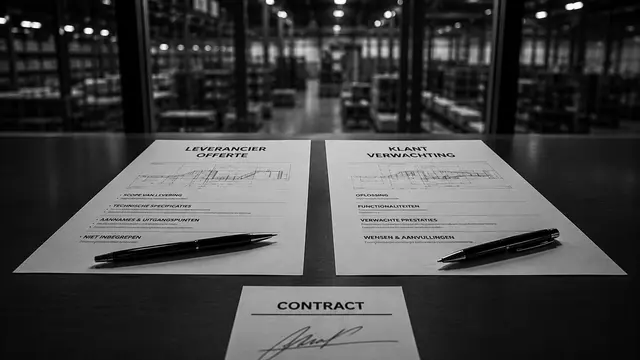
Discussions regularly arise about the condition in which machines are returned. Which marks count as normal wear and tear, and which are considered damage? Which parts should already have been repaired during the contract period? And which costs may still be charged afterwards? These are exactly the differences in interpretation I described earlier in why a signature does not automatically create clarity.
For organisations, it is often difficult to form an objective picture here. What is normal wear for one party may be classified as damage by another. Especially when large numbers of machines are replaced at the same time, such discussions can have considerable financial consequences.
With purchased machines: disposing of dozens at once
With purchased machines, a completely different question arises.
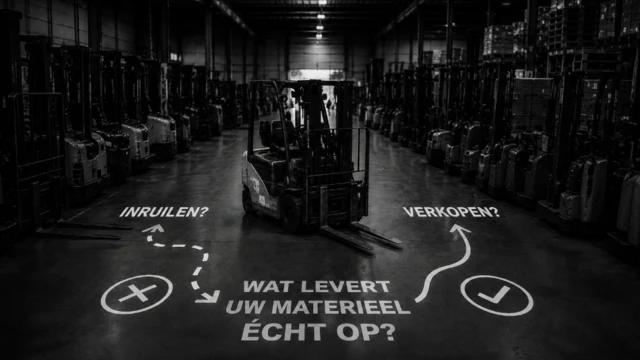
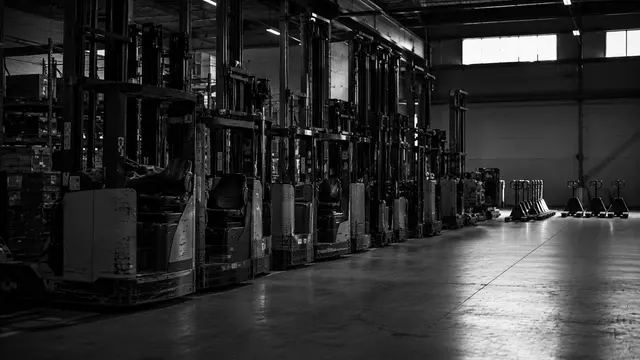
As soon as an organisation decides to renew its fleet, the challenge emerges of disposing of the existing equipment. With a few machines, that is usually still manageable. But what happens when dozens or even hundreds of machines become available at the same time?
For many organisations, selling used material handling equipment is not part of their daily work. Drawing up advertisements, organising viewings, answering technical questions and negotiating with potential buyers takes time, knowledge and capacity.
Uncertainty also plays a role. What is a machine really worth? Which parties are interested? And how do you reach the right buyers?
The market is broader than one trade-in party
In practice, I regularly see the supplier delivering the new fleet simultaneously making a proposal to take over the existing equipment. That can be a perfectly good solution, because it offers clarity and keeps the project manageable. At the same time, it is not always the only possible solution.
The market for used material handling equipment is broader than many organisations think. Machines that have reached the end of their life cycle for one organisation can still add value for years for another. That applies not only within the Netherlands, but beyond it too.
That is exactly why it can be worthwhile to look beyond a single trade-in party. A broader market approach often provides more insight into the true market value of equipment and creates the opportunity to compare different bids.
The forgotten side of the business case
What stands out is that during replacement projects, attention often goes entirely to the cost of the new fleet, while the proceeds from the existing equipment receive relatively little attention. Yet a well-designed tender and a well-organised disposal together determine the total business case.
A well-organised disposal of used equipment can have a considerable influence on the total business case of a replacement project.
After all, the purchase of new equipment marks not only the start of a new fleet, but also the moment at which the value of the existing fleet is realised.
That is exactly why this phase deserves the same attention as the selection of the new machines.
Frequently asked questions
What happens to leased equipment at the end of the contract?
The machines go back to the supplier, but discussions regularly arise about their return condition: what is normal wear and what is damage? Clear agreements upfront and an objective assessment at return prevent unexpected costs.
How do you determine the value of used material handling equipment?
The true market value depends on operating hours, condition, configuration and demand at home and abroad. A broader market approach with multiple bids gives a more realistic picture than a single trade-in proposal.
Is it wise to sell old machines to the new supplier?
It can be a perfectly good solution because of its simplicity, but it is not automatically the best one. Looking beyond a single trade-in party provides insight into the true market value and often a higher residual return.

Sjef Kerkvliet is the founder of OctaFlow and has more than 15 years of experience in intralogistics, warehouse optimisation and internal transport. Drawing on his hands-on experience, he helps organisations with questions around goods flows, process improvement, warehouse layout, automation and operational efficiency.
Want to talk about your operation?
A logistics or operational challenge? OctaFlow is happy to think along. No fuss, just a good conversation.