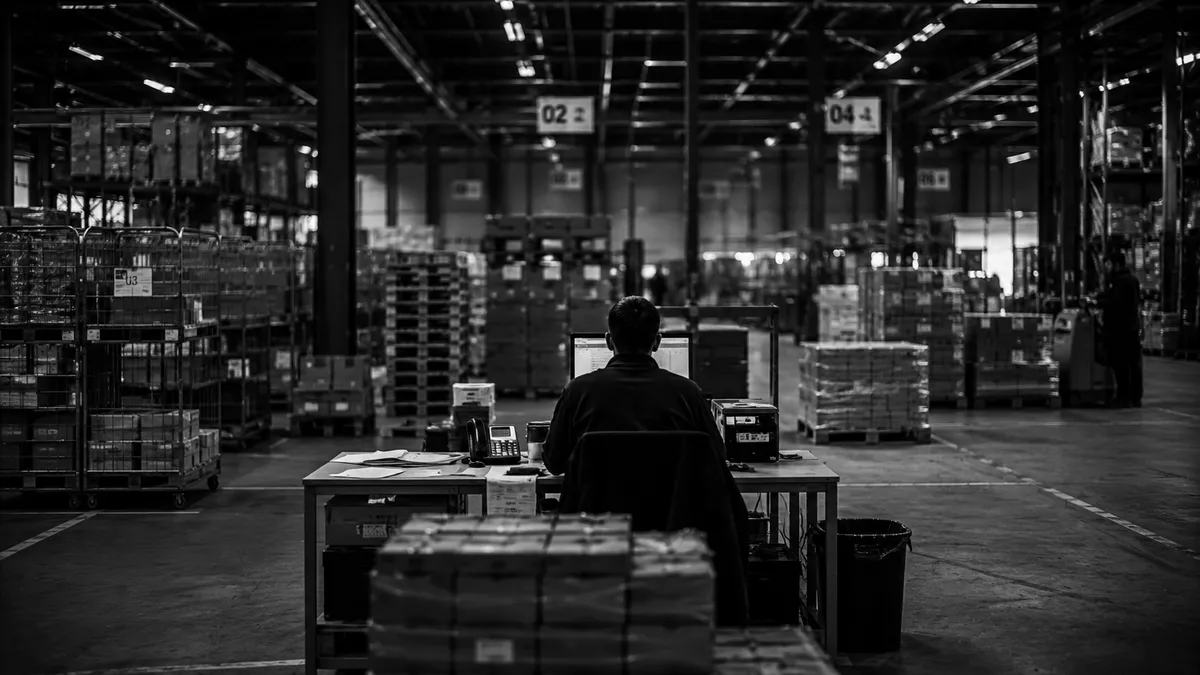
Virtually every organisation knows them. Employees who seem to know everything, are involved in everything and always have a solution when something goes wrong. When a system crashes, a process is unclear or a customer has an exceptional question, everyone knows exactly who to turn to.
Knowledge retention is the structural recording and transfer of knowledge held by individual key employees, so an organisation does not remain dependent on a single person.
At first glance, these are the employees every organisation would like more of.
Yet I regularly see that this is precisely where a risk arises that receives little attention.
Not because these employees are doing anything wrong, but because the organisation unconsciously becomes dependent on them.
Knowledge that lives only in people's heads
In many warehouses, processes do not emerge on paper alone, but above all in practice. Employees build up experience, devise clever solutions and develop ways of working that are not always fully documented. As long as the same people are present, that usually causes few problems. The operation simply keeps running. It is no accident that a warehouse is often smarter than its processes.
The vulnerability often only becomes visible when someone falls ill, takes a holiday or decides to work elsewhere.
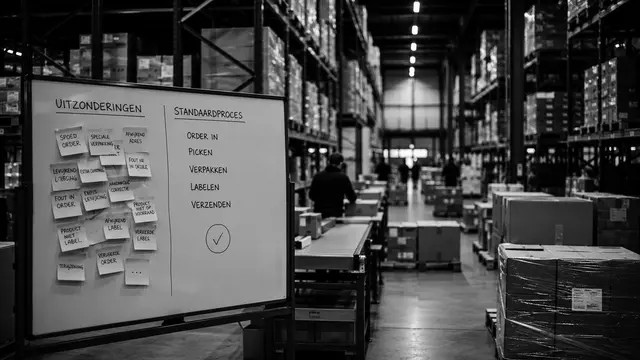
Suddenly it turns out that important knowledge is not recorded anywhere. Colleagues do not know exactly which agreements were made with customers. Certain work can only be carried out by one person. Processes that seemed self-evident for years turn out to depend on knowledge that exists solely in the head of one employee.
A risk created by quality
What strikes me is that this situation usually does not arise because of poor employees, but precisely because of good ones. They solve problems before others see them, know all the exceptions within the process and help colleagues when something is unclear. As a result, a situation slowly develops in which more and more knowledge and responsibility ends up with the same person.
For the daily operation, that often feels efficient. Problems are solved quickly and the organisation benefits from the experience of these employees. In the longer term, however, a dependency develops that keeps growing.
Sharing knowledge, making processes transferable
That is exactly why the strongest organisations I encounter are not dependent on individual employees, however good those employees may be. They make sure knowledge is shared, processes are understandable and work remains transferable.
That does not mean everyone has to be able to do everything. It does mean an organisation must look critically at situations in which only one person knows how something works.
An interesting test is to ask yourself what happens if an employee is unexpectedly absent tomorrow. Can the work continue? Do colleagues know what needs to be done? Are processes sufficiently documented? Or does uncertainty immediately arise about how certain work should be carried out?
Practice shows that many organisations only discover this dependency when it is already too late.
Experience as a strength, not a dependency
That is why I believe a good process should not depend on one person. Of course, some employees will always have more experience than others. That is normal and often desirable. The difference lies in whether that experience makes the organisation stronger, or whether the organisation becomes dependent on it. Those who actively use that experience will also discover that employees often know what is going wrong before management does.
The best employees are often enormously valuable to an organisation. At the same time, they sometimes also represent the biggest operational risk.
Not because they should be indispensable, but precisely because no organisation can afford to depend on one person.
The most robust operation is therefore not the operation with the best employee.
It is the operation in which that best employee can go on holiday for two weeks without any problems.
Frequently asked questions
Why is it a risk when all the knowledge sits with one employee?
Because the operation becomes dependent on knowledge that is not recorded anywhere. As long as that employee is present you barely notice it, but when they fall ill, take a holiday or leave, it suddenly turns out that colleagues do not know which agreements were made or how certain work should be carried out. The risk usually arises not because of poor employees but because of good ones: they solve everything, so more and more knowledge ends up with the same person.
How do you know if your operation depends too much on one person?
A simple test is to ask yourself what happens if that employee is unexpectedly absent tomorrow. Can the work continue, do colleagues know what needs to be done and are processes sufficiently documented? If uncertainty arises straight away, the dependency is too great. In practice, many organisations only discover this when it is already too late.
How do you stop knowledge from disappearing when an employee leaves?
You prevent knowledge loss by actively sharing it, documenting processes in an understandable way and keeping work transferable. That does not mean everyone has to be able to do everything, but no task should depend on one person who is the only one who knows how it works. A good yardstick: your best employee should be able to go on holiday for two weeks without any problems.

Sjef Kerkvliet is the founder of OctaFlow and has more than 15 years of experience in intralogistics, warehouse optimisation and internal transport. Drawing on his hands-on experience, he helps organisations with questions around goods flows, process improvement, warehouse layout, automation and operational efficiency.
Want to talk about your operation?
A logistics or operational challenge? OctaFlow is happy to think along. No fuss, just a good conversation.