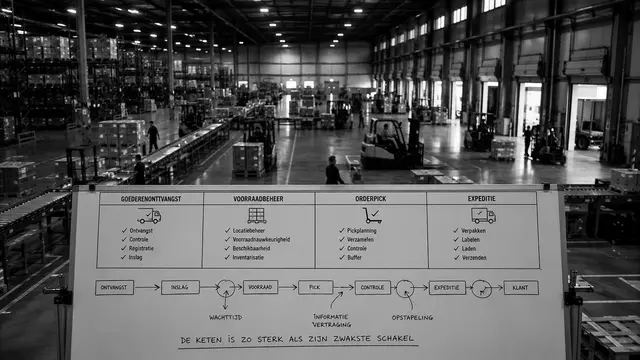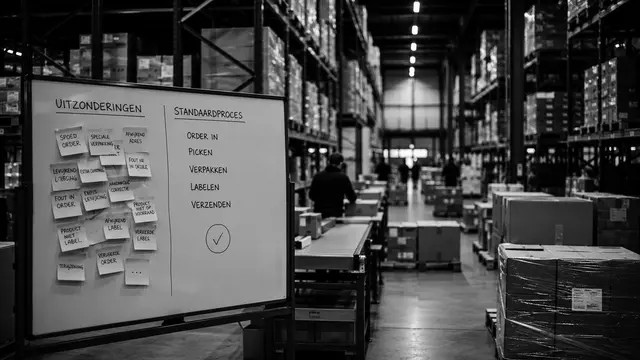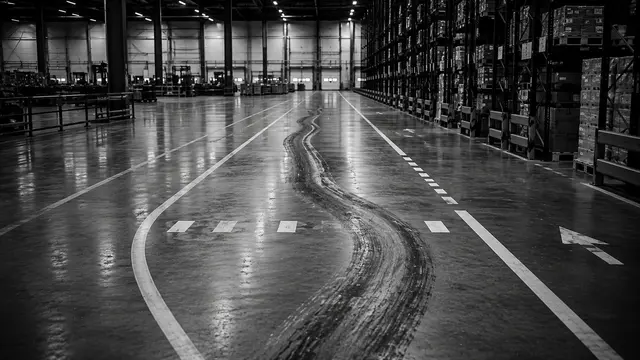
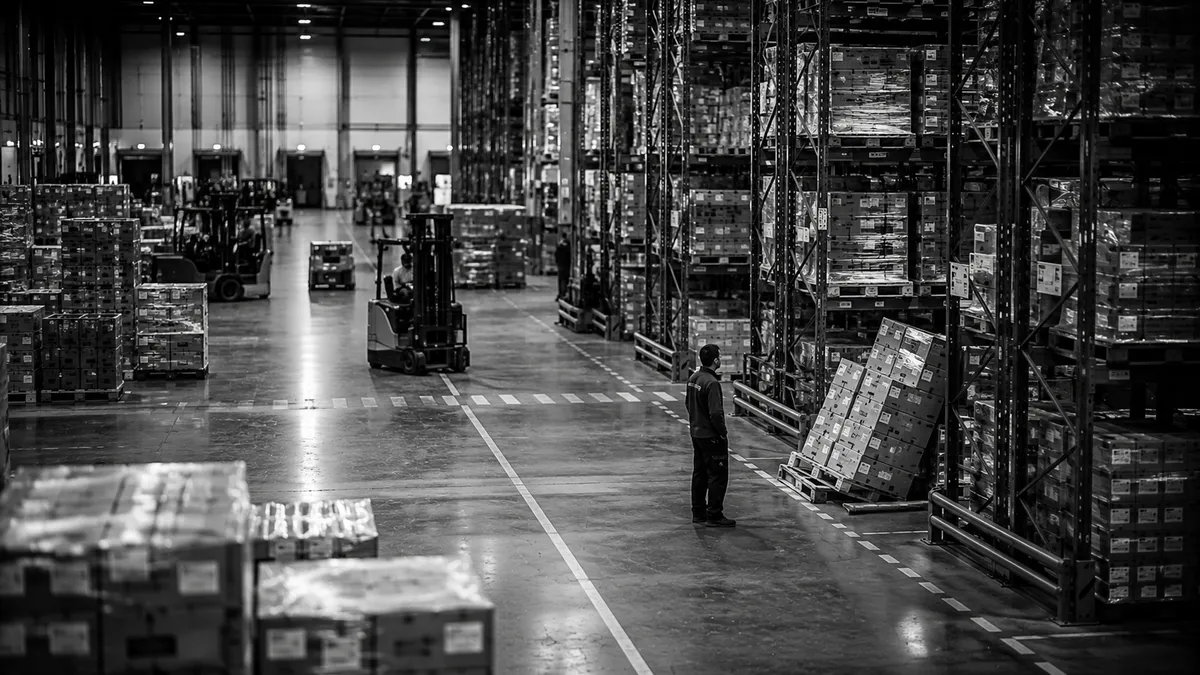
When organisations want to improve their performance, they often look at reports, KPIs, dashboards and management information. That is logical. Measuring matters and figures provide insight into how an operation performs. Yet during warehouse visits I regularly notice something: the people who do the work every day often know where problems arise long before the systems that eventually measure those problems.
Shop floor knowledge is the practical, often unspoken information employees gain daily about the operation, and it typically surfaces earlier than it does in dashboards or management reports.
An order picker knows exactly which locations are illogically arranged. A goods-receiving employee knows which suppliers structurally cause disruptions. A planner knows which agreements cause problems week after week. And an operator often senses weeks before a breakdown becomes visible that a machine is not functioning optimally. Not because these employees have access to more data, but because they stand in the middle of the process every day and directly experience the consequences of choices made earlier in the chain.
Plenty of data, little shop-floor knowledge
What I find interesting is that many organisations collect enormous amounts of data, but make relatively little use of the knowledge present on the shop floor every day. When a KPI deteriorates, an investigation is launched. When a dashboard shows a deviation, an analysis is started. In practice, it then regularly turns out that employees had spotted the problem much earlier. It just never surfaced in a meeting, or nobody had ever asked them what they thought.
That does not mean employees always have the solution. It does mean they often possess information that is not available anywhere else. That is exactly why I see the strongest organisations actively listening to the people who work with the processes every day. Not only when problems arise or during an annual employee survey, but structurally, as part of the daily operation.
Why signals remain unspoken
At the same time, I notice that many employees do not always share these signals with their supervisor or manager. Not because they do not see the problem, but because they sometimes feel nothing will be done with it anyway. In other cases, people do not want to be known as the one who constantly criticises or raises problems. As a result, much valuable knowledge remains unspoken, while it is precisely that knowledge that can help improve processes.
Interestingly, I regularly see the same employees speak openly about what is going on as soon as an external party talks to them. Not because an external adviser necessarily asks better questions, but often because he stands outside the daily organisation. There is no hierarchical relationship, no performance review and no history of previous discussions. This often produces surprisingly honest conversations in which employees explain exactly what costs them time every day, which disruptions keep returning and which processes they believe could be better.
No big investments, but big insights
During such conversations I regularly hear improvement points that have been known on the shop floor for years, but never structurally reached the right place. These are by no means always large investments or complex projects. Far more often it is about an illogical storage location, an outdated work instruction, a form nobody understands or an agreement between departments that does not work in practice. Precisely because employees face these situations every day, they often recognise waste sooner than people further removed from the process.
That makes shop-floor knowledge enormously valuable. Not only because employees flag problems, but also because they are often the first to notice when a change works out differently in practice than was conceived on paper. Where management reports mainly show that something is going wrong, employees can often explain why it is going wrong. After all, practice always beats the process.
From executor to co-owner
The best warehouses I visit are therefore characterised not only by good systems, clear processes or strong performance. They are characterised above all by employees feeling heard and being actively involved in improvements. In those organisations a culture emerges in which people are not merely executors of a process, but become co-owners of its improvement. Small problems are solved sooner, improvements are implemented faster and processes keep developing.
However good a dashboard may be, no system sees as much of the daily operation as the people standing in the middle of it. And that is exactly why employees often know what is going wrong before management does.
Frequently asked questions
Why do employees often know what is going wrong before management does?
Because employees stand in the middle of the process every day and directly experience the consequences of choices made earlier in the chain. Dashboards and KPIs mainly show that something is going wrong, while employees can often explain why it is going wrong. That is why they usually spot problems before the systems that eventually measure them.
How do you use shop-floor knowledge to improve your processes?
By structurally listening to the people who work with the processes every day, not only when problems arise or during an annual employee survey. The strongest organisations actively involve employees in improvements, so they feel heard and become co-owners of the improvement. Small problems are then solved sooner and improvements are implemented faster.
Why do employees not share problems with their manager?
Often because they feel nothing will be done with it anyway, or because they do not want to be known as the one who constantly criticises. As a result, much valuable knowledge remains unspoken. The same employees often do speak openly to an external party, because there is no hierarchical relationship, performance review or history of previous discussions.

Sjef Kerkvliet is the founder of OctaFlow and has more than 15 years of experience in intralogistics, warehouse optimisation and internal transport. Drawing on his hands-on experience, he helps organisations with questions around goods flows, process improvement, warehouse layout, automation and operational efficiency.
Want to talk about your operation?
A logistics or operational challenge? OctaFlow is happy to think along. No fuss, just a good conversation.