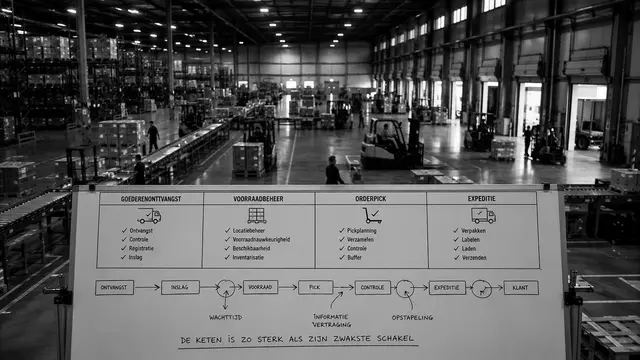
Virtually every organisation has processes. Work instructions, procedures and agreements are drawn up to carry out work safely, efficiently and predictably. And that is necessary. Without clear processes it becomes difficult to safeguard quality, train new employees and keep a growing organisation manageable.
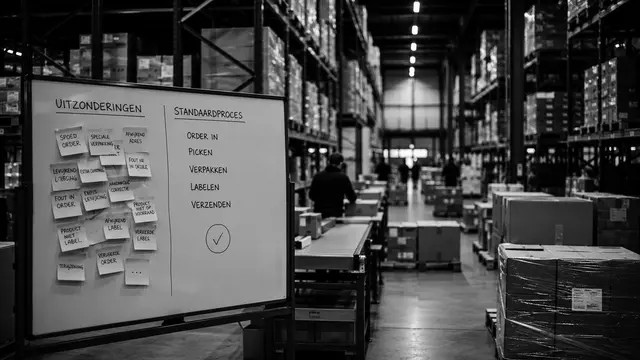
The gap between process and practice appears when shop floor employees deviate from the prescribed process: those deviations are often not a mistake, but a signal that the process itself no longer fits the practice.
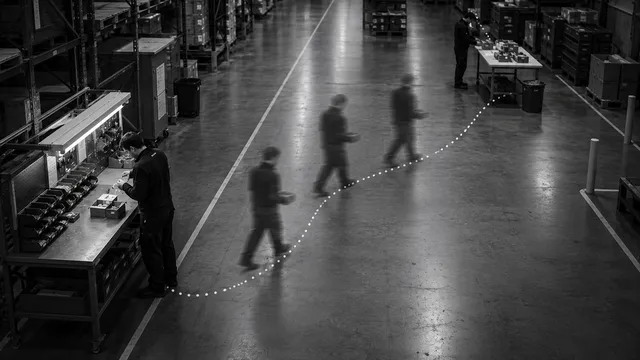
Yet during warehouse visits I regularly notice something. On paper the process is usually fine, while daily practice looks different. Employees carry out certain steps differently from what is described, skip parts or have developed their own way of working. That is often seen as a problem, but in reality there is frequently an interesting lesson behind it.
Why employees deviate
When employees structurally deviate from a process, the first reaction is usually to look at the employee. Why is the process not being followed? Why are people not sticking to the agreements? Although those are logical questions, in practice the real cause often turns out to lie elsewhere.
Many processes are designed on the basis of assumptions that were perfectly logical at the time. During a project, implementation or improvement programme, careful thought is given to how work should ideally be carried out. Then reality changes. Customers impose different requirements, volumes grow or shrink, product ranges change and employees discover in daily practice where bottlenecks arise.
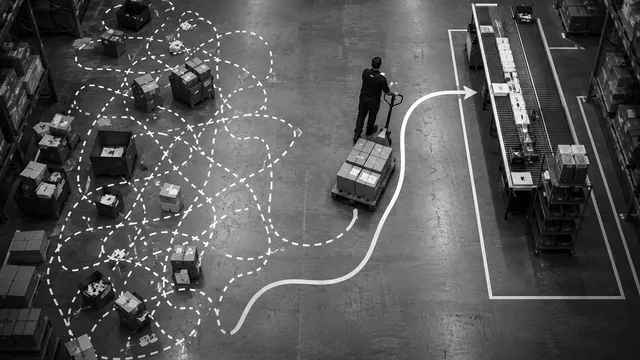
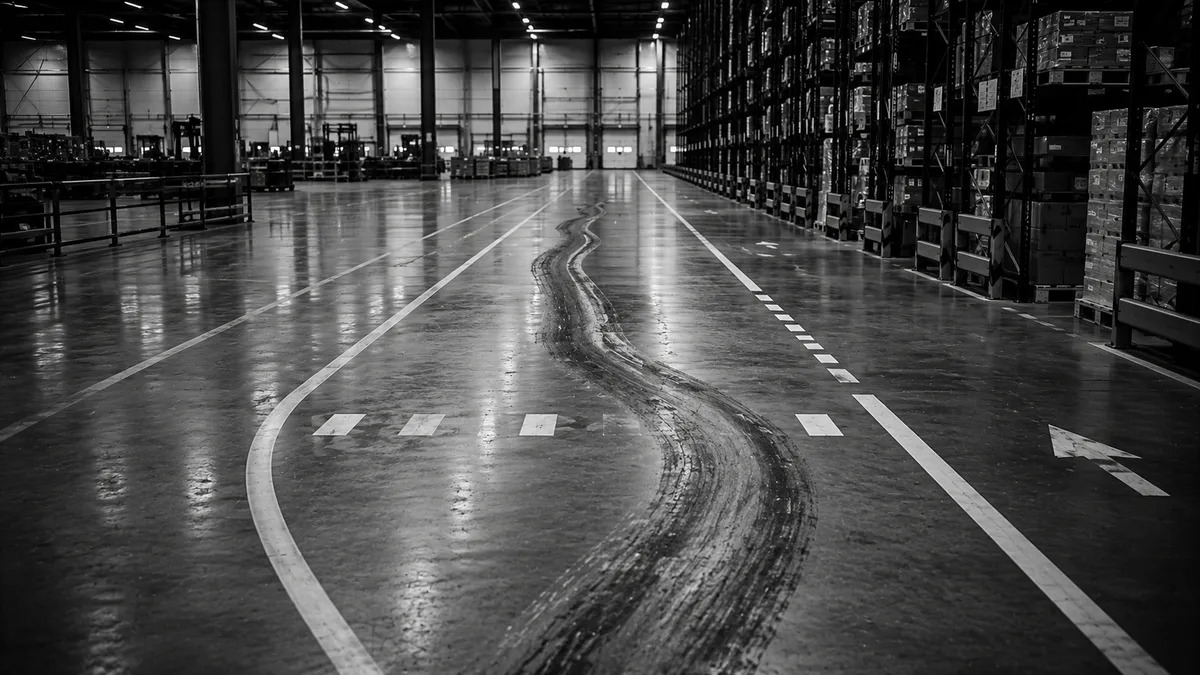
As a result, a gap slowly develops between the process as it was once conceived and the process as it is actually carried out.
What I find interesting is that employees rarely deviate because they consciously want to ignore rules. Far more often, they are trying to do their work as well as possible within the circumstances they work in every day. When a certain step takes unnecessarily long, a work instruction no longer fits reality or a procedure is awkwardly designed, an alternative way of working emerges naturally.
Deviations as a source of information
You see this everywhere. Employees develop clever shortcuts, make practical arrangements with colleagues or adjust their work so it runs more efficiently. In the short term that may seem undesirable, but it often says something valuable about the quality of the original process.
That is exactly why, during analyses, I look not only at the official process but also at the deviations from it. When several employees skip the same step or use the same workaround, that is rarely a coincidence. Practice is usually showing where a process no longer fits reality. It is no accident that a warehouse is often smarter than its processes.
I regularly encounter situations where a procedure looks perfectly logical on paper, but where the shop floor found a better way to achieve the same goal months or even years ago. That does not automatically mean the shop floor is right, but it does mean there is something to learn. Instead of correcting immediately, it is often more interesting to investigate why people chose that alternative way of working.
Not all deviations are desirable
This obviously does not mean processes should be ignored. There are plenty of situations where procedures have been deliberately designed around safety, quality or legal requirements. In those cases, deviating can carry significant risks. But even then it remains valuable to investigate why employees still choose a different way of working. When a process constantly has to be enforced, it is wise to check whether the process still fits daily practice.
Processes that keep learning
The strongest organisations I encounter therefore do not see processes as something static. They understand that a process is never finished and that daily practice is an important source of information. Employees often know what is going wrong before management does. Employees are seen there not only as executors of a process, but also as people who provide valuable feedback on how that process actually functions.
This creates a culture in which processes keep developing. Not on the basis of assumptions, but on the basis of what actually happens on the shop floor. New insights are incorporated, bottlenecks are addressed and improvements emerge from practice rather than exclusively from meeting rooms.
In the end, that may be the most important lesson. A process can be perfectly designed on paper, but practice determines whether it actually works. Organisations willing to learn from that practice often discover improvement opportunities that would otherwise remain invisible.
Because however well a process has been designed, in the end practice almost always wins.
Frequently asked questions
Why do employees deviate from work processes?
Employees usually deviate because the process no longer fits daily practice, not because they deliberately want to ignore the rules. Processes are designed around assumptions that were once correct, but customer requirements, volumes and product ranges change. When a step takes unnecessarily long or an instruction is awkwardly designed, an alternative way of working emerges naturally.
Is it a problem when the shop floor does not follow the process?
Usually not, because deviations are often a valuable signal that the process no longer fits reality. When several employees skip the same step or use the same workaround, that is rarely a coincidence. Only with procedures built around safety, quality or legal requirements can deviating carry real risks.
How do you deal with process deviations on the shop floor?
Start by investigating why employees have chosen a different way of working, instead of correcting them straight away. The shop floor has often found a better way to achieve the same goal, although that does not automatically mean it is right. Use those insights to adjust the process so it keeps matching what actually happens day to day.

Sjef Kerkvliet is the founder of OctaFlow and has more than 15 years of experience in intralogistics, warehouse optimisation and internal transport. Drawing on his hands-on experience, he helps organisations with questions around goods flows, process improvement, warehouse layout, automation and operational efficiency.
Want to talk about your operation?
A logistics or operational challenge? OctaFlow is happy to think along. No fuss, just a good conversation.