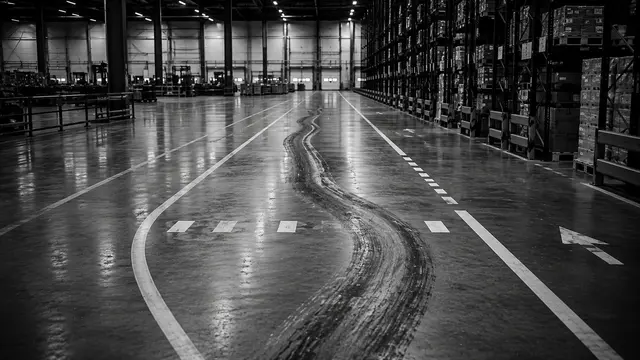
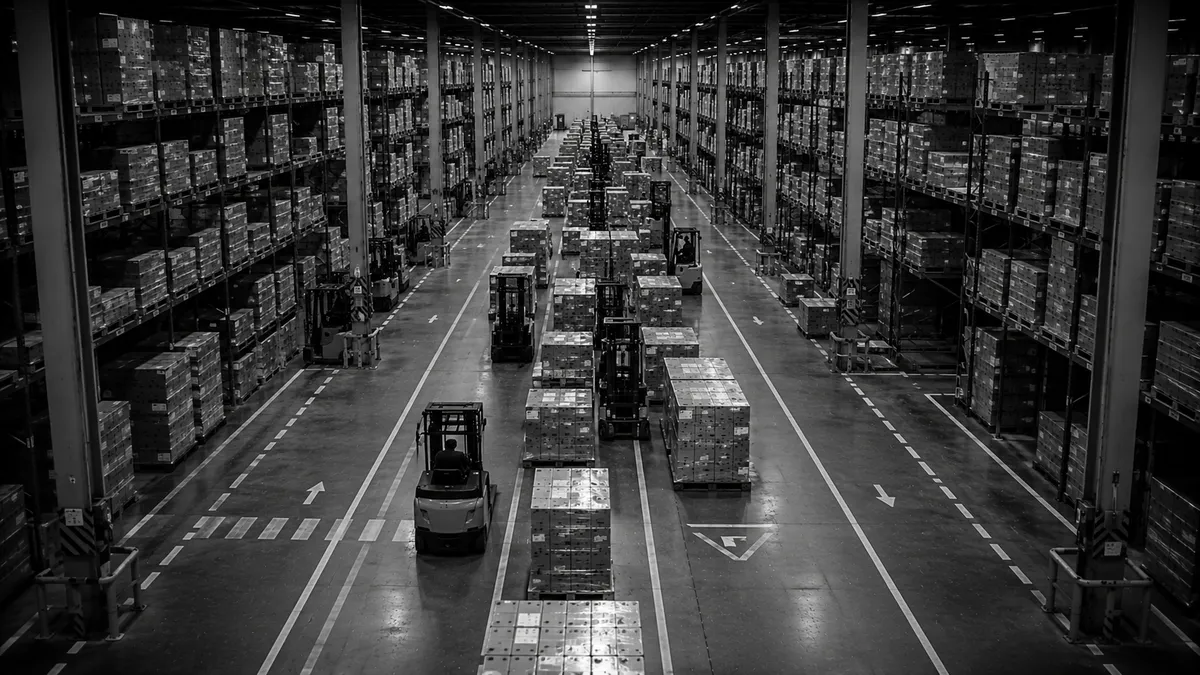
Virtually every logistics organisation knows them. Problems that should have been solved long ago, yet keep coming back. Damaged racking in the same location. Delays that occur around the same time every week. Recurring errors in orders. Discussions between departments about the same topics. Or a process that constantly has to be corrected to keep the operation running.
Recurring warehouse problems are issues that keep reappearing despite repeated fixes, and almost always point to an underlying, structural cause that has not yet been addressed.
What strikes me is that these problems are usually not ignored. On the contrary: people generally work hard to solve them. Employees jump in, planners shuffle work around, supervisors take decisions and experienced colleagues devise practical solutions. The operation keeps running and the customer often notices little. And that is exactly where the danger lies.
Good at solving, blind to the cause
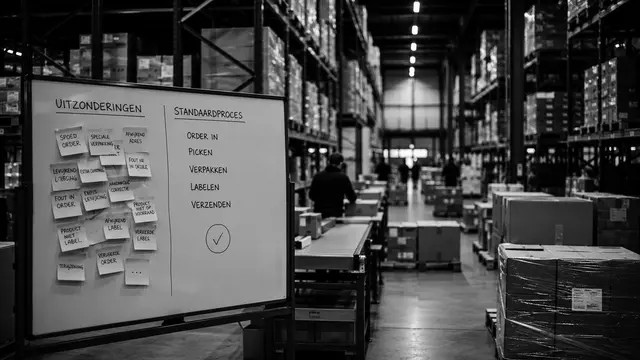
Many warehouses become extremely good at solving problems, so good, in fact, that less and less attention is paid to the question of why those problems keep coming back. When an order is about to leave late, people switch gears. When a lorry arrives unexpectedly, space is made. When a process stalls, someone usually knows a way to get it sorted anyway. In the short term, that is valuable, without that flexibility, much of the logistics world simply would not function.
But when the same disruption returns every week, the question is whether it is still an incident. In many cases, it has become part of the process, just as temporary solutions rarely stay temporary.
When does an incident become a pattern?
The tricky part is that a recurring problem rarely announces itself as a big alarm. It feels more like a series of separate, explainable moments, until you line them up next to each other. These signals suggest a problem is no longer incidental:
Signs a problem has become structural:
- the same disruption keeps returning weekly or monthly
- everyone on the shop floor already knows the problem before it happens
- there is a fixed, informal workaround for dealing with it
- no one can say any more when it first started
- the fix is repeated every time, never permanently implemented
- the problem is written down nowhere, it only lives in employees' heads
Everyone already knows the problem
I regularly see this in conversations on the shop floor. People often know exactly which problems are going to arise before they actually happen. They know which supplier regularly causes delays, which work causes congestion every Monday and which processes need extra attention to keep running smoothly. Employees often know what is going wrong before management does.
The remarkable thing is that this knowledge is often widely present within the organisation. Everyone knows the problem, everyone knows how to deal with it, and that is exactly why the urgency to tackle the underlying cause disappears. The problem feels manageable, until you start looking at it critically. Because every recurring disruption costs time, attention and capacity. Perhaps not visibly in a single day, but certainly on an annual basis: employees spend time correcting errors, supervisors are busy resolving exceptions, planners adjust schedules, and meanwhile the feeling grows that the workload keeps increasing.
The cause is rarely where the problem shows
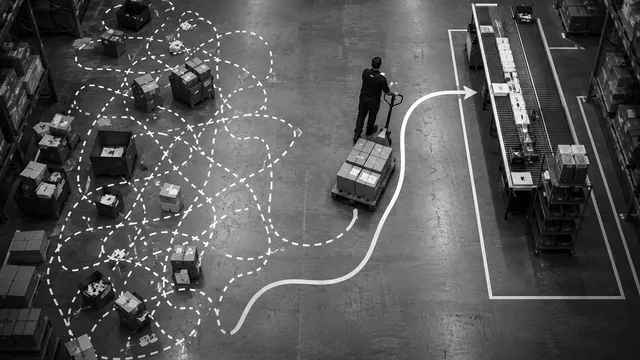
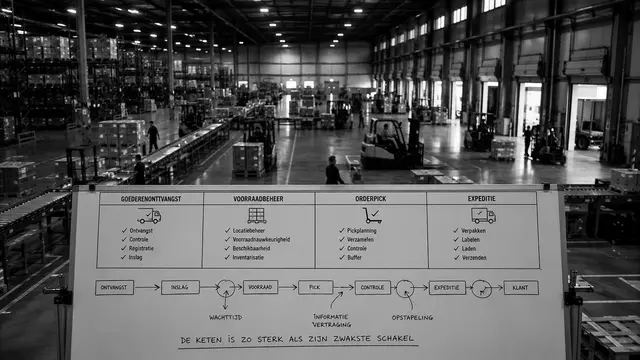
What is interesting is that the cause often does not sit where the problem becomes visible. An error in dispatch can have its origin in goods receiving. Damage to racking can be caused by an illogical driving route. A capacity shortage can be the result of a planning decision made hours earlier. As a result, people often work on fighting symptoms while the real cause remains out of sight.
That is exactly why structural improvement usually does not start with the question of how a problem should be solved, but why it arises at all. That question is asked surprisingly rarely, not because organisations do not consider it important, but because the daily operation demands attention. When a problem has to be solved today, it often feels more logical to act immediately than to free up time for a deeper analysis. Yet that is often where the biggest improvement opportunities lie.
From symptom to cause: a practical approach
Investigating why a problem keeps coming back doesn't have to be a big project. In practice, a simple, repeatable sequence works best:
- Log the problem separately from the fix. Note when a disruption occurs, even if it's already resolved the same day. Without logging, a pattern stays invisible.
- Look for repetition, not incidents. One report means little. The same report coming back three times in a month tells a different story.
- Trace the problem back to its starting point. For every symptom, ask what preceded it, the source often sits one or more steps earlier in the process.
- Involve the people who already know the problem. They usually already know where things go wrong, that knowledge has simply never been formally recorded or turned into a structural fix.
- Fix the cause, not just the symptom. That often takes more time than today's quick correction, but it prevents the same disruption from returning next month.
The strongest operations I encounter are not necessarily the ones with the fewest problems, every organisation has disruptions, unexpected situations and challenges. The difference lies in how they are handled: some organisations solve problems, other organisations investigate why those problems keep arising. That seems a small difference, but in practice it often determines whether a problem resurfaces next week. A problem that occurs once is annoying. A problem that comes back every week is usually no longer an incident, it is a process that demands attention.
Frequently asked questions
Why do the same problems keep coming back in a warehouse?
Usually because the symptom gets solved while the real cause remains out of sight. Many warehouses become so good at resolving disruptions that the question of why a problem keeps arising is hardly ever asked. As a result, the same problem simply resurfaces the following week.
When is a disruption in the warehouse no longer an incident?
A problem that comes back every week is usually no longer an incident, but has become a fixed part of the process. It often feels manageable because everyone knows how to deal with it. Yet every recurring disruption costs time, attention and capacity, and on an annual basis that adds up considerably.
How do you tackle recurring warehouse problems structurally?
By starting not with the question of how to solve the problem, but why it arises in the first place. The cause rarely sits where the problem becomes visible: an error in dispatch, for example, can have its origin in goods receiving. Finding that underlying cause prevents the same problem from resurfacing next week.

Sjef Kerkvliet is the founder of OctaFlow and has more than 15 years of experience in intralogistics, warehouse optimisation and internal transport. Drawing on his hands-on experience, he helps organisations with questions around goods flows, process improvement, warehouse layout, automation and operational efficiency.
Want to talk about your operation?
A logistics or operational challenge? OctaFlow is happy to think along. No fuss, just a good conversation.