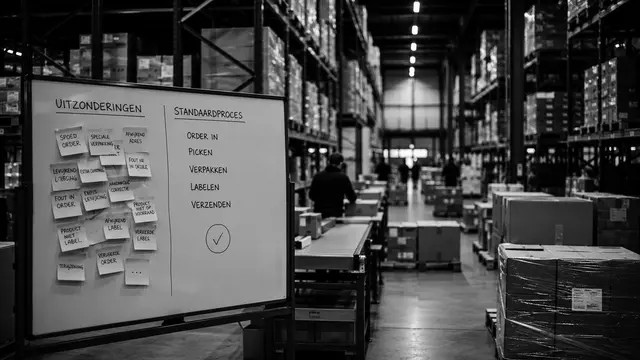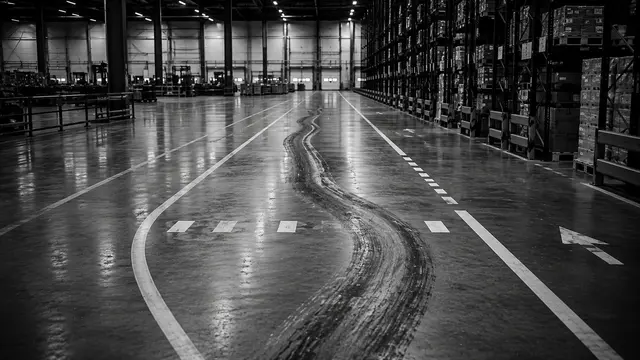
People are creative. That is often one of the greatest strengths within a warehouse. When a practical problem arises, it usually does not take long before someone has devised a solution. A handy adjustment to a workstation, an improvised holder for tools or a quick repair so the work can continue straight away.
A temporary fix in a warehouse is an improvised adjustment meant as a stopgap, but in practice it often stays in place for years without ever being properly resolved.
In itself, there is nothing wrong with that. In fact, without this kind of initiative many logistics operations would be far less flexible.
Yet during warehouse visits I regularly see temporary solutions take on a life of their own. What was once meant as a quick stopgap for a problem of a few days or weeks turns out to still be part of the daily operation months or even years later.
With the best of intentions
This often happens with the best of intentions.
A driver has no good place to store pens, documents or scanners and makes something himself. A damaged part is temporarily secured so the work can continue. An employee finds a way to suffer less from draught or rain. The original problem is usually quite understandable and often even legitimate.
That is exactly why these kinds of solutions persist.
The problem is not the need, but the fact that the temporary solution eventually becomes the definitive one.
From pen tray to cleaning invoice
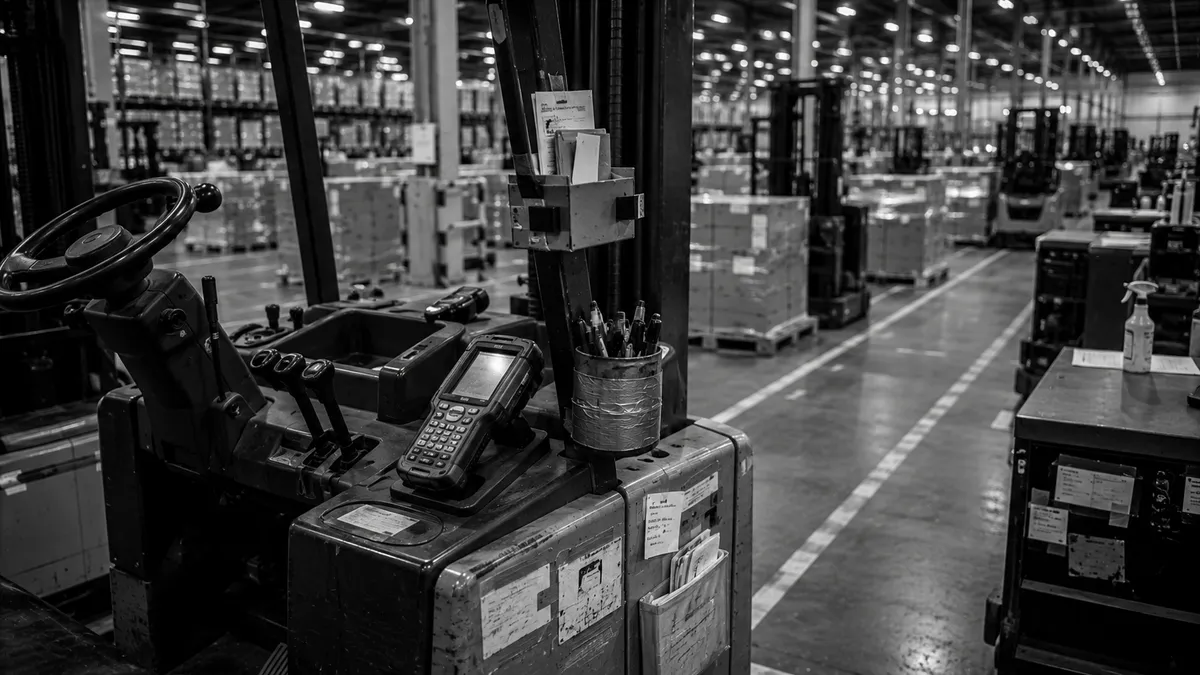
What starts as a practical adjustment can in time lead to extra costs, a less professional appearance or even safety risks. Almost everyone who regularly visits warehouses knows the examples. An old tape roll converted into a pen tray and taped to a truck. Quite creative in itself, but at the same time a clear signal that a proper solution to the problem was never devised. The same goes for stickers plastered all over equipment because drivers have no fixed place for documents, notes or temporary labels. Over time, entire vehicles are covered in stickers, while nobody wonders any more how that actually came about.
You regularly see the same with scanners. In many warehouses, drivers have scanners that are used intensively every day, but for which a proper holder was never fitted to the vehicle. The result is that the scanner is laid loose on the truck or wedged between other items. That goes well for weeks or months, until that one sharp turn is taken or a threshold is hit just a little harder than usual. The scanner slides off the vehicle and lands on the floor.
At that moment it often becomes clear that a scanner is considerably more expensive than the improvised solution that was used for years. Modern scanners are designed for intensive use, but not for repeatedly falling from a vehicle onto a concrete floor. While a solid scanner holder often costs just a few tens of euros, a damaged scanner quickly leads to repair costs, replacement or lost productivity. It is a fine example of how a small investment can sometimes prevent a much larger cost.
Ultimately this leads not only to an untidy appearance, but often also to extra cleaning work, discussions when returning equipment and unnecessary costs that could easily have been avoided. Anyone who has ever returned a leased forklift completely covered in stickers knows that a cleaning invoice regularly follows.
When improvisation affects safety
You see the same with temporary repairs. A roll of tape, a cable tie or a home-made construction can sometimes be a perfectly good emergency measure to finish a working day. The risk arises when nobody comes back to implement the definitive solution. Then a temporary repair slowly turns into a permanent part of the installation or the equipment.
A situation I also regularly encounter is home-made canopies and windshields on material handling equipment. Cardboard sheets, pieces of tarpaulin or other materials are used to protect drivers from rain, draught or headwind. The thinking behind it is understandable. Especially in large distribution centres or in work that regularly involves driving outside, it can provide extra comfort.
The problem arises when these solutions come at the expense of safety. A forklift by nature already offers limited visibility due to the mast, the load and the construction of the vehicle. Serious accidents with material handling equipment still happen every year, some of them sadly even fatal. Good visibility is therefore not a luxury, but an essential condition for safe working. When an opaque piece of tarpaulin or cardboard is then added, that visibility is further restricted, while the original problem could often have been solved in a much safer way.
What makes this all the more striking is that professional solutions already exist for many of these situations. Manufacturers supply factory-fitted safe canopy constructions, transparent screens, document holders, scanner holders, storage options and other provisions designed specifically for these applications. Yet they are not always used, because the improvised solution seems faster, easier or cheaper.
In the short term, that is often true.
In the longer term, however, the bill usually ends up somewhere else. In extra maintenance, higher cleaning costs, a less professional appearance, safety risks or simply frustration because the same temporary solution keeps demanding attention.
Temporary must stay temporary
The strongest organisations I visit do not stand out because they never improvise. In a dynamic operation, that is simply not realistic. The difference is that temporary solutions actually stay temporary. As soon as a problem keeps coming back, a structural solution is sought that fits the operation, the safety requirements and the company's image. That contributes directly to a good working environment.
That sometimes requires an investment, but far more often it starts with a simple question: if we have been solving this problem the same way for months or years, is it actually still a temporary solution?
Because as soon as a temporary solution becomes part of the daily operation, it is usually time to look for something better.
Frequently asked questions
Why do temporary fixes in a warehouse often become permanent?
Because the need behind them is usually legitimate and the quick fix removes the problem straight away, hardly anyone ever comes back for a definitive solution. What was meant to bridge a few days or weeks is often still part of the daily operation months or even years later. The problem is not the need itself, but the fact that the structural solution never follows.
What are the risks of improvised solutions in a warehouse?
Improvised solutions often lead over time to extra costs, a less professional appearance and sometimes even safety risks. A loose scanner that slides off a truck quickly costs more than a solid holder of a few tens of euros, and a home-made canopy of cardboard or tarpaulin restricts the forklift driver's visibility. That visibility is essential, because serious accidents with material handling equipment still happen every year.
How do you stop quick fixes from becoming permanent in the warehouse?
By deliberately keeping temporary solutions temporary and, for recurring problems, choosing a structural solution that fits the operation, the safety requirements and the company's image. A simple check helps: if you have been solving a problem the same way for months or years, is it really still a temporary fix? For many situations, professional factory-fitted solutions already exist, such as scanner holders, document holders and transparent screens.

Sjef Kerkvliet is the founder of OctaFlow and has more than 15 years of experience in intralogistics, warehouse optimisation and internal transport. Drawing on his hands-on experience, he helps organisations with questions around goods flows, process improvement, warehouse layout, automation and operational efficiency.
Want to talk about your operation?
A logistics or operational challenge? OctaFlow is happy to think along. No fuss, just a good conversation.