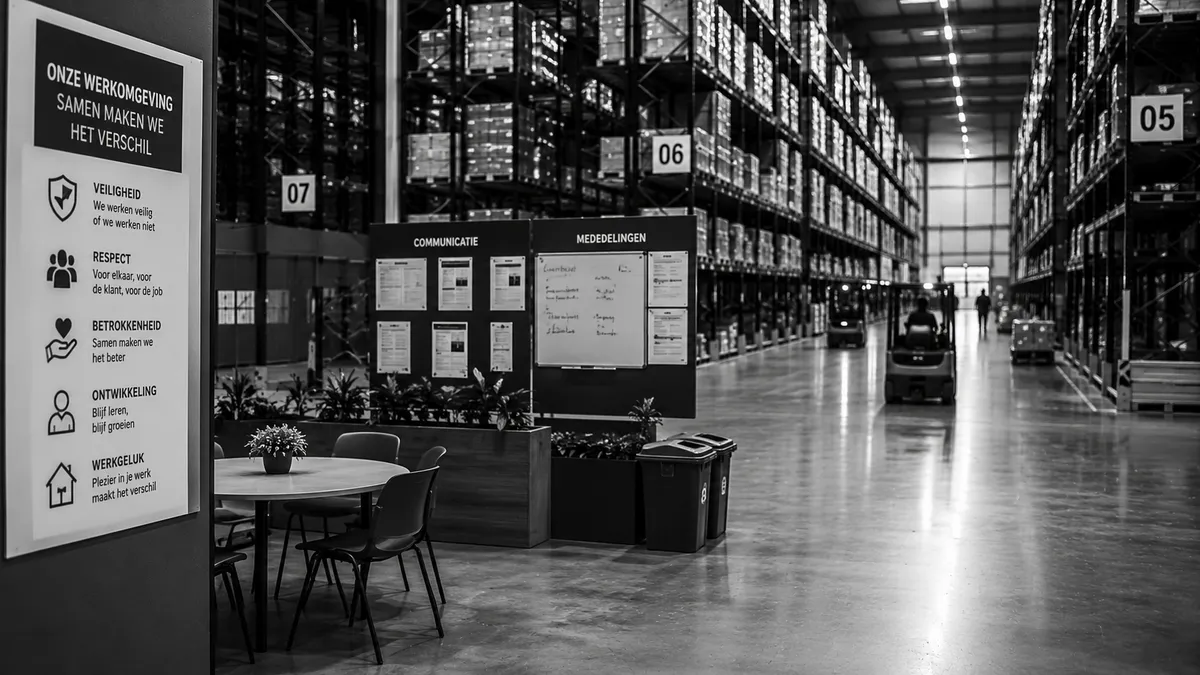
When organisations think about their warehouse, the conversation usually turns to capacity, productivity, storage locations and processes. Understandably so, because in the end the work has to get done.
A good working environment in a warehouse covers more than safety alone: it also includes comfort, clarity and job satisfaction, factors that directly affect both performance and staff retention.
Yet another element is regularly underestimated: the working environment itself. A warehouse is much more than a place where goods are stored and moved. For the people who work there, it is an environment where they spend a large part of their time every day, and that is exactly why the quality of that working environment often has more influence on performance than many organisations think.
The difference is in the details
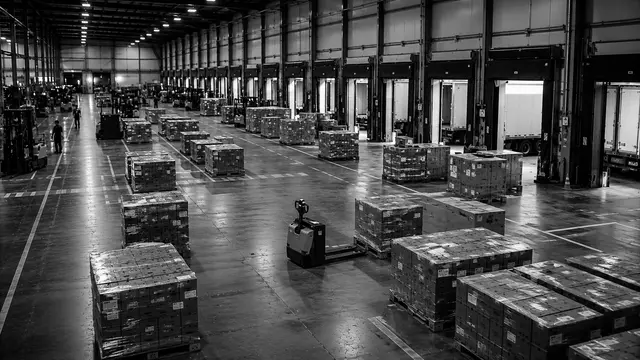
When I visit warehouses, I am regularly struck by how big the difference can be between companies doing comparable work, not only in processes or systems, but above all in the atmosphere of the operation. Some sites immediately feel calm, clear and organised. Others feel hectic, cluttered and restless, even when the work is similar. That difference rarely comes from one big measure, it usually sits in the details.
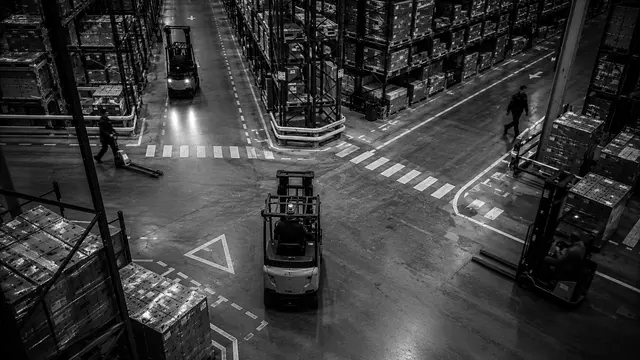
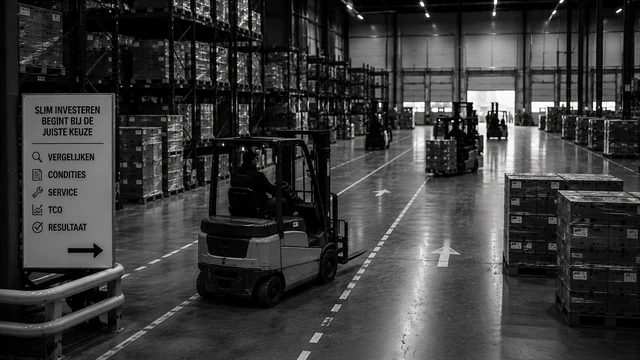
A clean floor, clearly defined work areas, tidy workstations, logical walking routes, sufficient lighting and good communication may not seem like spectacular topics in themselves, yet it is precisely these factors that determine how a working environment is experienced day to day. A simple example is waste on the shop floor: film, strapping bands and packaging material may seem like small details, but they cause unnecessary risks, extra disruptions and an untidy appearance. They also subconsciously send employees a signal about how much the organisation values order and tidiness.
Signals of a strong working environment you can spot quickly:
- a tidy floor, free of film, strapping bands and packaging waste
- clearly marked walking routes and work areas
- sufficient lighting at every workstation, including the corners
- colleagues who call each other out on order and safety without it feeling like criticism
- new colleagues who find their way within a few days
- few improvised "own" fixes for structural problems
How people feel
But a good working environment goes beyond tidiness alone, at least as important is how people feel within an organisation. The labour market makes that more relevant than ever: good logistics employees, order pickers, planners and technical specialists are increasingly hard to find. Many organisations try to retain staff with extra benefits, gym memberships or other perks, and there is nothing wrong with that.
Yet I regularly see that employees mainly stay for something else. Far more often, a pleasant working atmosphere, good colleagues, engaged supervisors and an organisation in which people feel valued turn out to be the decisive factors. Employees who feel heard not only stay longer, they also contribute more actively.
A nice example I once came across was an organisation that offered free Dutch lessons to employees who wanted to improve their language skills. No large automation project or expensive investment, simply a teacher giving lessons on site a few times a week. The effect went far beyond language development: people felt supported, valued and more engaged with the organisation. You will not find initiatives like that in a KPI dashboard, but they often do influence engagement, collaboration and staff retention.
Safety as culture
Safety plays an important role here too. Safety is not just about rules, markings or procedures, it is ultimately about people going home healthy after a day's work. That is exactly why the best working environments are often not the sites with the most rules, but the sites where safety has become part of the daily culture. Where that is not the case, you see it reflected in recurring damage and improvised solutions that rarely stay temporary.
When people feel safe, know what is expected of them and can work in a clean and orderly environment, calm emerges. And it is precisely that calm that often forms the basis for quality, productivity, safety and collaboration. The best warehouses I visit are therefore not always the most advanced or the most automated, they are often simply the places where people enjoy working. And in the end, that may well be one of the most important conditions for a successful operation.
Frequently asked questions
Why is a good working environment in a warehouse so important?
The quality of the working environment often has more influence on performance than organisations think. The difference rarely comes from one big measure, but from details such as a clean floor, clearly defined work areas, logical walking routes and sufficient lighting. When people work in a clear and orderly environment, calm emerges, and it is precisely that calm that forms the basis for quality, productivity and collaboration.
How do you retain good warehouse employees?
Employees mainly stay because of a pleasant working atmosphere, good colleagues, engaged supervisors and the feeling that they are valued. Extra benefits such as gym memberships are fine, but they rarely turn out to be the deciding factor. Small initiatives, such as free language lessons on site, often do more for engagement and retention than large investments.
What does safety as a culture mean in a warehouse?
Safety as a culture means that working safely is part of the daily way of working, rather than something that only exists in rules and procedures. The best working environments are therefore not the sites with the most rules, but the places where safety has become second nature. Where that culture is missing, you see it reflected in recurring damage and improvised solutions that rarely stay temporary.

Sjef Kerkvliet is the founder of OctaFlow and has more than 15 years of experience in intralogistics, warehouse optimisation and internal transport. Drawing on his hands-on experience, he helps organisations with questions around goods flows, process improvement, warehouse layout, automation and operational efficiency.
Want to talk about your operation?
A logistics or operational challenge? OctaFlow is happy to think along. No fuss, just a good conversation.