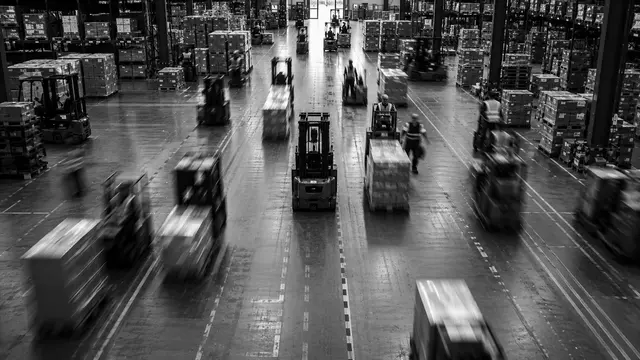
Many warehouses function for years without major changes to the layout. That is not strange in itself. When the operation runs and customers are served, there is often little reason to fundamentally revise the warehouse setup.
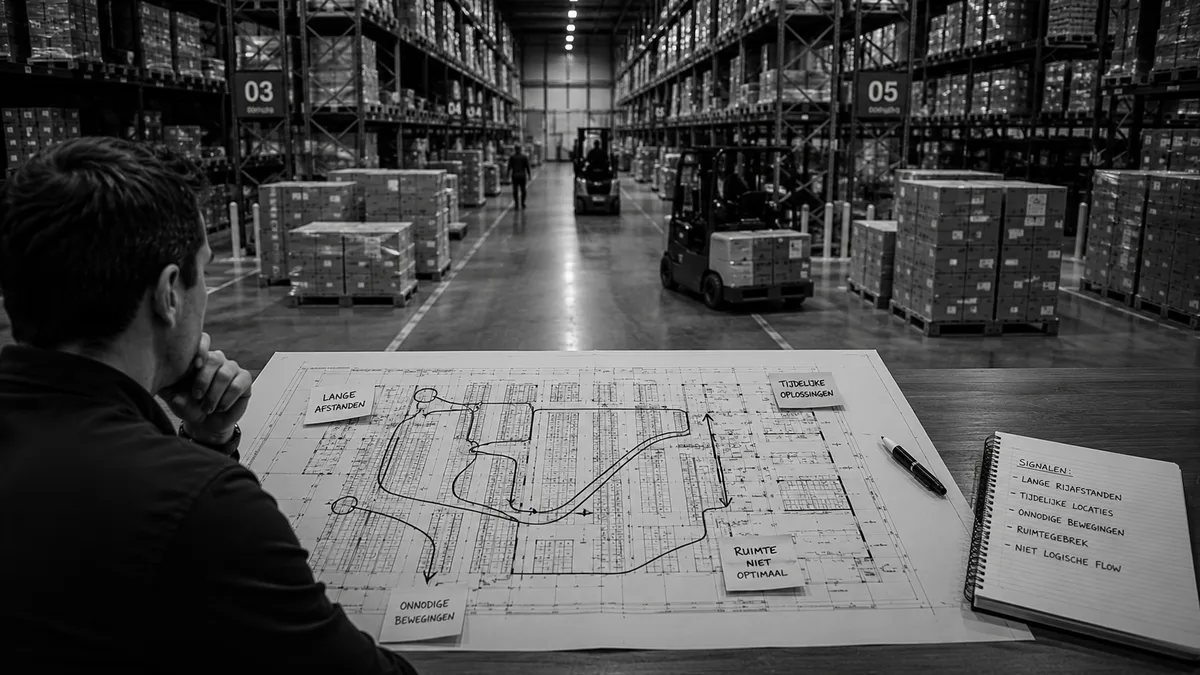
An outdated warehouse layout shows itself through long travel distances, lack of space and temporary locations that have become permanent, signals that the layout no longer fits the current operation.
At the same time, I notice that warehouses often change faster than their setup does.
New customers, changed goods flows, additional product groups and growing volumes mean that an operation can look very different after a few years than at the moment the layout was originally designed.
That is precisely why a situation regularly arises in which a warehouse still functions perfectly well, but is no longer optimally set up for the reality of today.
A warehouse often tells its own story
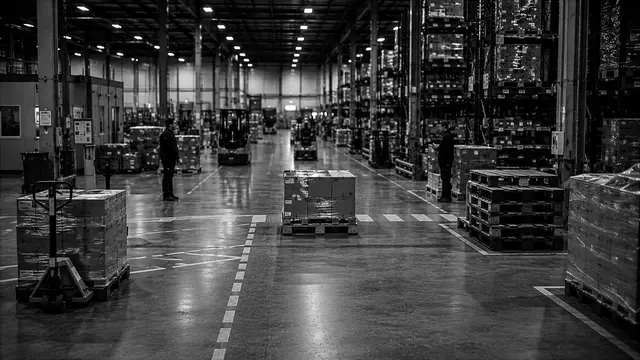
What strikes me when I walk through warehouses is that you can often see how an operation has developed over the years.
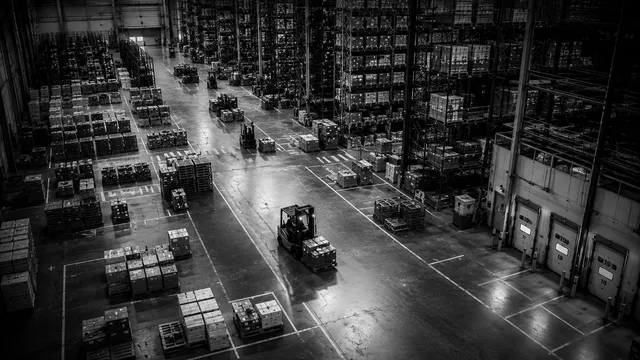
Temporary storage locations that have become permanent. Products that were once an exception but now represent a significant part of the volume. Extra racking that was added because the available space turned out to be insufficient.
In themselves these are often logical choices. After all, the operation has to keep going. At the same time, all these adjustments together can cause the original logic of the layout to slowly disappear.
This creates goods flows that were once efficient, but now cause unnecessarily many movements.
Long distances are often a signal
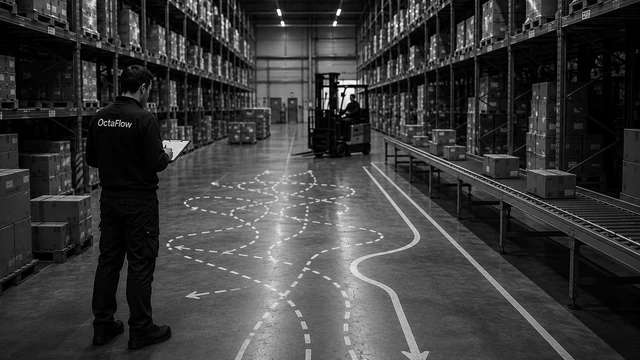
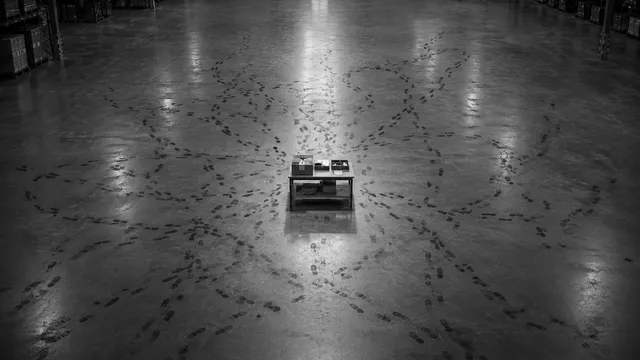
One of the first signals of an outdated layout is the number of metres covered every day.
I have experienced situations in which drivers structurally had to travel long distances between locations that worked closely together. Not because anyone had consciously chosen that, but because the goods flow had changed over the years while the setup had largely stayed the same.
What was once a logical arrangement simply no longer matched daily practice.
It is precisely this that often creates unnecessary transport movements that recur every day and unnoticed cost a lot of capacity.
Lack of space does not always mean there is too little space
When organisations run into space problems, the thought often goes to expansion. That is understandable, but in practice a lack of space is not always caused by a shortage of square metres.
I regularly see warehouses in which storage locations are set up for a situation that was relevant years ago. Product groups have changed, turnover rates have shifted and goods flows look different than in the original design.
As a result, a warehouse can feel full while the available space is not being used optimally.
The question is then not how much space is available, but how that space is used.
The best layout changes with the operation
What makes a good warehouse layout differs per organisation. A distribution centre has different requirements than a production environment, and a fast-growing operation calls for different choices than a stable goods flow.
That is exactly why there is no ideal setup that works for every situation.
What I do see is that successful warehouses regularly test their layout against the reality of the moment. Not because the existing setup is bad, but because the operation changes constantly.
More than just racking and aisles
The discussion about warehouse layouts is ultimately not only about storage locations, racking or driving routes.
It is about the question of whether the warehouse setup still aligns with the way the operation functions today.
What was once a logical choice does not automatically have to still be one.
And that is exactly why an outdated layout is often not the result of a wrong decision, but of an operation that changed faster than the warehouse setup.
Frequently asked questions
When is a warehouse layout outdated?
A layout is not so much outdated due to age, but because it no longer aligns with the current goods flows, volumes or ways of working within the operation.
How do you recognise an inefficient warehouse setup?
Common signals are long travel distances, lack of space, many temporary storage locations, unnecessary movements and goods flows that do not connect logically.
How often should a warehouse layout be evaluated?
That differs per organisation. In the event of growth, changed goods flows or major operational changes, it is wise to reassess the setup.

Sjef Kerkvliet is the founder of OctaFlow and has more than 15 years of experience in intralogistics, warehouse optimisation and internal transport. Drawing on his hands-on experience, he helps organisations with questions around goods flows, process improvement, warehouse layout, automation and operational efficiency.
Want to talk about your operation?
A logistics or operational challenge? OctaFlow is happy to think along. No fuss, just a good conversation.