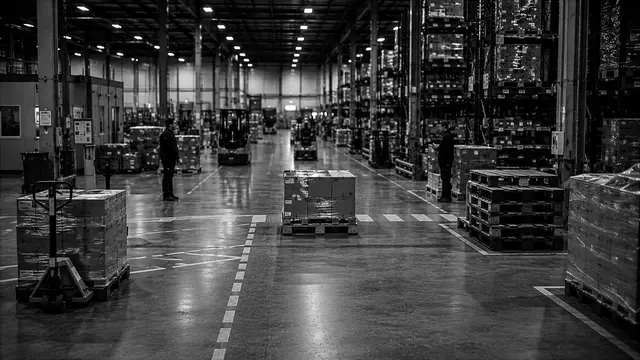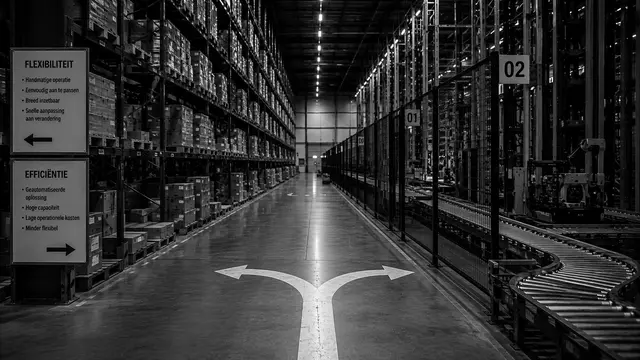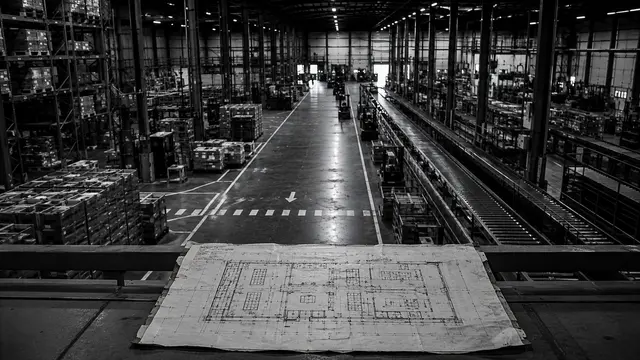
Warehouse optimisation is a term that is used regularly within the logistics sector. Yet during conversations with organisations I notice that people do not always mean the same thing when the topic comes up.
Warehouse optimisation means structurally improving the existing processes, layout and working methods within a warehouse, so the operation runs more efficiently and effectively, without necessarily requiring investment in new systems or extra equipment.
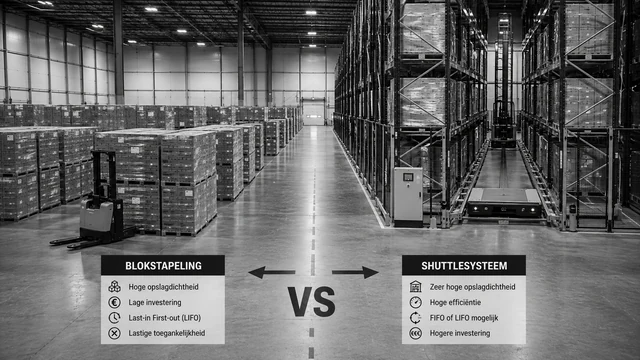
Many people immediately think of automation, new systems or investments in extra equipment. In practice, however, warehouse optimisation often has much more to do with the way existing processes are organised.
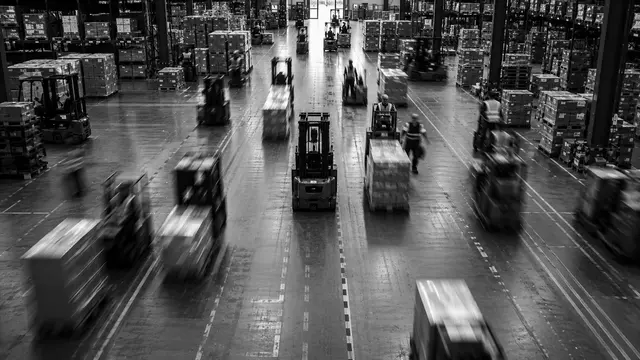
When pressure on an operation increases, the need for extra capacity arises quickly. People look at more staff, extra forklifts or even expanding the warehouse. While that can be the right solution in some situations, I regularly see that the biggest improvement opportunities are already present within the existing operation. Extra forklifts often solve the wrong problem.
Processes often grow gradually
What makes warehouse optimisation interesting is that inefficiencies usually do not arise overnight. Processes often grow gradually along with the organisation.
A temporary solution becomes part of the standard way of working. An extra check is added. A goods flow changes while the layout largely stays the same. In themselves these are often logical choices, but over time these small adjustments can make processes unnecessarily complex.
As a result, the impression sometimes arises that an organisation is short of capacity, while the available capacity is not being used optimally.
Understand before you optimise
What strikes me is that organisations often start thinking about solutions straight away. The question of which investment is needed is sometimes asked before the question of where the actual problem lies.
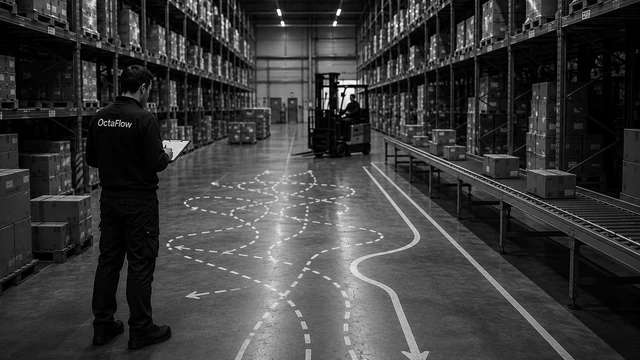
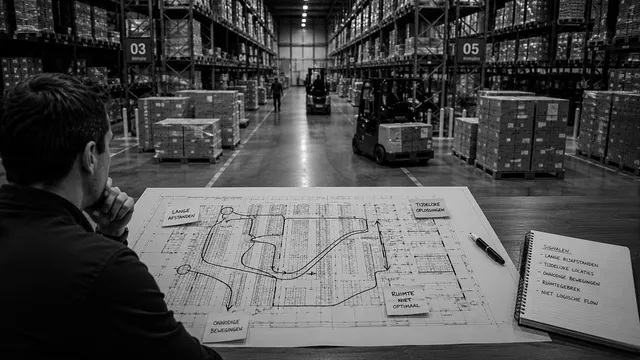
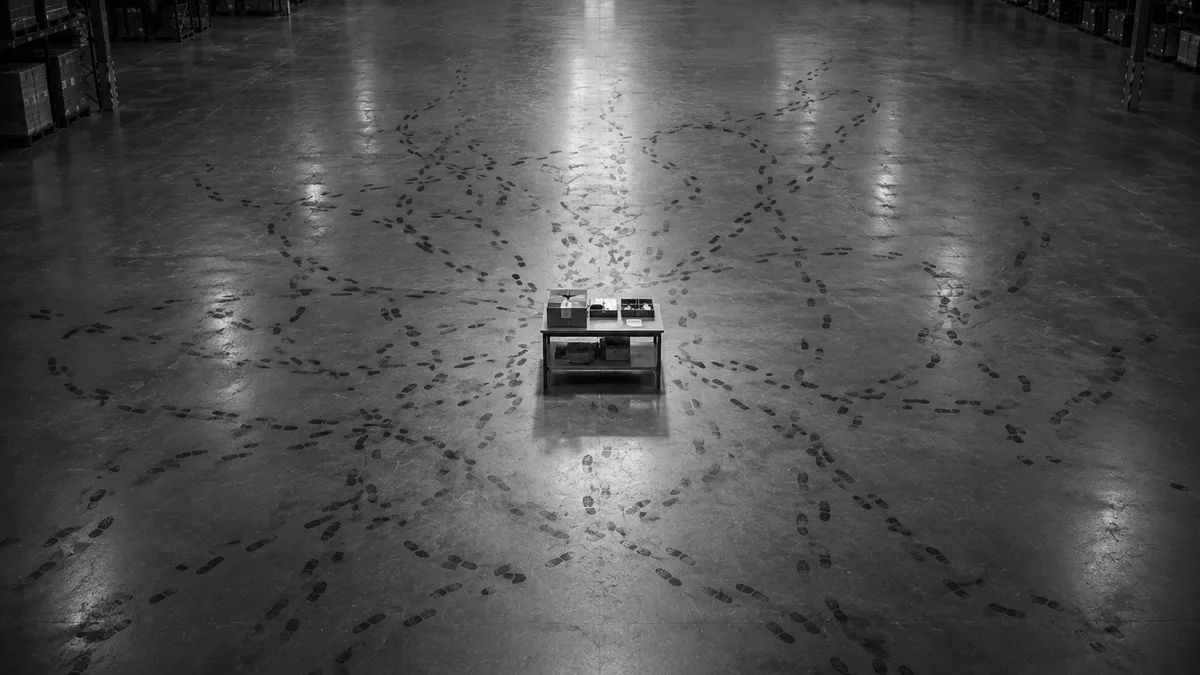
That is exactly why warehouse optimisation usually starts with understanding the current situation. How do goods move through the warehouse? Where do waiting times arise? Which distances are covered every day? And which process steps actually add value?
Only once those questions have been answered does it become clear where the biggest improvement opportunities lie.
Not always a large investment
What strikes me time and again is that the solution by no means always requires a large investment. Sometimes it is about organising a workstation differently, shortening a walking route or removing a process step that once arose for a good reason but is no longer needed. It is precisely those small adjustments that often have a surprisingly large effect on an annual basis.
That does not mean investing is never the right choice. But I regularly see that the best solution only becomes visible once the underlying process is properly understood.
An ongoing process
Warehouse optimisation is therefore rarely a one-off project. An operation changes constantly: customers, volumes and goods flows look different again within a few years. A layout that is optimal today does not have to be tomorrow.
The strongest organisations I encounter therefore keep looking critically at their own processes, even when everything appears to be running well at first glance. Not because something is going wrong, but because they understand that almost every process can be improved.
Warehouse optimisation is ultimately not about more systems, more space or more equipment. It is about the question of whether the operation still aligns optimally with the reality of today. And that is exactly why it starts not with investing, but with understanding.
Frequently asked questions
What is warehouse optimisation?
Warehouse optimisation is improving the performance of a warehouse by better aligning processes, goods flows, warehouse layout and the deployment of equipment. The goal is to work more efficiently, safely and reliably.
Does warehouse optimisation always mean investing in automation?
No. Automation or new systems can be part of the solution, but many improvements come from organising existing processes more intelligently and removing unnecessary steps.
Where do you start with warehouse optimisation?
Usually by understanding the current situation: how do goods move through the warehouse, where do waiting times arise and which process steps actually add value? Only then does it become clear where the biggest improvement opportunities lie.

Sjef Kerkvliet is the founder of OctaFlow and has more than 15 years of experience in intralogistics, warehouse optimisation and internal transport. Drawing on his hands-on experience, he helps organisations with questions around goods flows, process improvement, warehouse layout, automation and operational efficiency.
Want to talk about your operation?
A logistics or operational challenge? OctaFlow is happy to think along. No fuss, just a good conversation.