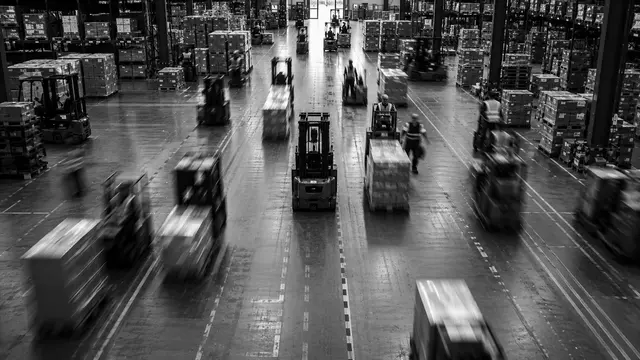
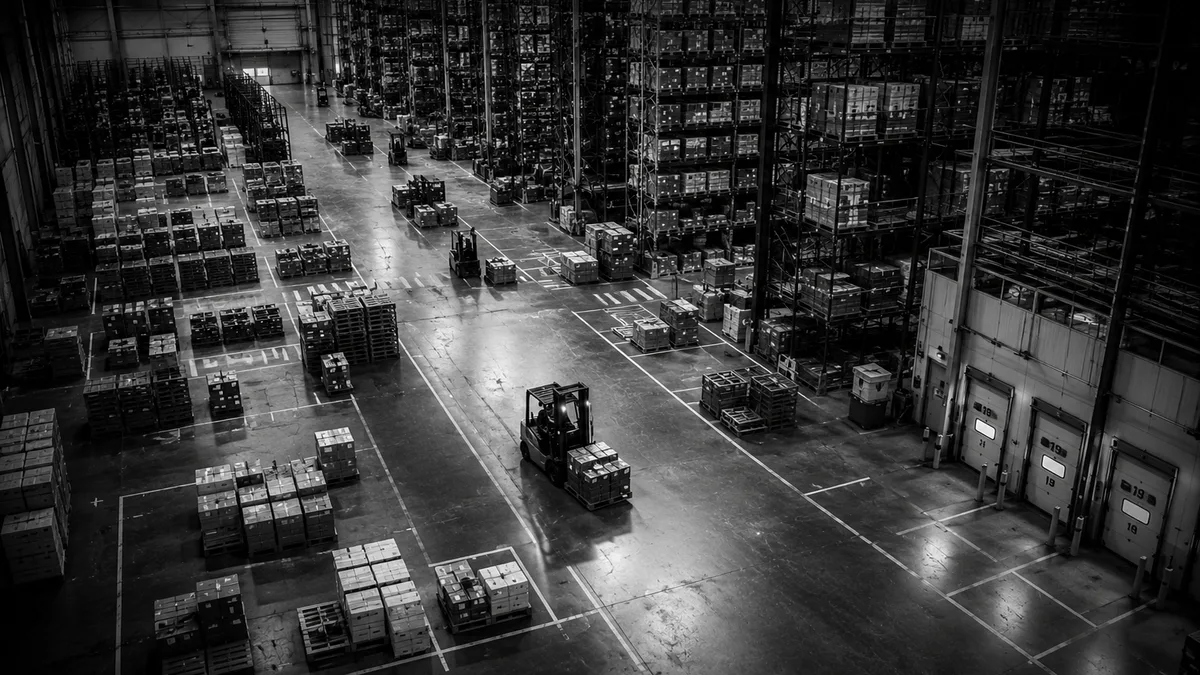
Many organisations have the feeling that there is room for improvement within their warehouse. The daily operation runs, customers are served and orders leave the warehouse on time. At the same time, there is often a suspicion that processes could be more efficient, that unnecessary costs are being incurred or that capacity is being lost.
A warehouse scan maps the interplay between processes, equipment and layout, and surfaces improvement opportunities that often go unnoticed from within the daily operation itself.
The challenge is usually not that organisations do not want to improve, the challenge is that it is often difficult to determine exactly where the biggest improvement opportunities lie. That is precisely where a warehouse scan can add value.
Most bottlenecks are already known
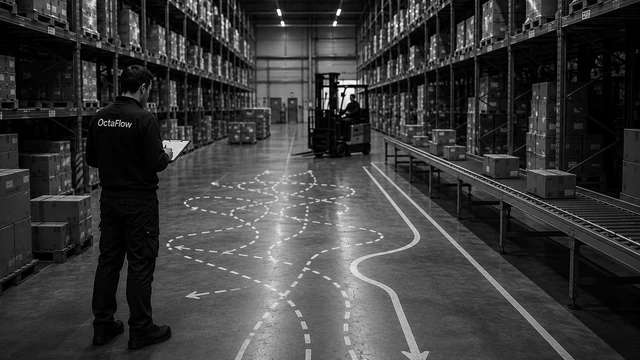
What strikes me during conversations with organisations is that employees often know remarkably well where the bottlenecks are. Drivers know where waiting times arise every day, team leaders know which processes regularly cause disruptions, and operators often know exactly which tasks take more time than necessary. Yet many of these signals persist for years, and that usually has little to do with unwillingness. In a busy operation, the focus logically lies on keeping the daily work running, so there is often no time to look at processes as a whole. A warehouse scan is precisely what makes that step possible.
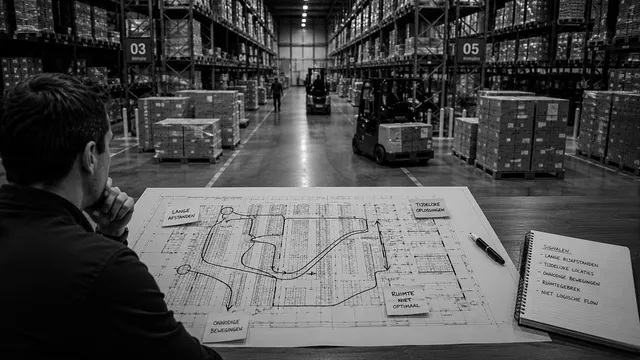
Signals that often point to untapped improvement potential:
- employees have been complaining about the same bottleneck for a while, without it getting fixed
- several informal "tricks" exist to keep the work running smoothly
- the site feels structurally busier than the figures justify
- no one can quite explain why a process is set up the way it is
- different departments point at each other as the cause of the same delay
- investment decisions are made without a complete picture of the operation
From isolated signals to the full picture
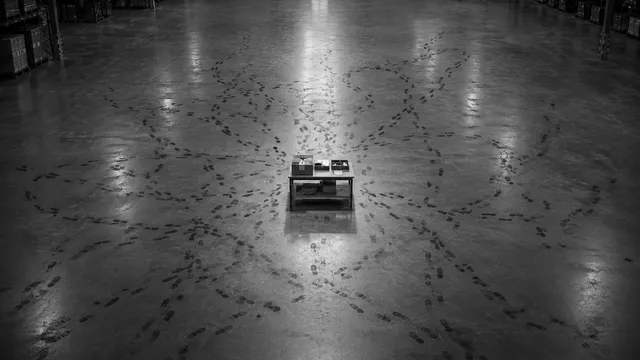
Many operational problems are looked at in isolation: a case of damage is resolved, an extra truck is deployed or a process step is adjusted. In themselves these can be logical measures, but at the same time I regularly see that different signals share the same underlying cause. Long travel distances, waiting times, lack of space and a high workload sometimes seem unrelated, while they ultimately trace back to the same goods flow or the same process setup. That is exactly why it is important to look not only at individual problems, but at the coherence within the operation.
Small observations can have big consequences
I have, for example, experienced situations where employees carried out extra actions every day without anyone consciously noticing any more, not because the process was designed incorrectly, but because the way of working had developed over the years. What was once a temporary solution had slowly become part of the standard way of working. It is precisely those kinds of situations that are often interesting during a warehouse scan, not because they directly cause major problems, but because small inefficiencies repeat themselves every day. What seems like a few seconds can represent a surprising amount of time and capacity on an annual basis.
A scan does not always produce the same outcome
That also makes a warehouse scan different from what many people expect. Sometimes an analysis leads to recommendations for process improvements, in other situations the warehouse layout turns out to no longer align well with the goods flows. It also happens that the deployment of equipment or the collaboration between departments has the greatest influence on the performance of the operation. As a result, there is no standard outcome: the value lies not in confirming pre-conceived solutions, but precisely in making visible the improvement opportunities that were not seen before.
More than just efficiency
A warehouse scan is ultimately not only about efficiency. It is also about safety, flexibility, collaboration and future readiness: an operation that functions well today often also needs to be prepared for future growth, changing customer demands and new logistics challenges. The discussion is therefore not only about solving existing problems, ultimately it is about gaining insight into how a warehouse functions today and where the biggest opportunities for tomorrow lie. And that is exactly why a warehouse scan does not start with solutions, but with looking, understanding and analysing.
Frequently asked questions
What is a warehouse scan?
A warehouse scan is an analysis of processes, goods flows, warehouse layout and internal transport in order to make improvement opportunities within a logistics operation visible.
When is a warehouse scan worthwhile?
A warehouse scan can be worthwhile when organisations are dealing with growth, lack of space, high workload, damage, inefficiencies or when there is a feeling that the operation could perform better.
Does a warehouse scan always lead to investments?
No. Improvements regularly turn out to be possible by organising processes more intelligently or using existing resources more efficiently. Investments can be part of the solution, but are by no means always the outcome.

Sjef Kerkvliet is the founder of OctaFlow and has more than 15 years of experience in intralogistics, warehouse optimisation and internal transport. Drawing on his hands-on experience, he helps organisations with questions around goods flows, process improvement, warehouse layout, automation and operational efficiency.
Want to talk about your operation?
A logistics or operational challenge? OctaFlow is happy to think along. No fuss, just a good conversation.