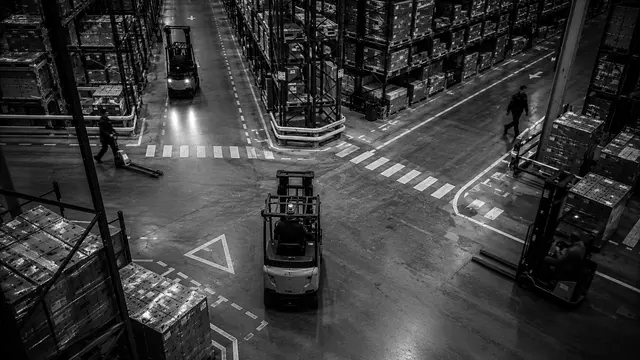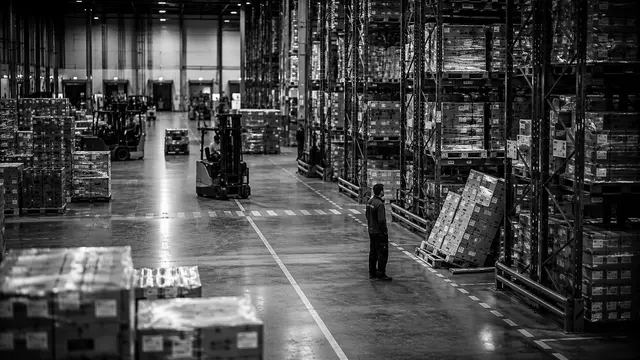

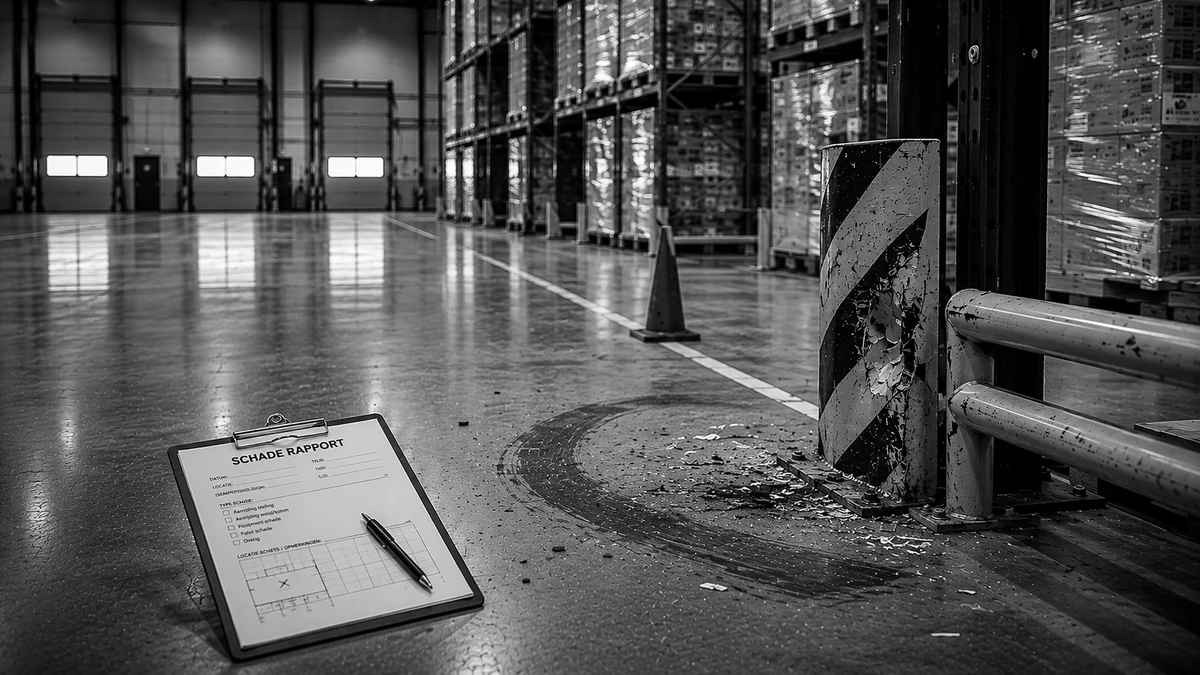
Damage within a logistics operation is often seen as an unavoidable part of daily work. A damaged rack, a collision, a damaged pallet or a broken-down machine then gets handled as a one-off.
When damage keeps recurring, though, the cause is often not one incident or one employee. Recurring damage can result from routing, workload, layout, equipment deployment, sightlines, working methods or the way processes are organised.
That's why OctaFlow investigates not just where damage occurs, but above all why it occurs, and why the same patterns keep coming back.
Combining damage data with on-site observations, conversations with the people involved, and analysis of processes, equipment and working conditions builds insight into the structural causes.
The goal is not just less damage, but an operation where availability, safety and cost are structurally better controlled.
When is damage reduction worthwhile?
An analysis of damage and cost is worthwhile when incidents keep recurring, damage costs are rising, or it's unclear where the main causes lie. That can become visible, for example, when:
- racking, doors, dock equipment or other assets are regularly damaged;
- forklifts and other material handling equipment get damaged more often;
- maintenance and repair costs keep rising;
- damage is registered but barely analysed;
- the same types of incidents keep happening;
- employees are regularly involved in minor collisions;
- damage mainly occurs during peak moments or shift changes;
- insurance costs or deductibles are rising;
- a lot of time is lost to repairs and idle equipment;
- it's unclear whether damage is mainly caused by behaviour, equipment, layout or workload;
- measures have been taken but incident numbers barely drop.
Even small instances of damage deserve attention when they occur structurally. A single incident of a few hundred euros may look limited. When the same type of incident happens dozens or hundreds of times a year, the total effect can be significant, on top of indirect costs like downtime, repair time, productivity loss and disruption of the operation.
What does OctaFlow look at?
Damage reduction starts with understanding the full process in which damage arises. That's why we don't look exclusively at the moment of the collision or incident.
Damage patterns
What types of damage occur and how often? We look at frequency, location, equipment type, timing, circumstances and possible overlaps between different incidents.
Locations and routing
Certain locations can structurally carry more risk due to limited space, crossings, busy traffic flows, illogical routing or insufficient separation between users.
Equipment deployment
Is the equipment used suited to the environment and the work? Technical condition and any breakdowns or defects can play a role too.
Workload and peak load
During busy periods, shift changes or peak moments, traffic flows can intensify and pressure on employees and equipment increases.
Working methods and behaviour
Behaviour is part of the problem, but not automatically the whole cause. We examine why an action seems logical or necessary in practice.
Environment layout
We assess aisle widths, sightlines, crossings, racking, doors, loading and unloading zones, traffic flows and possible collision points.
Registration and cost
Where possible, we also map the financial impact: repairs, parts, maintenance, downtime, replacement equipment and other costs.
How does a damage reduction project work?
-
Establishing the damage picture and objective
We start with the existing damage picture. What incidents occur? What costs are involved? Where does the biggest concern lie within the organisation, and what ultimately needs to improve? When damage history or other data is available, it's used as the starting point for the analysis.
-
Examining patterns in the data
Next, we look for recurring patterns. Are certain machines involved more often? Does damage mainly occur at specific locations? Are there differences between shifts? Does a particular type of damage mainly occur under peak load? Combining this information builds a clearer picture of where the biggest risks and costs lie.
-
Assessing practice on site
Data shows what happens. On-site observation helps explain why. We therefore look at the relevant situations in practice, observing traffic flows, activities, equipment deployment, working methods and the conditions under which incidents can occur.
-
Distinguishing causes
Not every instance of damage has the same cause. An incident can be influenced by, for example:
- layout;
- routing;
- equipment;
- working method;
- workload;
- training or behaviour;
- technical conditions;
- poor communication;
- insufficient visibility or space.
Assessing these factors both individually and in combination gives a more realistic picture of the real cause.
-
Developing measures
Based on the analysis, measures are determined that match the causes found. This can relate to routing, layout, traffic separation, equipment, working methods, instructions, technical provisions or organisational measures. The emphasis is on structural improvement: a measure that only limits the consequence of an incident while leaving the cause untouched doesn't necessarily prevent the same problem from recurring.
-
Prioritising and determining impact
Not every measure needs the same investment or has the same impact. We determine which measures are relatively easy to implement, which require bigger changes, and where the greatest potential cost savings or risk reduction lie.
Damage is often a symptom of a bigger problem
A collision is easily seen as an incident between an employee and an object. The more interesting question is why the conditions that allowed that collision were present at all.
Was the route logically laid out? Was there enough space? Was there enough visibility? Was traffic exceptionally busy at that moment? Was the equipment used suited to the situation? Was the employee under time pressure?
Asking those questions shifts the focus from who caused the damage to what causes the pattern of damage. That is what makes structural improvement possible.
What does damage reduction deliver?
A structural approach to damage can deliver several benefits:
- less material damage;
- lower repair and maintenance costs;
- less machine downtime;
- higher equipment availability;
- less disruption of operational processes;
- lower direct and indirect damage costs;
- better insight into recurring risks;
- more targeted safety measures;
- better-substantiated investments;
- more grip on total operational cost.
The goal is not to eliminate every incident entirely. Incidents can occur in any operational environment. The goal is to structurally reduce unnecessary and recurring damage and to keep the associated costs manageable.
Damage reduction and safety are closely linked
Damage and safety are sometimes treated as separate topics within organisations. In practice, they often share the same underlying causes.
An illogical traffic route can lead to both a collision and an unsafe situation. Limited sightlines can cause damage while also posing a safety risk.
That's why insights from a damage analysis can also lead to measures that not only lower costs, but improve the safety of the operation.
When a question is primarily about safety, the Safety Scan & safety optimisation service may fit better. When damage, cost and operational performance are central, OctaFlow focuses the analysis specifically there.
What does OctaFlow deliberately not do?
Damage reduction doesn't automatically mean stricter rules, more warnings or extra training. Behaviour can be part of the solution, but when the working environment structurally invites risky behaviour, addressing or training alone is usually not enough.
Damage is also not automatically attributed entirely to the employee. When the same damage recurs at the same location, it's important to also critically assess layout, routing, workload and the resources used.
Structural damage reduction starts with tackling the cause, not just correcting the consequence.
When is damage reduction not the right step?
When there's barely any damage and no structural cost or availability problem, an extensive damage reduction project may add little value.
When the main question relates to general traffic safety, risk assessment or safety layout, a Safety Scan may fit better.
When it's still unclear how the total operation functions, an Operational Quick Scan can be a more logical starting point.
The right approach is therefore determined by the nature of the problem and the information needed to actually solve it.
What does a damage reduction project cost?
The scope of a damage reduction project depends on the size of the organisation, the available damage data, the number of locations and the complexity of the operational environment. A targeted analysis of one recurring damage problem requires a different approach than an organisation-wide analysis of damage, cost and operational risk.
That is why OctaFlow does not work with a single standard price. After an intro call, we determine which analysis fits and what investment it requires.
Frequently asked questions
How can I reduce damage in my warehouse?
The first step is establishing where and why damage occurs. Analysing damage data and combining it with on-site observations can reveal recurring patterns. Measures can then be targeted at the actual causes, for example routing, layout, equipment, working methods or behaviour.
Is damage always a safety problem?
Not every instance of damage is directly a safety incident, but recurring damage can point to a structural risk in the operation. That is why it's important to examine patterns rather than treating each incident separately.
How do I know where most damage occurs?
By linking damage data to locations, machines, times, shifts, activities and incident types, patterns become visible. Good registration makes it possible to track not just the total number of incidents, but also the causes and circumstances around them.
Can behaviour be the cause of damage?
Behaviour can certainly play a role, but it's important to examine why that behaviour occurs. When a particular way of working happens structurally, factors such as workload, routing, layout or available resources can be influencing it.
Can less damage also lower operational costs?
Yes. Besides direct repair costs, damage can lead to downtime, replacement equipment, maintenance, productivity loss and process disruption. Removing recurring causes can reduce both direct and indirect costs.
Can OctaFlow also help with safety measures?
Yes. When a damage analysis shows that safety measures are needed, these can become part of the advice. When safety is the primary question, the Safety Scan & safety optimisation service may fit better.
Less damage starts with understanding why it happens
Bringing together data, work-floor observations, equipment, routing, working methods and conditions builds insight into the structural causes. OctaFlow helps organisations surface those causes and translate them into concrete measures.