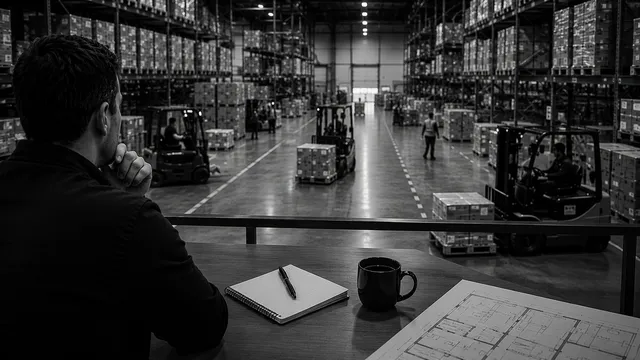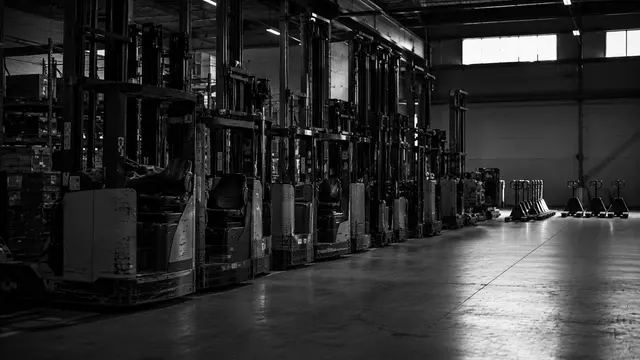

Material handling equipment is a key part of every logistics operation. Forklifts, reach trucks, order pickers, pallet trucks and other machines need to be available when required, suit the work at hand, and match the way the organisation actually operates.
In practice, however, fleet composition is not always the result of deliberate analysis. Machines are purchased in different years, contracts do not run in parallel, volumes change and work shifts over time. As a result, an organisation can end up with too much equipment overall while still experiencing shortages at certain moments.
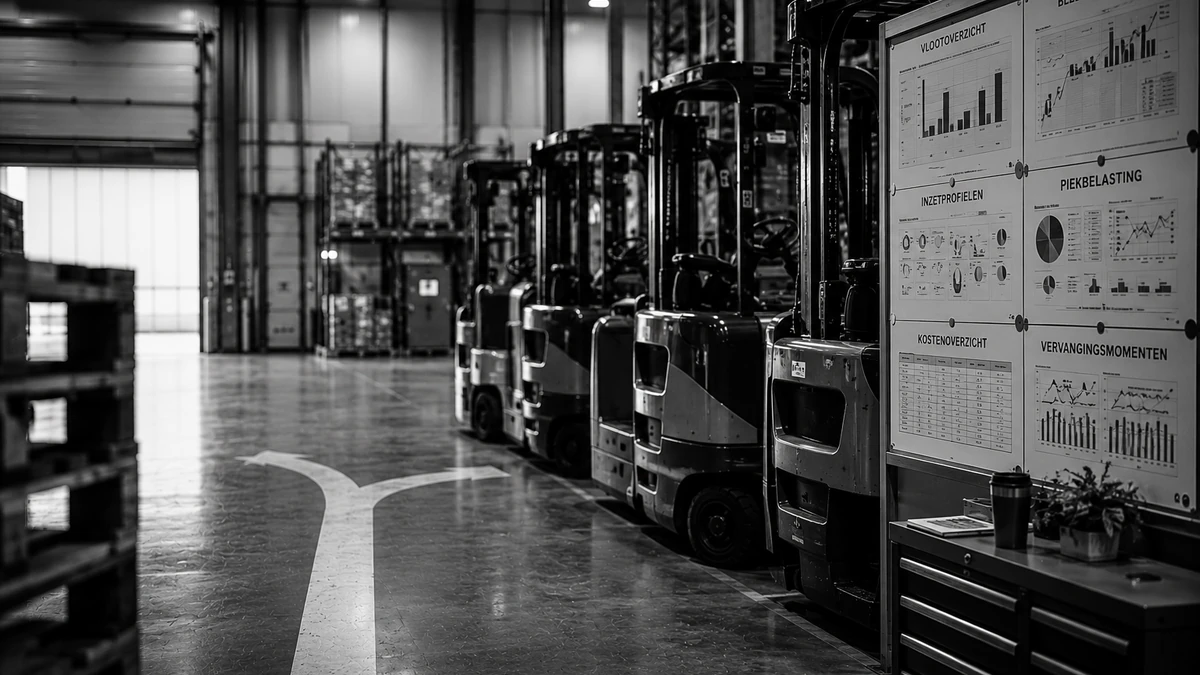
OctaFlow analyses the deployment of material handling equipment from the perspective of the total operation. We look at fleet composition, usage profiles, utilisation, intensity of use, machine choice, capacity and future developments.
The goal is a balanced fleet that matches actual need: enough capacity when it's needed, without structurally paying for equipment that is under-used.
When is fleet optimisation worthwhile?
An analysis of material handling equipment is worthwhile when there is doubt about the size, composition or deployment of the current fleet. That can become visible, for example, when:
- extra machines are regularly hired in to absorb peaks;
- employees have to wait because the right equipment isn't available;
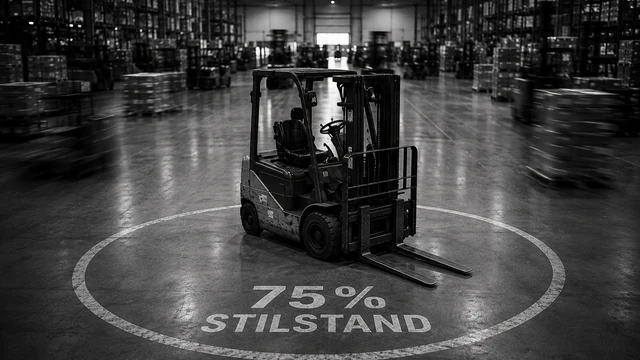
- machines sit unused for a large part of the day;
- different types of machines are used for similar work;
- the fleet has grown over the years without the total need being reassessed;
- multiple lease or rental contracts expire at different times;
- a major replacement round is coming up;
- new machines are being considered without a clear picture of how much capacity is really needed;
- machine deployment varies strongly between working days, shifts or seasons;
- the organisation wants to switch to a different power source;
- the cost of internal transport is higher than expected;
- management wants to know whether the current fleet still matches the future operation.
Growth is also worth flagging: it's important not to simply carry the existing fleet forward into the new situation. A volume increase of, say, 20% does not automatically mean 20% more machines are needed.
The required capacity is determined by how the work is carried out, not only by total volume.
What does OctaFlow look at?
An optimal fleet is not simply the smallest possible number of machines. Machines also need to be available at the right moment, suited to the work, and matched to the conditions in which they operate. That's why we look at several aspects of the fleet.
Fleet composition
Which machines are present and what are they used for? We map the current fleet and assess whether the different machine types logically match the work carried out with them.
Number of machines
How many machines are actually needed? We look at actual deployment, volumes, peak load, available working time, and how often machines are needed simultaneously.
Utilisation rate
A machine available for eight hours is not automatically productive for eight hours. A high utilisation rate can look efficient, but under peak load it can mean there is too little room in the operation.
Usage profiles
Not every machine is used the same way. Mapping usage profiles lets the fleet be matched more closely to actual work.
Peak load
A fleet that has enough capacity on an average working day can still fall short during shift changes, order peaks or seasonal busy periods. We investigate when the greatest capacity demand arises.
Machine suitability
The right number of machines is not enough. Lift height, capacity, dimensions, manoeuvrability, operating environment, intensity of use and the nature of the goods all matter too.
Replacement timing
The moment a machine should be replaced is not determined by age alone. Operating hours, maintenance cost, reliability, residual value and energy use all play a role.
How does fleet optimisation work?
-
Mapping the current fleet and operation
We start by building insight into the current situation, gathering information about existing machines, contracts, deployment, operating hours, activities and operational conditions. Where available, we use existing data from, for example, fleet management systems, hour registrations, maintenance records and contract information. That information is then connected to the reality on the work floor.
-
Analysing actual deployment
Next, we examine how the equipment is actually used. Which machines are in near-continuous use? Which stand idle regularly? Where does waiting time arise? When is extra equipment brought in? And which machines are used for work that might suit a different machine type better? We look not only at averages, but specifically at differences between periods and peak moments.
-
Determining capacity need
Based on the operational data, we determine the capacity the organisation actually needs, taking into account daily operations, peak load, working hours, driving distances, volumes and desired availability. A key principle: a fleet does not need to be at maximum utilisation to be efficient. Enough capacity must remain available to absorb peaks, without structurally holding a large amount of unused equipment.
-
Determining the right fleet composition
We then assess which combination of machines best fits the work. This can show that not only the number of machines needs to change, but also the split between different equipment types. Sometimes an organisation can do the same work with fewer machines; in other cases, capacity is missing and additional machines are needed.
-
Determining replacement and future needs
Fleet optimisation does not look only at today. When machines are due for replacement soon, we also factor in future volumes, developments in the operation, power supply and expected deployment. This creates a picture not only of current need, but of how the fleet could develop over the coming years.
-
Translating improvements into concrete choices
The analysis is translated into practical advice. This can involve adjusting the number of machines, changing fleet composition, redeploying existing equipment differently, adjusting replacement timing, or investigating other drivetrains and technology. When suppliers or new machines need to be selected, OctaFlow can then support comparing solutions and assessing quotations.
What does fleet optimisation deliver?
A well-matched fleet ensures equipment is available when the operation needs it, without structurally holding capacity that is barely used. Depending on the situation, optimisation can lead to:
- a better-matched number of machines;
- better use of existing capacity;
- less unnecessary rental and lease cost;
- less idle equipment;
- better availability during peak moments;
- a more logical split between different machine types;
- better-substantiated replacement decisions;
- lower maintenance and operating costs;
- more insight into the total cost of internal transport;
- a fleet that better matches future developments.
The goal is not simply the cheapest fleet. A fleet that's too small can lead to waiting time, productivity loss and disruption. A fleet that's too large leads to unnecessary cost. The optimal situation sits in between.
Whatever is left after an optimisation has to go somewhere. For those machines there is the Residual Value Check: a second price from the market alongside the supplier's offer, so that what the disposal brings in becomes part of the project instead of an afterthought.
What does OctaFlow deliberately not do?
OctaFlow does not automatically advise reducing the number of machines. A smaller fleet is only interesting when the required operational capacity is preserved. When a reduction leads to structural waiting time or insufficient flexibility, the opposite can actually be necessary.
Fleet advice also does not start with a brand or supplier. Linde, Toyota, Jungheinrich, STILL or another brand can be the right solution in a given situation, but the choice of supplier only follows once it's clear which machine, capacity and specification the operation actually needs.
First establish what the operation requires. Then determine which equipment fits.
When is fleet optimisation not the right step?
When it is still unclear where the main operational problems lie, an Operational Quick Scan can be a better first step, examining the total operation before looking specifically at the fleet.
Also, when the need is solely to select a new machine, without the size or composition of the fleet being in question, a targeted machine or quotation assessment can be sufficient.
Fleet optimisation is especially valuable when an organisation wants a well-founded answer to the question: how much material handling equipment do we actually need, which machines fit that need, and when should we replace them?
What does fleet optimisation cost?
The scope of fleet optimisation differs per organisation. An analysis of a limited fleet at one location requires a different approach than an organisation with multiple locations, different equipment types, multiple contracts and a complex operational structure. Available data, desired depth, and any support with supplier selection or implementation also determine the scope of the project.
That is why OctaFlow does not work with a single standard price. After an intro call, we determine which approach fits the size and complexity of the fleet and what investment it requires.
Frequently asked questions
How do you determine how many forklifts a company needs?
The number of forklifts needed cannot be reliably determined based only on square metres or total pallet movements. Volumes, peak load, working hours, driving distances, loading and unloading times, usage profiles and how often machines are needed simultaneously all determine how much capacity is necessary. That is why we first look at actual operational deployment.
How do you determine which type of material handling equipment is needed?
That depends on the work the equipment is used for. Lift height, capacity, driving distances, floor surface, aisle widths, usage intensity, goods and working environment all play a role. The right type of machine is therefore determined by operational need, not by what a supplier happens to offer.
When is a forklift due for replacement?
Age alone does not determine whether a machine should be replaced. Operating hours, maintenance cost, breakdowns, reliability, energy use, residual value and future deployment are relevant too. A replacement decision should therefore be based on total cost and expected use, not just the machine's age.
Is a high forklift utilisation rate always good?
No. A high utilisation rate can mean equipment is being used efficiently, but it can also mean there is barely any room to absorb peaks. A fleet should therefore not be optimised for maximum utilisation, but for the right balance between use, availability and operational reliability.
Can OctaFlow advise on different forklift brands?
Yes. OctaFlow is independent of forklift suppliers and can assess different brands and solutions based on the requirements of the operation. The starting point is the required capacity, deployment and total cost. Brand is part of the final choice, not the starting point.
Can OctaFlow also help with a tender for new forklifts?
Yes. When the fleet analysis shows that replacement or expansion is needed, OctaFlow can support drawing up requirements, comparing suppliers, and assessing and negotiating quotations. That way, fleet optimisation can be carried through into an independent, well-founded procurement process.
An optimal fleet is not the biggest possible fleet
The value of material handling equipment is not in the number of machines standing on site, but in the capacity the operation actually has available when it's needed. OctaFlow maps the relationship between capacity, deployment, utilisation, fleet composition and cost.