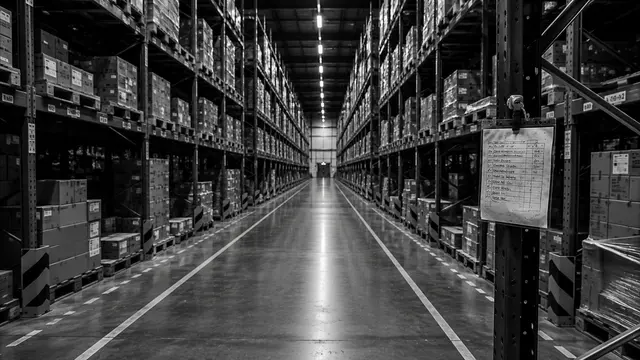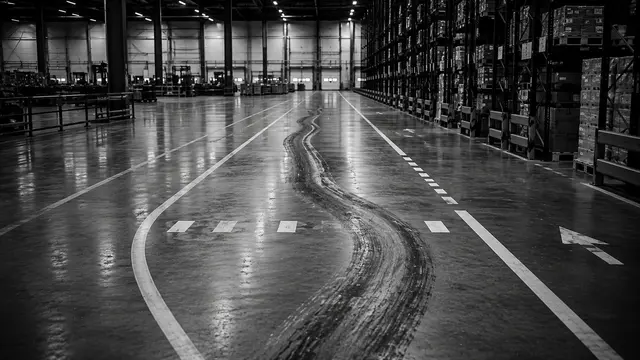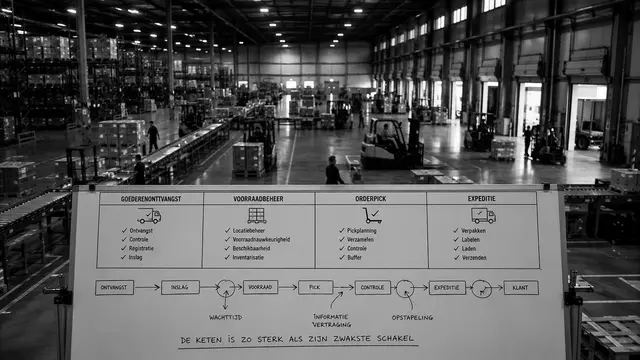

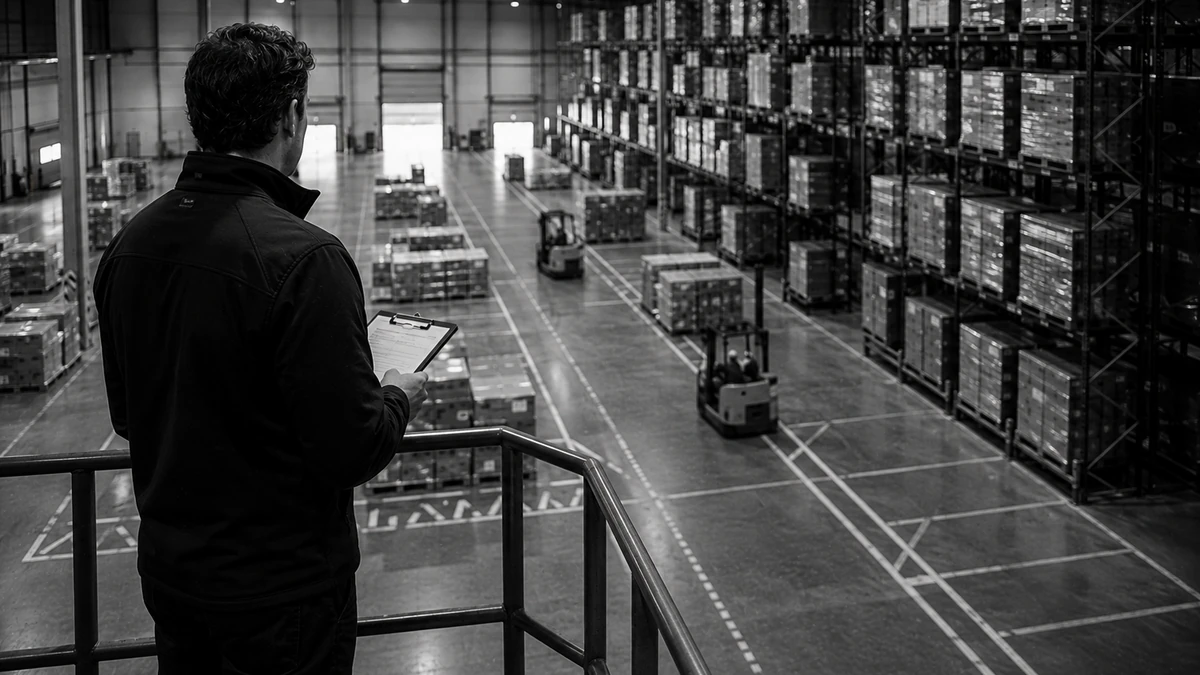
A logistics operation consists of many separate processes, but performance is ultimately determined by how those processes connect with each other.
Inbound can run efficiently while goods then wait unnecessarily long before becoming available. Order picking can deliver strong performance while employees cover unnecessary distances every day. A warehouse can have enough capacity yet still grind to a halt regularly because goods flows cross at the wrong moments.
That is why OctaFlow looks not only at individual processes, but at the total flow of goods, people and resources through the organisation.
With operational and intralogistics optimisation, we map that coherence and translate insights into concrete improvements. We look at processes, routing, working methods, warehouse layout, capacity, equipment deployment and the collaboration between different parts of the operation.
The goal is not to make the operation more complex, but to make it simpler, more efficient and easier to manage.
When is operational and intralogistics optimisation worthwhile?
An optimisation project is worthwhile when the operation fundamentally works, but performance, capacity or efficiency no longer match what the organisation needs.
That can become visible, for example, through:
- growing volumes without a proportional increase in available capacity;
- long driving or walking distances;
- recurring waiting times and congestion;
- goods that get moved multiple times before reaching their destination;
- a warehouse layout that no longer matches current goods flows;
- processes that rely heavily on exceptions or manual workarounds;
- departments that each function well individually but together create insufficient flow;
- a lack of space while it is unclear where the space is actually being lost;
- rising staffing costs without a clear improvement in output;
- investments in automation or equipment where it is not yet clear whether they solve the underlying problem.
Growth, too, can be a reason for optimisation. A process that worked well at 5,000 pallet movements a week does not necessarily deliver the same performance at 10,000 movements.
The right question then is not only how to increase capacity, but whether the current way of working is still the most logical way to reach the desired performance.
What does OctaFlow optimise?
Every operation has different characteristics and constraints. That is why optimisation does not start with a standard solution, but with understanding the existing situation. Depending on the question, we look at some or all of the following.
Goods flows
We map how goods move through the organisation, where processes touch each other, and where unnecessary movements, waiting time or handover points arise. It is not just the individual movement that matters, but above all the total route a product takes through the operation.
Routing and internal traffic flows
The layout of a warehouse largely determines how people and equipment move through the organisation. We assess routes, crossing points, driving and walking distances, and how different traffic flows influence each other.
Warehouse layout and use of space
A warehouse is often built up and adjusted in different phases. We examine whether the available space is used logically and whether the layout fits the goods flows and operational working method.
Working methods
We look at how work is actually carried out and which steps are necessary to reach the desired result. We also look for opportunities to remove handling steps, handovers and unnecessary movements.
Capacity and utilisation
A capacity problem is not always a capacity problem. Before adding extra people, equipment or square metres, we examine how existing capacity is being used and where the real constraint lies.
Coherence between departments
A logistics operation does not stop at the boundaries of a department. Inbound, storage, replenishment, order picking, production, shipping and transport constantly influence each other. OctaFlow looks at the total chain.
Automation and technology
Automation can be a valuable solution, but it is not automatically the best one. We first assess which problem needs solving, and only then which technical solution fits.
How does an optimisation project work?
-
Determining the goal and starting situation
An optimisation project starts with establishing the reason and the desired result. What needs to improve? Is it about capacity, cost, throughput time, use of space, staffing, reliability, or a combination of these?
We also map the key starting points and constraints. That prevents solutions being developed that look attractive in theory but turn out not to be workable in practice.
-
Analysing the current operation
Next, we examine how the operation functions. Depending on the question, we use available data, process information, floor plans and on-site observations. We look at the actual goods flows, working methods and movements within the operation.
Coherence matters most here. A process can look efficient on its own, while in combination with another process it actually causes delay.
-
Determining bottlenecks and improvement potential
Based on the analysis, we map where the biggest opportunities lie. We look not only at what is not going well, but also at the cause and the consequences for the rest of the operation.
A problem that appears to cost only a few minutes a day can have a significant operational impact when hundreds of employees or thousands of movements a week are involved.
-
Developing improvements
The insights are then translated into concrete improvements. That can relate to, for example:
- process design;
- goods flows;
- routing;
- warehouse layout;
- working methods;
- capacity allocation;
- deployment of people and equipment;
- collaboration between departments;
- automation or other technical solutions.
We look for the solution that fits the organisation and its future development, not just the solution that delivers the fastest result today.
-
Prioritising and substantiating
Not every improvement needs to happen at the same time. That is why we distinguish between measures that are relatively easy to introduce and improvements that require more preparation, investment or organisational change.
The result is a realistic improvement agenda that makes clear what needs to happen, why it is needed, and what priority it has.
-
Carrying it through to delivery
An improvement agenda is not an end point. OctaFlow carries out the next step as well.
The solution often lies in the way of working: different routing, a different sequence, different agreements between departments or different behaviour on the floor. We guide that change through until it is genuinely how things go day to day.
If the solution does call for an investment, we take that on as well: working out the direction, weighing alternatives against each other and getting the substantiation right. But an investment is never the starting point. If a change in working method delivers the same result, that is the better solution.
How far we go is your call. One organisation leaves the whole route with us, from analysis to delivery. Another carries on itself and brings us in for one specific part. Both work.
From analysis to concrete improvement
An optimisation project delivers a thorough substantiation: what is going on, why it works that way and what changing it is worth. But that report is not the goal. The goal is an operation that actually functions better.
That is why improvements are translated into concrete choices and practical measures wherever possible. Think of adjusting goods flows, laying out a warehouse differently, reducing unnecessary movements, redistributing work, or making better use of existing capacity.
Sometimes an optimisation project shows that a relatively simple process adjustment is enough. In other situations, a bigger change is needed, for example a different warehouse layout, additional automation, or a different way of organising work.
In both cases OctaFlow stays involved until the change is in place, whether that is a different way of working or an investment that first needs substantiating. The whole route, or the part you need us for.
The solution follows from the question, not the other way around.
What does optimisation deliver?
A well-designed logistics process lets goods, people and resources move through the operation with as few unnecessary interruptions as possible. Depending on the question, optimisation can lead to:
- shorter driving and walking distances;
- less waiting time;
- better use of available capacity;
- lower operational costs;
- fewer unnecessary goods movements;
- better use of warehouse space;
- higher predictability of processes;
- better deployment of employees and equipment;
- more room for growth without immediately adding extra capacity.
The exact improvement differs per organisation. That is why a good optimisation project always starts with the current situation and the concrete objectives.
What does OctaFlow deliberately not do?
Operational optimisation does not automatically mean automation. A new system, extra equipment or a larger warehouse location can be a solution, but only when the underlying problem calls for it.
OctaFlow therefore does not work from a predetermined technology or supplier. We first establish where the operational need lies and what improvement is needed. Only then can it be determined whether a process adjustment is enough or whether an investment is necessary.
We also do not look only at the performance of one department. An improvement that speeds up inbound but then causes congestion at storage has not actually improved the total operation. The starting point is always the total flow.
When is optimisation not the right step?
Not every organisation needs an extensive optimisation project straight away. When it is still unclear where the main problems lie, an Operational Quick Scan can be a better first step. That establishes independently, first, where the main bottlenecks and improvement priorities lie.
When the problem is very specific, a targeted analysis can be more suitable, for example a question around material handling equipment, energy transition, safety, or an investment project.
The right approach therefore depends on the question that needs answering. Sometimes optimisation is the next step. Sometimes it starts with first understanding what is really going on.
What does an optimisation project cost?
The scope of operational and intralogistics optimisation varies strongly by organisation and question. A project can relate to one specific process, a complete warehouse operation, or the coherence between multiple locations and processes. The desired depth and the extent to which OctaFlow is involved in execution also differ per assignment.
That is why OctaFlow does not work with a single standard price. After an intro call, we determine which approach fits the situation and what investment it requires.
Frequently asked questions
What is operational optimisation?
Operational optimisation is improving the way people, goods and resources work together within an organisation. It looks at processes, capacity, routing, working methods and the coherence between different parts of the operation. The goal is to make better use of available capacity and reduce unnecessary cost, movement and disruption.
What is the difference between a quick scan and optimisation?
An Operational Quick Scan mainly focuses on establishing the current situation, bottlenecks, causes and improvement priorities. Operational and intralogistics optimisation goes a step further: the insights are translated into concrete improvements and, where desired, supported through further development and implementation. The quick scan gives insight into what is going on; optimisation then focuses on how the operation can function better.
What falls under intralogistics optimisation?
Intralogistics optimisation can cover the entire internal goods flow: routing, storage, warehouse layout, internal transport movements, order picking, replenishment, handover points and the collaboration between different processes. Which parts are examined depends on the question.
Is warehouse optimisation the same as magazijnoptimalisatie?
The terms are often used interchangeably. Both refer to improving the way a warehouse functions. OctaFlow looks beyond the physical layout alone: processes, goods flows, working methods, capacity and the deployment of people and equipment are taken into account as well.
Does a warehouse need to be automated to become more efficient?
No. Automation can be a solution, but it is certainly not always necessary. In many situations, a lot can already be improved by adjusting processes, routing, layout and working methods, or by making better use of existing capacity. The question is therefore not whether automation is possible, but whether automation is the right solution for the problem that needs solving.
Can OctaFlow help with a new warehouse layout?
Yes. When a new layout is being developed, it is important to first understand the logistics flow, goods flows, storage needs and operational working method. From those starting points, it can be determined which layout best fits the desired operation.
Does OctaFlow also guide the implementation?
Yes. The solution often lies in the way of working: different routing, different agreements between departments, different behaviour on the floor. OctaFlow guides that change through until it is genuinely how things go day to day. If the solution does call for an investment, we work it out and substantiate it, but an investment is never the starting point. That can run as one continuous route from analysis to delivery, or as a separate part when the organisation handles the rest itself.
A more efficient operation starts with the total flow
A logistics operation does not become more efficient by optimising every individual process to the maximum. OctaFlow helps organisations look at goods flows, people, equipment, space and processes as one whole, and translate that into improvements that work in daily practice.