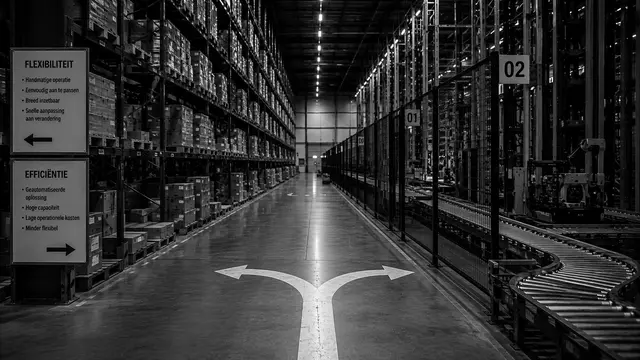

A 3PL operation is never entirely stable. New customers come on board, contracts change, volumes fluctuate, and every client has its own requirements for storage, order processing and handling. What is an efficient operation today can come under pressure again tomorrow.
OctaFlow helps 3PL and distribution companies set up their logistics operation so it stays efficient and flexible. Not just looking at today's situation, but especially at what's needed to keep performing well as volumes, customers and processes change.
The challenge lies in the variation
Where an in-house warehouse is often built around one product flow and a relatively predictable process, a 3PL has to facilitate several operations at the same time.
One customer has many pallets and few order lines. Another needs extensive order picking and frequent replenishment. Add seasonal peaks, temporary storage, unusual packaging and changing volumes on top of that.
That makes decisions around warehouse layout, internal transport and capacity more complex.
A forklift or order picker that works perfectly for one customer can be unnecessarily expensive or inefficient for another operation. The same applies to warehouse capacity, routing and staffing.
That's why good advice starts with understanding the full operation and the different customer flows within it.
Flexibility without unnecessary cost
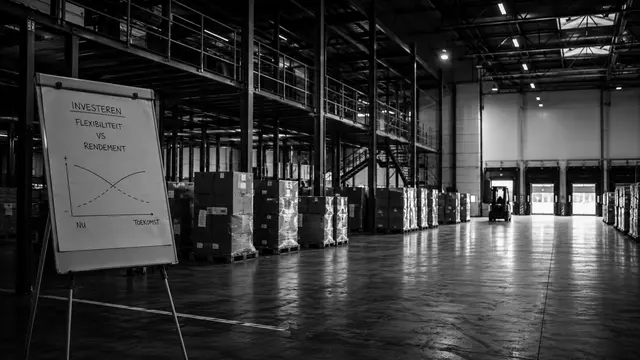
Flexibility matters for a 3PL, but flexibility shouldn't mean structurally holding too much capacity.
Too much equipment means higher costs and lower utilisation. Too little capacity causes waiting times, extra movements and problems during peaks.
Getting the balance right requires insight into, among other things:
- volumes and peak load
- different customer processes
- required storage capacity
- transport movements and distances
- utilisation of material handling equipment
- staffing
- cost per process or activity
- future growth and changing customer needs
OctaFlow looks not only at the equipment itself, but at why it's needed, how it's deployed and what it actually costs.
Where OctaFlow helps
Within 3PL and distribution, several questions regularly come together. The most important are:
Equipment advice
Choosing the right material handling equipment doesn't start with a brand or machine type, but with the operation. OctaFlow maps the work, volumes, distances, usage intensity and conditions, and translates these into a fitting equipment strategy.
Read more about equipment advice →Warehouse optimisation
With multiple customer flows, warehouse layout quickly becomes complex. OctaFlow analyses the logistics flows and looks for practical improvements that make the operation more efficient without adding unnecessary complexity.
Read more about warehouse optimisation →Tenders & procurement support
3PL companies regularly deal with investments in material handling equipment, lease contracts and service agreements. OctaFlow compares proposals based on total cost and terms.
Read more about tenders & procurement →An operation ready for the next customer
A good 3PL operation isn't just about working as cheaply as possible today. The setup also needs to leave room for growth, new customers and changing processes.
That's why OctaFlow looks beyond a single machine, warehouse layout or saving. The goal is a logistics operation that's transparent, scalable and practically workable.
Whether it's improving an existing operation, setting up a new site, or making choices around internal transport: OctaFlow brings logistics back to what it's really about.
An efficient operation that can keep pace with change.
Frequently asked questions
Why is logistics consultancy for 3PL companies different from a regular warehouse?
A 3PL operation has to serve multiple customer flows at the same time, each with its own requirements for storage, order processing and handling. Where an in-house warehouse is often built around one relatively predictable process, a 3PL needs a setup that can move with different customer profiles, seasonal peaks and changing volumes.
How do you prevent flexibility at a 3PL from leading to too much spare capacity?
By understanding, among other things, volumes, peak load, customer processes, storage capacity, transport movements, equipment utilisation and staffing. OctaFlow looks not only at the equipment itself, but at why it's needed and what it actually costs, so flexibility doesn't turn into structurally oversized capacity.
Which OctaFlow services come up most often for 3PL and distribution?
Usually equipment advice, warehouse optimisation, and support with tenders and procurement of material handling equipment. Which combination is most relevant depends on the specific customer flows and the stage the operation is in.
Is OctaFlow independent of forklift suppliers?
Yes. OctaFlow doesn't sell forklifts or other specific supplier solutions. That means the advice can start from the organisation's operational need, without a particular brand or product as the starting point.
A 3PL operation that grows with you
OctaFlow helps 3PL and distribution companies align equipment, warehouse layout and procurement with changing customer flows, without giving up efficiency.