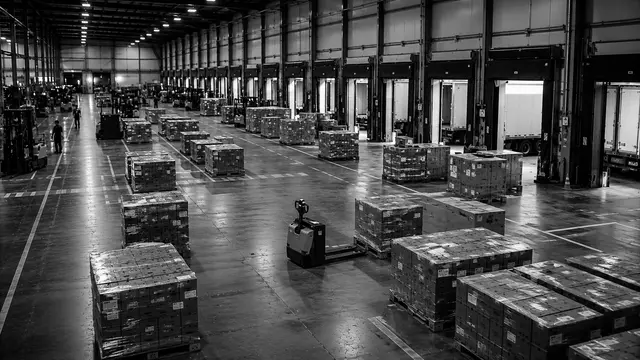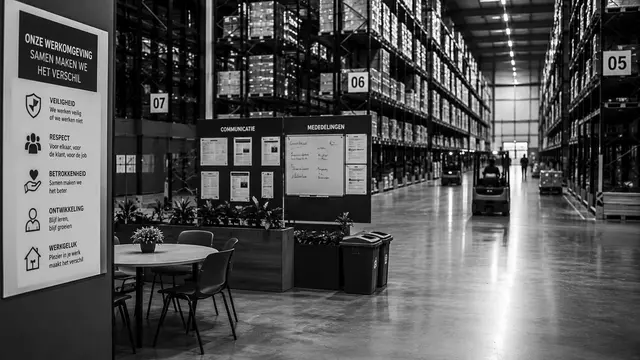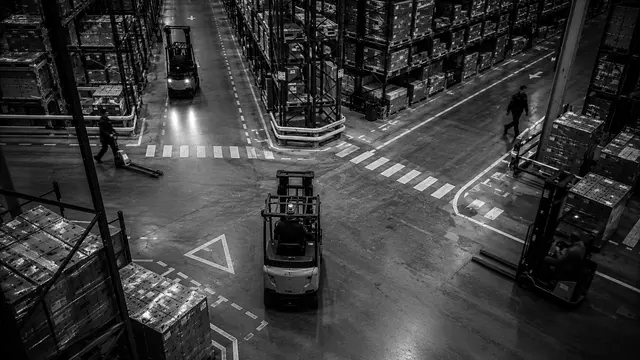

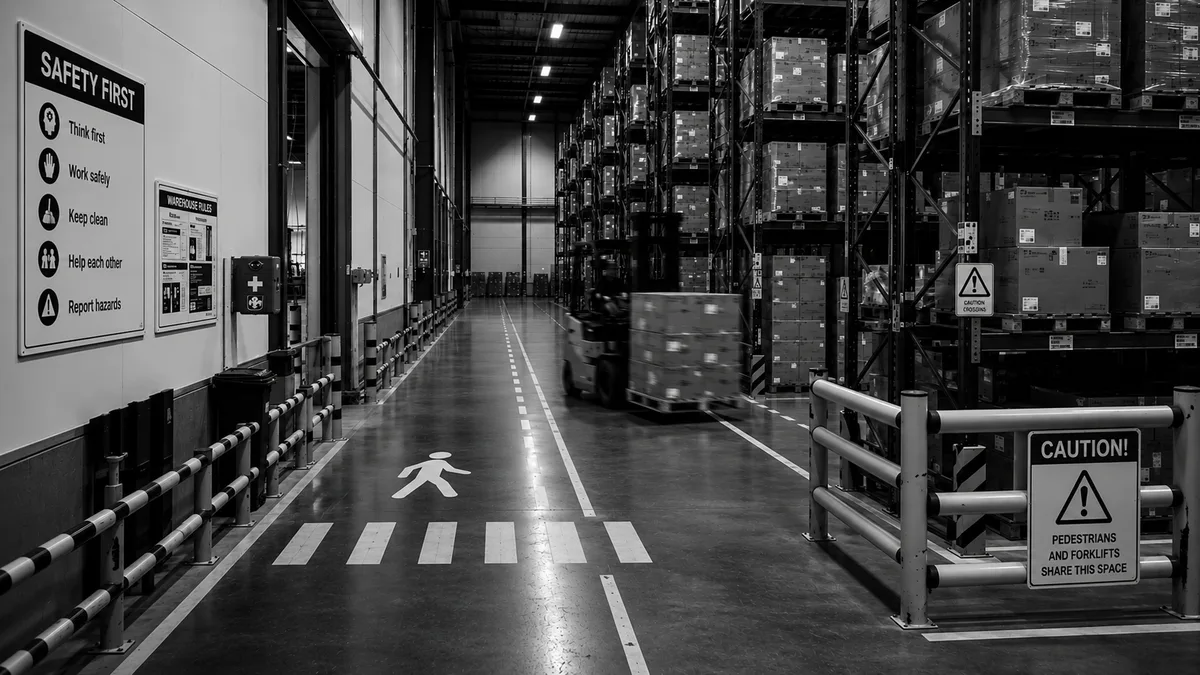
Warehouse safety is about removing the conditions in which accidents and damage can occur: the layout, the traffic flows, the sightlines and the workload, rather than only the behaviour of individual employees.
When damage occurs through a collision with a forklift or reach truck, attention turns straight to the driver. That is understandable, someone was behind the wheel after all. Yet in my experience that is rarely the full story. When several drivers cause damage in the same spot, that is no coincidence, it says something about aisle width, sightlines or the separation between pedestrians and internal transport.
Below are the questions I get asked most often about this, followed by all articles on the topic.
How do I know if my warehouse is safely laid out?
Not from one incident, but from patterns. Isolated events say little, but when the same type of damage or near miss keeps repeating, it almost always points to the layout rather than to chance or carelessness.
Signals that deserve attention:
- damage that keeps occurring in the same spot
- corners and crossings with limited visibility
- spots where pedestrians and forklift traffic cross
- near misses that are never recorded anywhere
- routes that change with busyness instead of staying fixed
- high driving speed in spots with little visibility
See why collision damage is rarely a driver problem for how to trace those patterns back to the real cause.
How do I lay out traffic flows safely and efficiently?
By physically separating pedestrians and internal transport wherever possible and limiting crossings to spots with good visibility. A route where people have to watch out, take detours or wait is almost always both less safe and slower, so safety and speed work together here, not against each other.
The same applies to driving speed itself. The difference between 8 and 12 kilometres per hour seems significant, but over a short distance it amounts to mere seconds, while wear, energy use and risk increase sharply. Read why driving faster does not always mean working faster.
How do I prevent collisions between forklifts, warehouse trucks and pedestrians?
Almost never with a warning to the driver alone. A collision that repeats in the same spot is a structural problem, not a behavioural one. Aisle width, sightlines at a corner and the separation of routes together determine how much room a driver actually has to react.
The causes that come up most often here are set out in why damage is rarely a driver problem.
Does my warehouse meet the key safety requirements?
An operational view of layout, traffic flows and workload reveals many practical risks, including risks that are easily overlooked in a formal assessment because they only show up in daily practice. That is different from a legal obligation.
OctaFlow is not a certifying body, and a Safety Scan does not replace a formal risk assessment (RI&E) or specialist safety inspection where required. Where formal or legal expertise is needed, that should be arranged separately, alongside the operational safety question that OctaFlow focuses on.
How do I combine safety with high productivity?
By treating safety as part of designing the operation, not as a separate layer on top. A tidy shop floor, good lighting and clear routes lower risk, and they also lower the time lost to waiting, dodging and searching.
That also affects how people feel at work. See why a good working environment is more than a safe workplace, and consider the free Warehouse Performance Check as a first step to see where attention is needed most.
Frequently asked questions
How do I know if my warehouse is safely laid out and where the biggest risks are?
Don't look only at incidents, look at patterns: damage that keeps recurring in the same spot, corners with poor visibility, spots where pedestrians and forklift traffic cross, and moments when workload peaks. Those patterns almost always point to the layout, not to one careless employee.
How do I lay out traffic flows in my warehouse safely and efficiently?
By physically separating pedestrians and internal transport wherever possible, limiting crossings and improving sightlines at corners and doorways. A route where people have to watch out, take detours or wait is almost always both less safe and slower, so safety and speed work together here, not against each other.
How do I prevent collisions between forklifts, warehouse trucks and pedestrians?
Almost never with a warning to the driver alone. When collisions repeat in the same spot, that says something about aisle width, sightlines, the separation of routes or the speed possible there. Structural causes need structural fixes in the layout.
How do I know if my warehouse meets the key safety requirements?
An operational view of layout, traffic flows and workload reveals many practical risks, but it does not replace legal obligations such as a formal risk assessment (RI&E) or specialist safety inspections where required. OctaFlow is not a certifying body: where formal or legal expertise is needed, that should be arranged separately.
How do I combine a safe warehouse layout with high productivity?
By treating safety as part of designing the operation, not as a separate layer on top. A tidy shop floor, good lighting and clear routes lower risk, and they also lower the time lost to waiting, dodging and searching.
Want to discuss your operation?
A logistics or operational question? OctaFlow is happy to think along. No fuss, just a good conversation.