
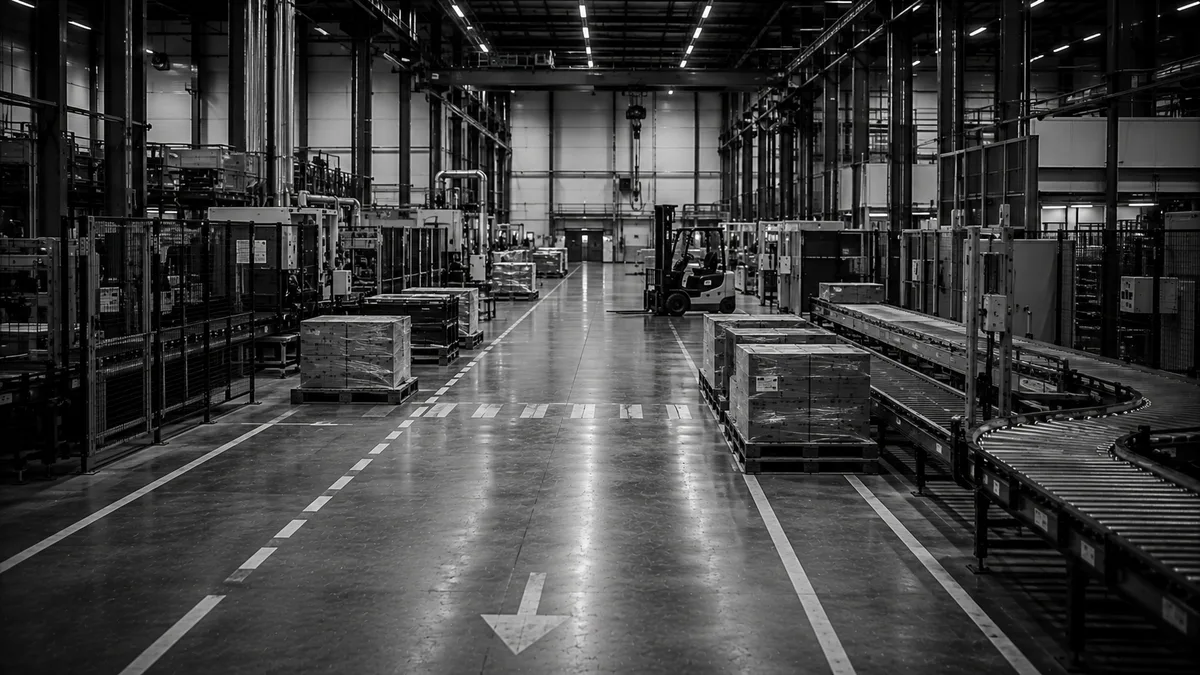
In a production environment, internal transport is not a standalone activity. Raw materials, semi-finished goods, packaging and finished product need to be in the right place at the right time. A disruption in internal logistics can directly affect production.
OctaFlow helps manufacturers set up their internal logistics so material flows run reliably, efficiently and predictably. We look not just at the warehouse or the material handling equipment, but at the full flow from incoming goods through to finished product.
No production without a good material flow
A production line can only keep running when the required materials are available exactly when needed. That sounds simple, but in practice this is exactly where unnecessary movements, waiting time and intermediate stock build up.
Material can be delivered too early, for example, leaving workstations cluttered. Or operators have to wait for raw materials because internal supply doesn't align well with the production process.
Long driving and walking distances, illogical storage locations, and a lot of manual transport can also have a major impact on operational efficiency.
The challenge, therefore, isn't just moving goods, but moving the right goods at the right time with as few unnecessary movements as possible.
Continuity comes first
A production site often has less room to tolerate internal logistics not working well for a while. When a production line grinds to a halt because material isn't available, costs can rise quickly.
That makes reliability a key starting point for decisions about internal transport and warehouse layout.
OctaFlow looks at, among other things:
- material flows between warehouse and production
- supply frequencies
- transport distances and driving routes
- required buffers and intermediate stock
- deployment and utilisation of material handling equipment
- safety around production lines
- peak load and shift patterns
- opportunities for automation
- total cost of the logistics operation
The goal is not to strip as much transport as possible out of the operation, but to prevent unnecessary transport movements and disruptions.
From warehouse to production line
In many production environments, a large part of the logistics gain doesn't lie in the warehouse itself, but in the connection between storage and production.
An efficient warehouse layout has little value when materials then have to travel long distances to the production line. Conversely, a smart production layout can create extra stock or transport capacity needs when supply isn't well organised.
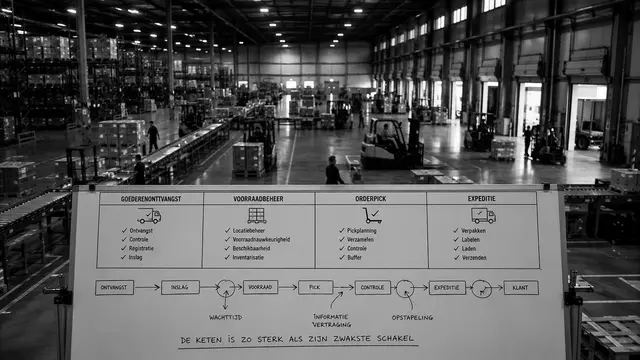
That's why OctaFlow looks at the logistics chain as a single whole.
Where do materials come in? Where are they stored? How often are they delivered? What route do they take? Where does waiting time arise? And which movements actually add value?
Where OctaFlow helps
Within production, several questions regularly come together. The most important are:
Warehouse optimisation
A production warehouse often has different requirements than a traditional distribution warehouse. OctaFlow analyses material flows, storage and routing, and looks for a more logical, more efficient logistics operation.
Read more about warehouse optimisation →Equipment advice
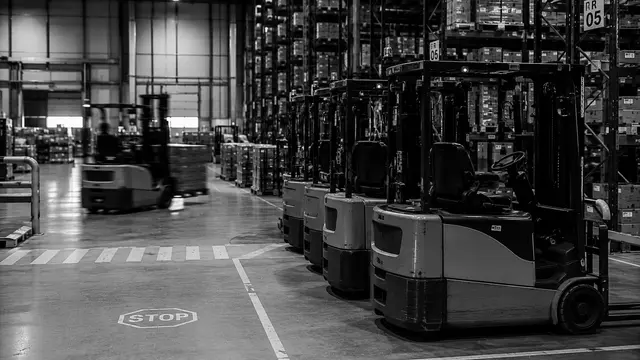
The right material handling equipment depends strongly on the production flow. OctaFlow assesses use, distances, load, frequency and conditions, and translates this into a fitting equipment strategy.
Read more about equipment advice →Automation
When material flows are predictable and involve many repeated movements, automation can become interesting. OctaFlow first looks at the logistics fundamentals: automation is not a goal in itself, but a means to solve a concrete problem.
Read more about the operational quick scan →Production logistics that keeps running
You often only notice good internal logistics when it stops working well. Materials aren't ready on time, employees wait, machines cover unnecessary distances, and production lines become dependent on manual workarounds.
OctaFlow helps manufacturers surface those dependencies and better align internal logistics with the production process.
No more transport than necessary. No unnecessary stock or movements. Just a logistics operation that supports production the way it should.
Production sets the pace. Logistics has to be able to keep up.
Frequently asked questions
Why is internal logistics so decisive for a production environment?
Raw materials, semi-finished goods, packaging and finished product need to be in the right place at the right moment. A disruption in internal logistics can therefore directly affect production, while a production site often has less room to tolerate internal logistics not working well for a while.
How do you prevent material arriving too early or too late at the line?
By aligning the material flow between warehouse and production, supply frequencies, transport distances and required buffers. Material delivered too early clogs up workstations; material that arrives too late leaves operators waiting. Both cost money.
Which OctaFlow services are most relevant for manufacturers?
Usually warehouse optimisation and equipment advice, focused on the link between storage and the production line. When material flows are predictable and repetitive, it's also worth examining whether automation solves a real problem.
Is automation always the right solution for production logistics?
No. Automation is not a goal in itself, but a means to solve a concrete problem. OctaFlow looks at the logistics fundamentals first, before automation is considered as a solution.
Internal logistics that supports production
OctaFlow helps manufacturers align material flows, warehouse layout and equipment with the pace of the production line.