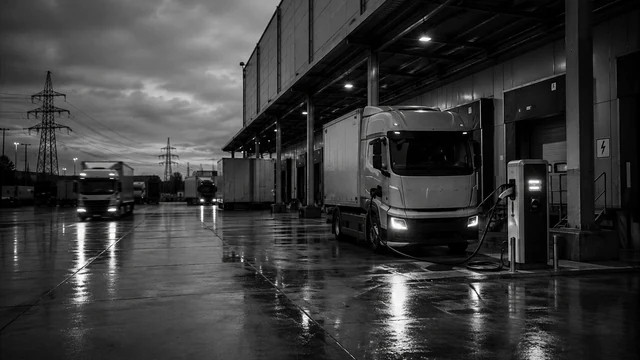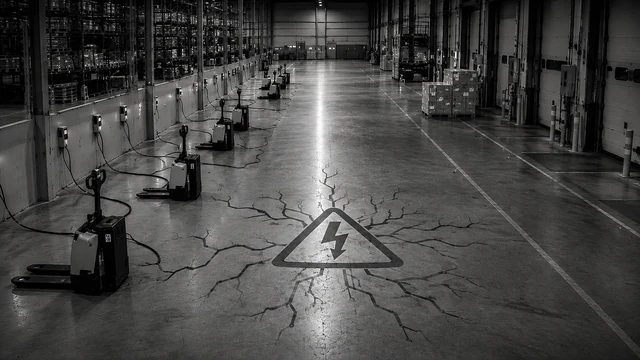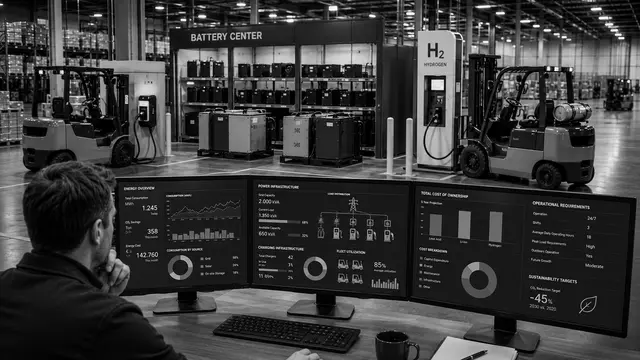

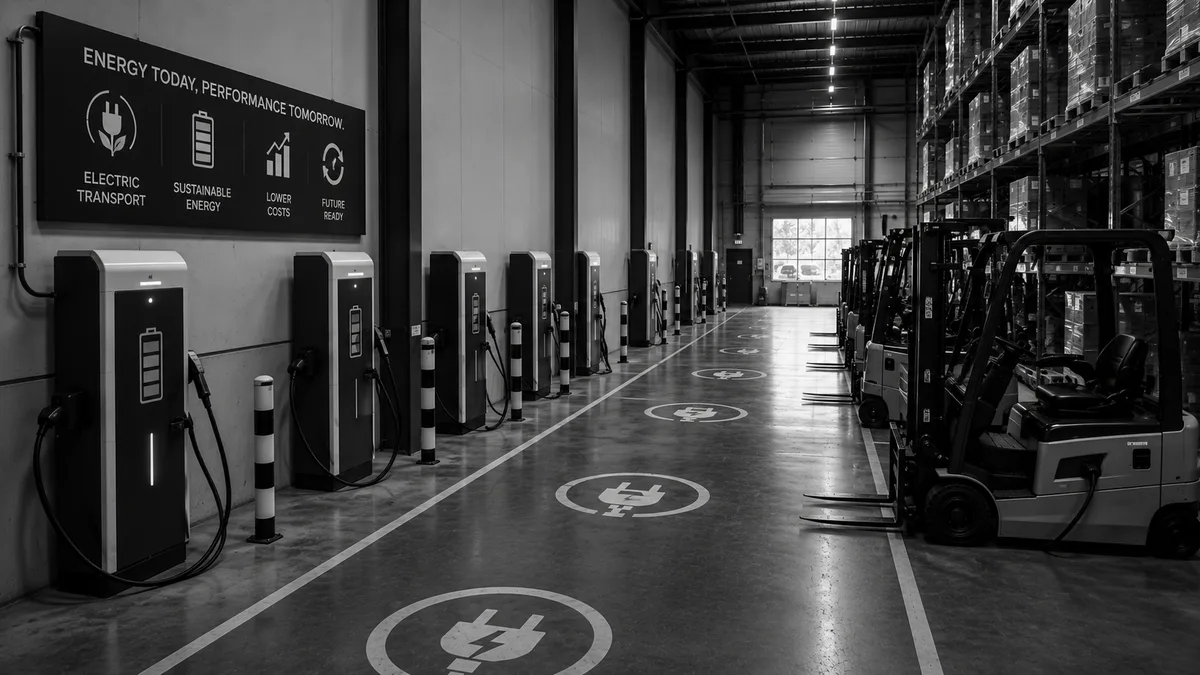
The energy transition in logistics is the shift from fossil to electric power for material handling, buildings and transport, including everything that comes with it: battery technology, charging infrastructure, energy management and the available capacity of the grid connection. Grid congestion is the situation in which the electricity grid can no longer deliver that requested capacity.
The question I get most often is which power source is best: diesel, gas, lead-acid, lithium-ion or hydrogen. The honest answer is that the question comes too early. A battery that technically fits the deployment profile perfectly can still be the wrong choice when there is no room to charge it at the right moment. Electrification shifts the question from the machine to the infrastructure around it.
Below are the questions I get asked most often about this, followed by all articles on the topic.
Is switching to electric forklifts worthwhile for my business?
That doesn't start with the machine, it starts with the deployment profile: how many hours a day the equipment runs, whether there is room to charge in between, and how much grid capacity the site has available. Electric is far from always the obvious choice, despite the picture often painted.
Operating hours per day
Intensively used machines need a different charging regime than trucks that only run part of the day.
Room for interim charging
Lithium-ion enables opportunity charging, but that only works if the process leaves room for it.
Available grid capacity
Fleet ambition and connection capacity need to line up from the very start.
Indoor or outdoor use
Emissions and noise weigh more heavily inside a building, which makes electric attractive faster there.
Only once deployment, charging opportunity and grid connection line up does the switch become worthwhile in practice. See why the energy transition in material handling is more complex than many people think.
How much charging capacity do my electric trucks need?
Not by simply multiplying the number of machines by a charger's power rating. What matters is peak power: how many machines charge at the same time and at what moment. Ten machines charging in a spread pattern need far less connection capacity than ten machines all going on charge at five o'clock together.
In many warehouses the trucks go on charge at the end of the shift, exactly when the peak is greatest. Read why your next logistics bottleneck isn't a forklift, it's your power supply.
How do I prevent charging infrastructure from becoming a bottleneck?
By spreading charging moments instead of concentrating them all at the end of the shift, and by treating the grid connection as a design question rather than something you arrange at the end of a project. New automation, heat pumps, extra chargers and now customers' electric trucks as well all draw power from the same connection.
In large parts of the Netherlands extra grid capacity is scarce and a heavier connection can take years. See charging electric trucks at your warehouse for how that customer demand factors into the design.
What does the switch cost, and when does it pay off?
Look beyond the purchase price of the machine. Charging infrastructure, any grid reinforcement, battery replacement and energy costs over the useful life together determine whether electric works out cheaper than diesel or gas. That calculation varies sharply by site, mainly because of available grid capacity and the fleet's deployment profile.
A solid calculation therefore belongs in the business case, not as an afterthought. Want to know first where your energy question stands today? The free Warehouse Performance Check gives an initial indication.
How do I set up my energy supply for future growth?
By designing the charging infrastructure with a larger fleet, extra automation and possibly charging for customers' electric trucks already in mind, instead of sizing it exactly to today's situation. Applying for grid capacity takes time, so that margin needs to be built in upfront.
That calls for the same lens as with equipment: not just looking at what's needed today, but at what the operation will demand in a few years. See also forklift, reach truck and MHE advice for how fleet size and electrification connect.
Frequently asked questions
How do I determine whether switching from diesel or LPG to electric forklifts is worthwhile for my business?
Start with the deployment profile: how many hours a day the equipment runs, whether there is room to charge in between, and how much grid capacity the site has available. Electric is far from always the obvious choice. Only once deployment, charging opportunity and grid connection line up does the switch become worthwhile in practice.
How do I determine how much charging capacity my electric forklifts and warehouse trucks need?
Not by simply multiplying the number of machines by a charger's power rating. What matters is peak power: how many machines charge at the same time and at what moment. Ten machines charging in a spread pattern need far less connection capacity than ten machines all going on charge at five o'clock together.
How do I prevent my charging infrastructure from becoming a bottleneck in my logistics operation?
By spreading charging moments instead of concentrating them all at the end of the shift, and by treating the grid connection as a design question rather than something you arrange at the end of a project. Waiting until machines stand idle without power is the most expensive signal you'll get that the infrastructure didn't keep pace.
What does the switch to electric material handling cost and how do I calculate whether that investment pays off?
Look beyond the purchase price of the machine. Charging infrastructure, any grid reinforcement, battery replacement and energy costs over the useful life together determine whether electric works out cheaper than diesel or gas. That calculation varies sharply by site, mainly because of available grid capacity.
How do I set up my energy supply and charging infrastructure for the future growth of my electric fleet?
By designing the charging infrastructure with a larger fleet, extra automation and possibly charging for customers' electric trucks already in mind, instead of sizing it exactly to today's situation. Applying for grid capacity takes time, so that margin needs to be built in upfront.
Want to discuss your operation?
A logistics or operational question? OctaFlow is happy to think along. No fuss, just a good conversation.