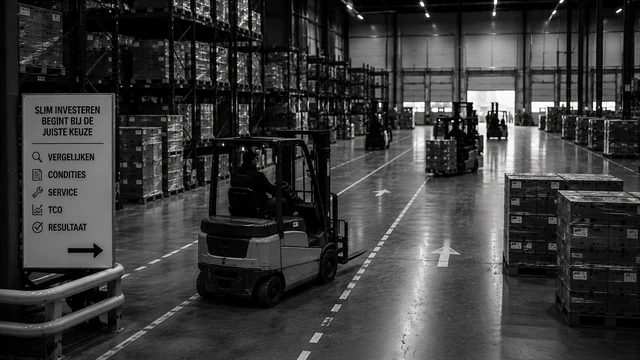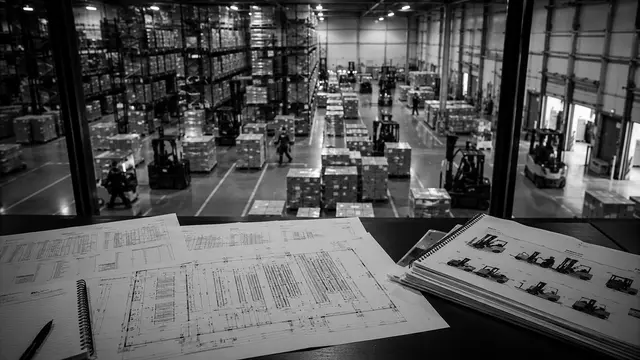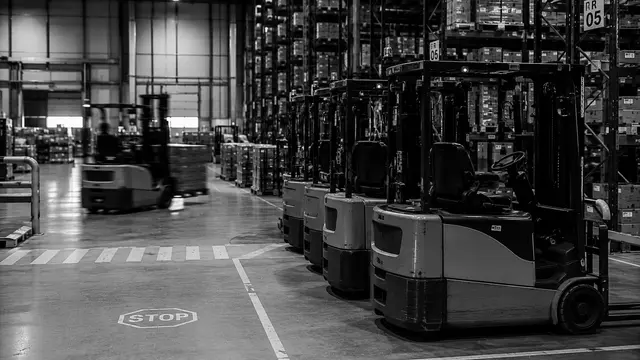
Today your warehouse runs without major problems. The forklifts charge overnight, the conveyors run, the lights are on and the grid connection meets current demand.
Grid capacity is the maximum amount of power your grid connection can deliver at any given moment. Charging infrastructure for electric trucks is the whole of charging points, power distribution and control needed to charge trucks on your own site. The difference in scale is significant: a battery charger for a forklift requires 5 to 15 kW, a DC fast charger for an electric truck 150 to 350 kW per charging point.
Everything seems under control. Until an important customer asks a simple question: "Can our electric trucks also charge at your site while loading and unloading?"
It seems a logical question. In fact, the chances are you will be asked it more and more often in the coming years. And that is exactly where a challenge begins for many logistics organisations, one that goes far beyond a couple of extra charging points.
The energy transition doesn't stop at your own fleet
More and more shippers are making their transport more sustainable. Some do so out of conviction, others because legislation and regulation require it. Clients too are increasingly setting sustainability requirements for their logistics partners. Where price, lead time and quality used to be the main considerations, CO₂ emissions, electrification and sustainable logistics now play an ever larger role in the choice of a logistics service provider.
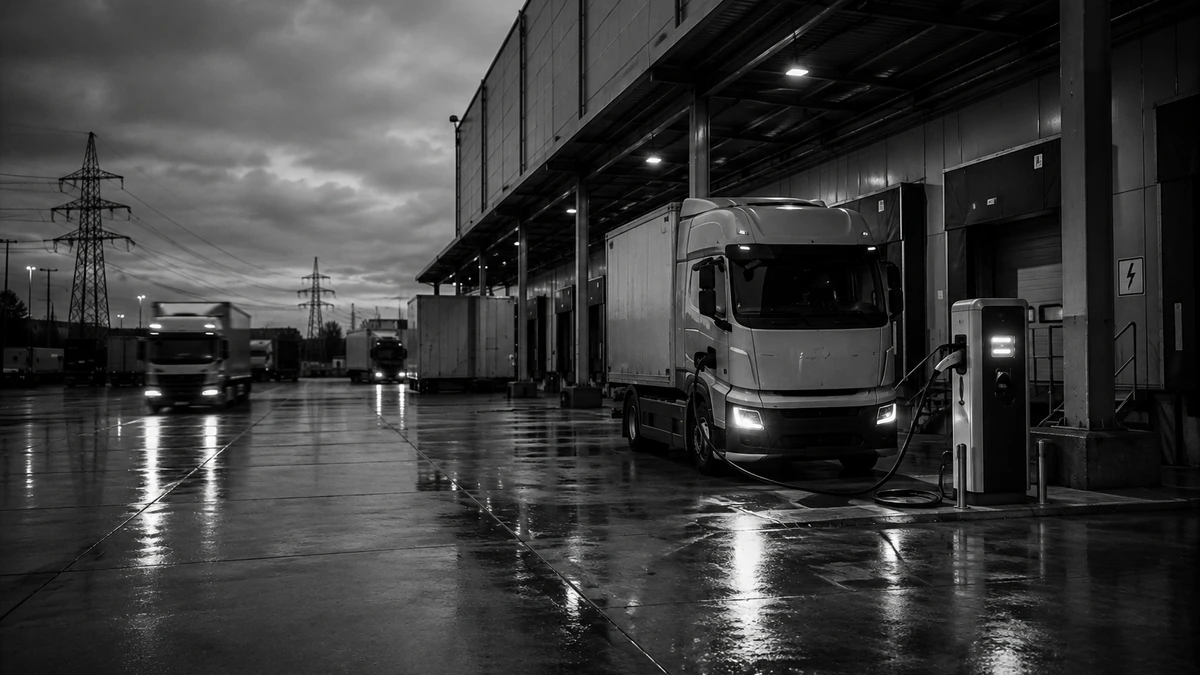
That changes the demand towards warehouses as well. It is not only your own equipment that has to be able to run electrically: increasingly, there is a wish to charge customers' electric trucks at your location too, during waiting times or while loading and unloading. Today that may still be an exception, but in a few years it could easily be a standard requirement.
When a commercial opportunity turns into a technical problem
Suppose one customer asks for two charging points. That still seems manageable. But what happens when several customers have the same wish, or when a large customer indicates that this is becoming a condition for continuing the partnership? Then a very different question arises.
Where a battery charger for an electric forklift often requires between 5 and 15 kW, the power of a DC fast charger for electric trucks quickly sits between 150 and 350 kW per charging point. A single truck charger can therefore demand as much power as dozens of MHE chargers combined. And one charging point is probably not going to be enough.
The grid was already barely holding up today
Many warehouses are already running into the limits of their grid connection. New forklifts, automated warehouses, shuttle systems, AMRs, conveyors, heat pumps, solar panels and battery storage: everything requires electricity. Often the installation still runs just within the available capacity today.
But as soon as several heavy truck chargers are added, the situation changes completely. And that is exactly when the next challenge comes into view.
A bigger grid connection isn't arranged overnight
Many business owners think a bigger connection is a matter of submitting an application. Practice is different. In large parts of the Netherlands extra grid capacity is scarce and the lead time can run into years. That means the technical solution may already be available, while the required grid capacity cannot be delivered for a long time yet.
That is precisely why waiting is not a strategy.
Looking ahead is a competitive advantage
Perhaps no customer is asking for charging facilities today. But what happens if your largest client does so next year? Will you be able to answer straight away that it has already been prepared, or will you have to explain that expansion is impossible for now because of the available grid capacity? That difference can ultimately determine whether you retain customers and win new contracts.
The right question isn't: do we need charging points?
Many organisations start with the technology. How many charging points do we need? Which charger should we buy? How heavy does the connection need to be? Those are important questions, but they are not the first ones.
The first question is what your energy demand will look like in five or ten years. Only once that future picture is clear can you determine which investments are sensible today.
A future-proof warehouse needs an energy vision
The energy transition is not a temporary project. It changes the way warehouses are designed, expanded and automated. Anyone who invests today only for today's situation runs the risk of having to invest again tomorrow.
By gaining insight now into future energy demand, grid capacity and expansion possibilities, you prevent growth from later being limited by a connection that once seemed sufficient.
More than just charging points
A future-proof energy strategy goes beyond extra charging points. Think for example of:
- smart charging based on available grid capacity
- battery storage for peak load
- energy management systems
- phased expansion of charging infrastructure
- smart planning of charging moments
- reserving space for future expansion
- alignment between automation and energy supply
It is precisely the combination of these elements that determines whether a warehouse is ready for the next step.
Conclusion
The energy transition is not a development that takes place somewhere in the future, it is already on the doorstep today. You may still notice little of it right now, but the chances are that the question will not start with your own organisation, but with your customers. And that is exactly when you do not want to discover that the technology or the grid capacity is the limiting factor.
To look ahead is to govern. Not because everything has to change tomorrow, but because tomorrow you may no longer have the time to start today.
Frequently asked questions
How much power does a charging point for an electric truck require?
A DC fast charger for an electric truck typically requires 150 to 350 kW per charging point. For comparison: a battery charger for a forklift requires 5 to 15 kW. A single truck charger can therefore demand as much power as dozens of MHE chargers combined.
Can I simply apply for a heavier grid connection?
Usually not. In large parts of the Netherlands extra grid capacity is scarce and the lead time of an application can run into years. The technology is often available sooner than the grid capacity, which makes waiting to plan an unwise strategy.
Why should I think about charging points for customers now?
Because the question often does not start with your own organisation, but with your customers. Shippers increasingly set sustainability requirements for their logistics partners. When a large client makes charging facilities a condition, the available grid capacity determines whether you can say yes.
What belongs in a warehouse energy strategy besides charging points?
Think of smart charging based on available grid capacity, battery storage for peak load, energy management systems, phased expansion of charging infrastructure, smart planning of charging moments, reserving space for future expansion, and alignment between automation and energy supply.

Sjef Kerkvliet is the founder of OctaFlow and has more than 15 years of experience in intralogistics, warehouse optimisation and internal transport. Drawing on his hands-on experience, he helps organisations with questions around goods flows, process improvement, warehouse layout, automation and operational efficiency.
Want to talk about your operation?
A logistics or operational challenge? OctaFlow is happy to think along. No fuss, just a good conversation.