For small, routine equipment purchases a tender is often unnecessary, comparing a few quotations side by side works perfectly well. But there is a clear point beyond which that is no longer enough, and where guidance makes the difference between a good and a mediocre outcome.
A tender manager in an MHE purchase does not only guide the comparison of quotations, but also tests whether the original request itself is still the right question, so the advice comes from within rather than only afterwards from a supplier.
When it becomes worth it
As the investment grows larger, the fleet more complex, or the contract runs longer, the risk of a wrong choice grows too. For an investment fixed for several years, the first quotation is rarely the best, simply because suppliers know there is little pushback when comparisons are not done professionally.
A few situations where tender management pays for itself: replacing a large part of the fleet at once, a procurement where multiple parties must respond under the same conditions, contracts with a long term where the terms stay fixed for years, and investments where the internal knowledge to critically assess suppliers is lacking.
Are you actually aligned internally? In the free Octagon each role divides 40 points across eight dimensions of an MHE decision separately, and one picture shows you where the priorities diverge.
What a tender manager does differently than a buyer
An internal buyer knows the company well, but does not always have insight into how the market works on the other side of the table: what margins are customary, which terms are negotiable, and where suppliers leave room that is rarely noticed by someone who does not deal with it daily.
That is not because buyers do a poor job, but because experience on the commercial side of the market simply yields different knowledge than experience on the buying side.
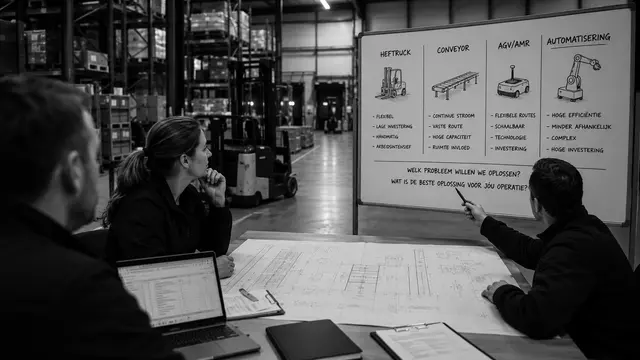
Just as important is a role that is often underestimated: a good tender manager does not simply take the request at face value. Before the request goes out to suppliers, it is first critically reviewed to check whether this is actually the right question. Is this type of equipment still the best solution for the challenge, or was the specification once set based on what was already in place, rather than what the operation needs today? That advice then comes from within, based on knowledge of the operation itself, rather than only afterwards from a supplier simply responding to a request that was already fixed.
What the process delivers in practice
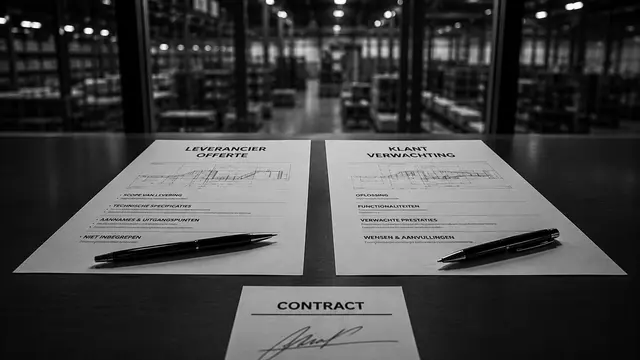
A well-guided tender does not only deliver a lower price, although that is often the case too. Just as important are clear terms, comparable quotations that can genuinely be placed side by side, and a contract that does not still cause surprises three years later.
The question I would give everyone before a signature is placed: has this quotation been compared with an equivalent alternative, or is this simply the first one that came in.
Frequently asked questions
When does tender management make sense for an MHE purchase?
Especially for large investments, a complex fleet, long-term contracts, or when internal knowledge to critically compare suppliers is lacking. For small, routine purchases a few quotations are usually enough.
What does a tender manager do differently than a buyer?
A tender manager not only knows the market from the commercial side, but also tests the request itself: is this actually the right question, or is it unknowingly already steering towards a particular solution. That advice then comes from within, not from the supplier responding to it later.
Does tender management always save money?
Often yes, but just as important are clear terms, comparable quotations and a contract that does not cause surprises later on.

Sjef Kerkvliet is the founder of OctaFlow and has more than 15 years of experience in intralogistics, warehouse optimisation and internal transport. Drawing on his hands-on experience, he helps organisations with questions around goods flows, process improvement, warehouse layout, automation and operational efficiency.
Want to talk about your operation?
A logistics or operational challenge? OctaFlow is happy to think along. No fuss, just a good conversation.