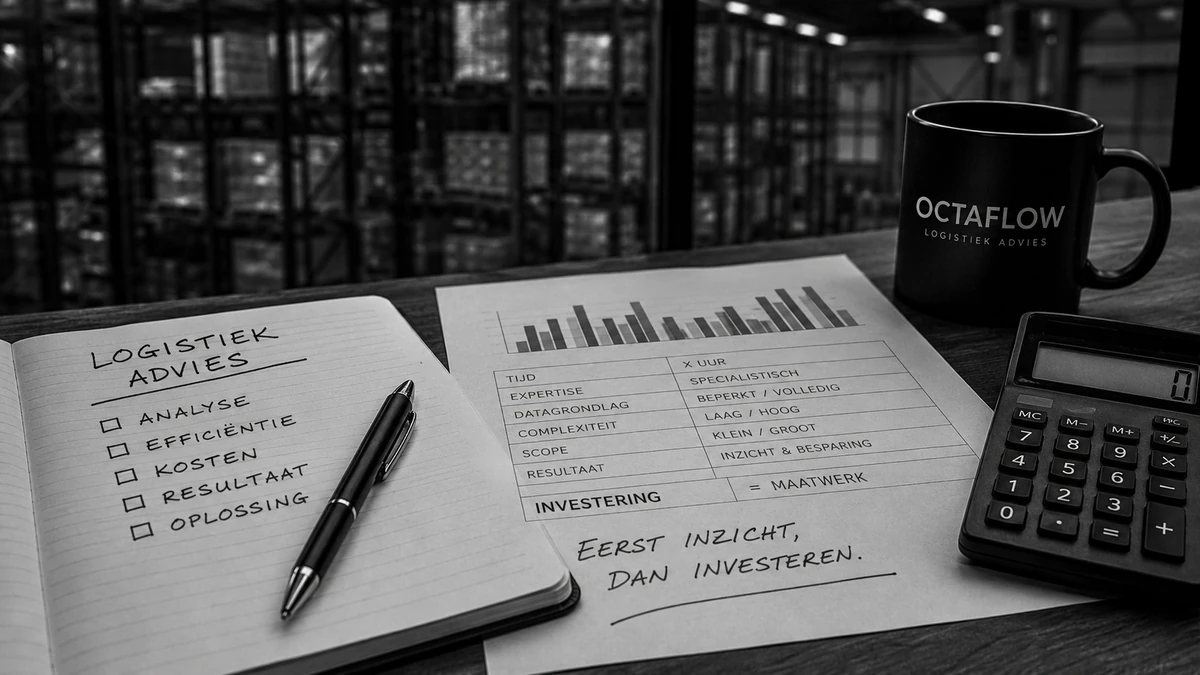
It is a question rarely asked out loud, but almost always on people's minds: what does a logistics consultancy actually cost? A logical question, yet one without a standard answer.
The cost of a logistics consultancy has no fixed price: it is determined by the size of the operation, the number of locations and the desired depth of the review, not by a standard rate.
The cost of a logistics advisory project can vary widely. That is because no two warehouses, distribution centres or logistics processes are the same. The size of the operation, the complexity of the question and the desired depth of the research ultimately determine how much time an advisory project requires.
Why the price differs so much
Within the logistics consultancy sector, fixed standard prices are practically never used. One organisation wants a first independent assessment of the current situation, while another is looking for a complete improvement project including implementation support. That calls for a different approach, and therefore a different time investment.
Factors that determine the scope of an advisory project include the size of the site and the number of logistics processes, the number of locations to be examined, the availability and quality of operational data, the desired depth of the analysis, and whether only an advisory report is required or also guidance during execution.
Only once these elements are clear can a realistic estimate be made of the work involved and the associated investment.
Free advice rarely exists
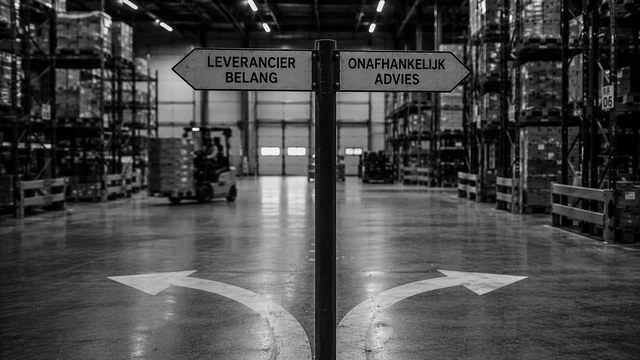
When comparing logistics consultancies, it stands out that some parties offer advice for free or at a very low rate. That sounds appealing, but it is wise to also look at the business model behind the advice.
A simple rule of thumb is: if advice is free or exceptionally cheap, you are probably the product. In many cases the consultant is not paid by the client, but by a supplier of, for example, forklifts, warehouse racking, software or automation solutions. That does not necessarily have to be wrong, but it can influence the independence of the eventual advice.
An important question to always ask is therefore: who pays the consultant, and can those interests influence the proposed solution?
Independent advice is about the best solution
An independent logistics consultancy receives no provisions or commissions from suppliers. As a result, there is no drive towards selling a particular brand, system or supplier, only towards the solution that best fits the logistics processes and objectives of the organisation.
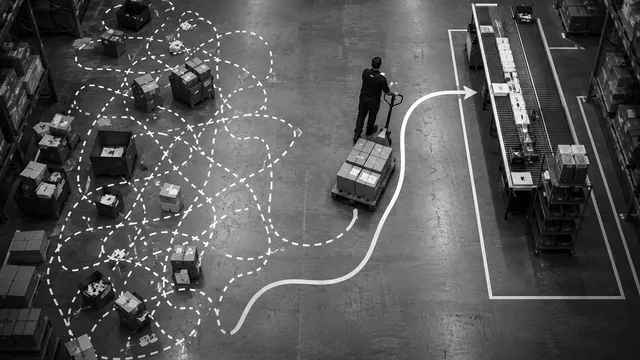
That also means the outcome of a review does not always have to be a large investment. Relatively small process improvements, an adjusted warehouse layout or a more efficient way of working regularly turn out to deliver a greater return than a costly automation solution.
How does an advisory project work?
At many independent logistics consultancies, a project starts with a no-obligation introductory conversation. During this conversation, the current situation, the objectives and the main challenges are discussed. Based on that, it can be determined which approach is most suitable and how much time the research is expected to take.
Precisely because every warehouse and every organisation is different, a proposal is only drawn up once the situation has been properly mapped out. That results in an advisory project that matches the actual need, rather than being based on a standard package.
Insight first, then a proposal
Good logistics advice does not start with a fixed price, but with a solid understanding of the organisation and its logistics processes. Only once it is clear which questions need to be examined can a suitable approach and a realistic price be established.
At OctaFlow, every project therefore starts with a no-obligation introductory conversation. Only once it is clear what the organisation needs does a concrete proposal follow. That way you know exactly what to expect in advance, without hidden interests or surprises afterwards.
Frequently asked questions
What does a logistics consultant cost on average?
There is no fixed answer to that. The cost depends on the size of the operation, the number of locations, the desired depth of the research and whether implementation guidance is also required. A realistic estimate can only be given after a no-obligation introductory conversation.
Why do some consultancies offer free advice?
Often because the consultant is not paid by the client, but by a supplier of, for example, forklifts or software. That can influence the advice, even if that is not always the intention.
How do I know if a logistics consultancy is independent?
Ask explicitly whether the consultant receives commissions or provisions from suppliers, and whether equipment or systems are also sold. An independent firm has no stake in that.

Sjef Kerkvliet is the founder of OctaFlow and has more than 15 years of experience in intralogistics, warehouse optimisation and internal transport. Drawing on his hands-on experience, he helps organisations with questions around goods flows, process improvement, warehouse layout, automation and operational efficiency.
Want to talk about your operation?
A logistics or operational challenge? OctaFlow is happy to think along. No fuss, just a good conversation.