
Managing a forklift fleet takes time, knowledge and attention. Not every organisation has the size or the need to appoint a full-time fleet manager for it. Yet the costs of internal transport equipment can quietly rise precisely when nobody is structurally responsible for managing them. With independent on-demand fleet management, OctaFlow helps organisations keep control of costs, deployment, maintenance and safety, without needing a full-time role for it.
On-demand fleet management (also called interim or fractional fleet management) means that an independent specialist periodically oversees the full picture of a forklift fleet: costs, utilisation, maintenance, damage, contracts and inspections. That can be monthly, quarterly or yearly. The organisation gets the expertise of a fleet manager without hiring a full-time employee for it.
Fleet management matters more than it first appears
In many logistics organisations, managing the forklift fleet is split across several people. The maintenance department deals with breakdowns and servicing, the warehouse manager looks after daily operations and the purchasing department manages the contracts. Everyone has their own responsibility, but who oversees the full picture?
Who oversees the full picture?
Each department sees part of the fleet. The whole often falls in between.
That is not necessarily a problem. A fleet of twenty, fifty or a hundred machines does not automatically need a full-time fleet manager. The challenge arises when the overview is missing and nobody has enough time to keep track of how the different parts fit together.
Fleet management then tends to happen in between other work. A maintenance question is picked up when a breakdown occurs, damage is dealt with once the invoice arrives and a machine is replaced when the need presents itself. Meanwhile, lease contracts keep running, operational needs change and the number of machines can slowly grow without anyone reassessing whether the whole fleet is still needed.
The machines keep running, the operation carries on and there seems to be little wrong. But that does not mean the fleet is being managed as well as it could be.
A fleet that works operationally is not automatically a fleet that is well managed financially and organisationally.
Where do costs arise when the overview is missing?
The cost of a forklift fleet is more than the purchase price or the monthly lease payments. Maintenance, damage, downtime, energy use, insurance and actual utilisation together determine what a fleet costs the organisation. When these elements are looked at separately, problems can pile up without anyone tackling the cause structurally.
1. Damage: from incident to structural cost
Damage to forklifts, racking, doors and other parts of the warehouse is handled incident by incident in many organisations. The machine is repaired, the invoice is processed and the operation moves on. That solves the immediate problem, but it does not mean the underlying cause has gone away.
When the same kinds of damage keep coming back, it is important to look further. Does the damage occur at specific locations? Are there particular machines or tasks where things go wrong more often? Do driving behaviour, workload, sight lines or the warehouse layout play a role? And is damage actually recorded and analysed periodically?
Without that analysis, tackling damage often stays limited to repairing it. By recording incidents structurally and making patterns visible, you can determine where measures will have the most effect. That might lead to changes in routing, additional instructions, targeted training or a different workplace layout. You can read more about this in forklift damage: causes and a structural approach.
Reducing damage costs therefore takes more than good repair handling. Above all, it takes insight into the causes and the willingness to change something about them.
2. Maintenance: does what you pay match what you need?
Maintenance contracts provide certainty and help keep equipment available. Even so, it is sensible to assess periodically whether the agreements still match how the machines are actually used.
Which maintenance costs are being incurred? How often do breakdowns happen? How much downtime results? Are costs correctly allocated to the machines concerned, and are there striking differences between comparable trucks? It is also worth assessing whether the current maintenance agreements suit the age, usage and technical condition of the fleet.
A contract that made sense at the start does not have to be the best solution a few years later. Tasks can change, machines can be used less intensively and the make-up of the fleet may have changed. Without periodic review, existing agreements risk simply rolling on unnoticed.
The aim is not to organise maintenance as cheaply as possible. Reliability, safety and availability remain essential. What matters is that costs and the service delivered are in proportion to what the operation needs.
3. Too many machines, too little use
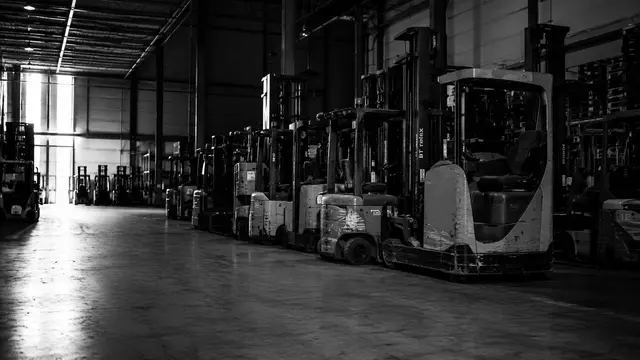
Another common challenge is the size of the fleet. Machines are regularly added because the operation grows, a new customer is taken on or peak capacity seems insufficient. That can be a logical decision, but the question is whether the need is reassessed later.
A machine that was essential during a busy period can sit largely unused in a quieter season. Tasks can also shift, processes can change, or different departments may think they need machines when there are opportunities to share capacity.
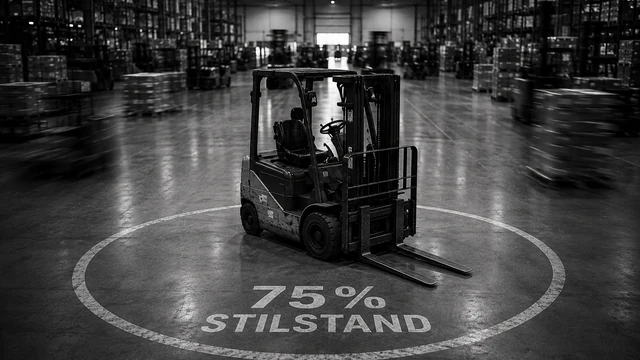
That is why it is important to look not only at the number of forklifts, but also at how they are actually used. How many running hours do the machines log? When do peaks in demand occur? Are there trucks standing idle almost every day, and are there moments when available capacity actually falls short? In why your forklift probably stands still more than it drives you can read how to calculate the utilisation rate of your fleet.
Low utilisation does not automatically mean a machine is surplus, by the way. A truck may be needed for peak loads, specific tasks or continuity when another machine breaks down. Assessing it properly requires insight into usage, capacity and operational risks.
Combining that data gives a better picture of the real need. Sometimes it turns out that machines can be disposed of or contracts adjusted. In other situations the fleet is large on paper, but its make-up is not suited to the work it has to do. See also fleet size: too big is expensive too.
Machines turning out to be surplus? With the Residual Value Check you put a second price from the market next to your supplier's offer. Free and without obligation, within five working days.
4. Contracts that run on while needs change
A forklift contract is usually agreed for a fixed period. During that term, however, circumstances within an organisation can change considerably. A site grows or shrinks, a process is reorganised or a machine is barely used any more.
When contracts are not monitored centrally, there is a risk that renewals, end dates and notice periods are spotted too late. As a result, an organisation can be tied to agreements for longer than it wants, or a replacement decision is made without all alternatives having been explored in time.
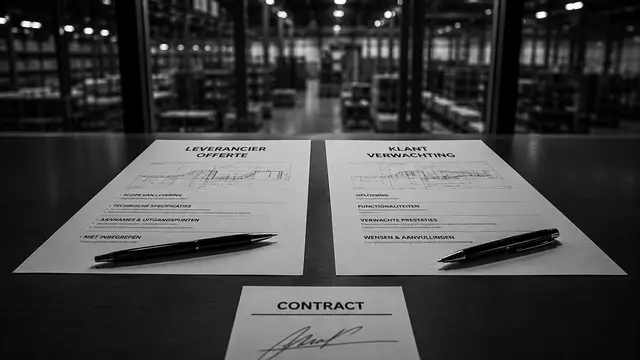
Good fleet management therefore also means having the contractual side in order. Which agreements apply to each machine? When do the contracts end? Which notice periods apply? Are there agreements that no longer match current use, and which decisions need to be prepared well before an end date? What to look for in new agreements is covered in MHE contracts: clarity before you sign.
By looking at this periodically, an organisation keeps the room to make considered choices instead of reacting to an approaching contract deadline.
5. Inspections, safety and overview
Besides costs and utilisation, safety also needs structural attention. Have the relevant inspections and checks been carried out on time and recorded verifiably? Is it clear who is responsible for following up on findings? And is there enough overview to prevent a deadline or a necessary action from getting stuck between departments?
The exact obligations depend on the type of equipment, the application and the applicable regulations. It is therefore important to look not only at an inspection date, but also at the requirements that apply, the documentation and the follow-up of any defects.
When information is scattered across emails, maintenance systems and separate files, it can be hard to keep the full picture in view. A central overview of the fleet, the relevant documents and the planned actions makes it easier to spot deviations in time and keep responsibilities clear.
Quick fleet check: how well do you know your fleet?
Eight questions, ten seconds. Nothing is stored or sent.
Want to go deeper? Take the free MHE Fleet Health Check: eighteen questions and a personal report.
Why fleet management often falls short alongside daily work
The topics above are not complicated in themselves. The challenge lies mainly in the connections and the continuity. To steer well, data has to be collected, deviations recognised, actions set in motion and results checked.
That takes time and knowledge. A warehouse manager responsible for daily operations usually has other priorities. A buyer can be excellent at contract negotiations, but does not automatically have the operational knowledge to assess the utilisation of every machine. And a maintenance department logically focuses mainly on technical availability and servicing.
So the problem is not that people are not doing their jobs well. The problem is that integrated fleet management is an area of its own that easily falls between existing responsibilities.
Without fixed moments to assess the fleet as a whole, decisions often remain reactive. Costs are explained afterwards instead of influenced beforehand. Opportunities to improve only come into view when a contract ends, a breakdown repeats itself or the organisation invests again.
That is exactly why it pays to treat fleet management not only as a technical task, but as a recurring part of operational and financial management.
Independent on-demand fleet management: the expertise without a full-time hire
Not every organisation needs a full-time fleet manager. That does not mean, however, that it has to do without the knowledge and attention that come with professional fleet management.
That is why OctaFlow offers independent on-demand fleet management. Depending on the size and complexity of the fleet, this can take place monthly, quarterly or yearly, for example. At these moments we assess together with the organisation how the fleet is doing, where deviations are visible and which topics deserve more attention.
We do not look only at the machines themselves. It is precisely the combination of operational use, costs, contracts, maintenance and safety that determines whether a fleet performs well. We use the available data to make patterns visible and discuss which improvements are realistic within the organisation concerned.
That can mean investigating where damage occurs structurally, assessing whether the number of machines still matches the real need, or showing which contracts and inspections need attention. We can also look at maintenance costs, downtime, replacement moments and the way the organisation has set up its fleet management.
OctaFlow brings experience from the world of internal transport equipment, along with knowledge built up around a wide range of fleets, suppliers and logistics environments. That practical experience helps not only to assess the figures, but also to translate them into the questions that really matter on the shop floor.
The principle is simple: no extensive reporting for the sake of reporting, but an independent view of the situation and concrete points of attention the organisation can act on.
Why independence makes a difference in fleet management
When assessing a forklift fleet, it is important to understand from which perspective the situation is being viewed. A supplier knows its machines, maintenance concepts and contract types. That knowledge is valuable and remains necessary for a well-functioning fleet.
At the same time, a supplier has a commercial interest in the products and services it offers. That is a logical part of its business model. The interest of the organisation using the machines, however, is broader than just buying or maintaining them.
Take damage prevention as an example. When an organisation structurally causes less damage, that can lead to lower repair costs and less downtime. For the user, that is a direct benefit. A supplier that partly earns from repairs or parts does not automatically gain the same financial benefit from that development. That does not mean a supplier does not take damage prevention seriously, but it does mean the interests do not always fully coincide.
The same distinction applies to fleet size, contract optimisation and the assessment of maintenance agreements. An independent consultant can look at these topics from the organisation's overall interest, without being tied to selling a particular brand, new machines or additional services.
OctaFlow does not sell new forklifts and receives no supplier commission for advising on equipment. That allows us to make recommendations based on the real need, the available data and the interests of the client.
Independent advice does not mean leaving suppliers out of the picture, but making choices based on what the operation needs.
How often should you have your fleet reviewed?
The right frequency depends on the size of the fleet, the complexity of the operation and how far fleet management is organised internally. A relatively small fleet with straightforward contracts and stable tasks usually needs less attention than a large, spread-out fleet with different types of equipment, suppliers and usage profiles.
Which frequency suits your fleet?
A guideline, not a fixed rule. We decide the right intensity together.
For a simple fleet, a yearly review can be a good starting point, supplemented by attention to important contractual or operational changes. When costs fluctuate strongly, damage keeps returning or the organisation manages many machines and contracts, a quarterly review can provide more grip. In a complex environment where utilisation, availability and costs change constantly, monthly follow-up may be appropriate.
Frequency alone does not determine the quality of fleet management, by the way. What matters most is that relevant information is available, deviations are spotted in time and agreements made are actually followed up.
That is why OctaFlow does not set the same intensity in advance for every organisation. In a no-obligation advisory conversation we map out the situation and discuss which form of support matches the need. That way a smaller fleet does not get more management than it needs, and a larger organisation keeps enough room to follow up the important topics structurally.
From insight to demonstrable improvement
Good fleet management starts with an overview, but does not end there. When the analysis shows that maintenance costs are rising, there is little point in merely noting it. The next step is to investigate where the costs come from, what influence the organisation has over them and which measures are likely to work.
From insight to improvement, and back again
The same applies to low utilisation or recurring damage. Only when it is clear what is going on and who is responsible for follow-up can the organisation actually improve.
OctaFlow helps take that step. Together we decide which topics have priority, which actions are needed and how progress can be monitored. In doing so, we take daily practice into account. An improvement should not only make sense on paper, but also be workable within the operation.
The result is more control over the fleet and a better-founded basis for decisions on costs, deployment, maintenance and replacement. Not by adding extra checks or tasks everywhere, but by focusing attention on the topics that make the difference for the organisation.
What does professional fleet management cost?
The cost of fleet management depends on the number of machines, the complexity of the fleet, the information available and the desired frequency. An organisation with a limited number of machines and straightforward contracts simply needs a different approach from a logistics centre with several sites and a range of contract types.
OctaFlow's starting point is that professional fleet management should also be accessible to organisations for which a full-time fleet manager is not the right solution. By using periodic on-demand support, the expertise needed can be added without immediately creating a full-time role.
In a free advisory conversation we discuss the size of the fleet, the current way of working and the topics where more control is wanted. On that basis we decide together which support is appropriate and how often a review is needed.
We look not only at the cost of fleet management itself, but above all at the opportunities to bring unnecessary spending, insufficient utilisation and missed improvements into view. The potential value differs per organisation and depends on what is actually found. That is exactly why a good approach starts with insight into the existing situation.
Frequently asked questions about fleet management
When does a company need a fleet manager?
That depends on the size and complexity of the fleet, the knowledge available internally and the amount of time needed to manage it properly. A full-time fleet manager is not necessary for every organisation. Periodic support from an independent specialist can be enough to keep an overview and achieve improvements.
What does OctaFlow check during fleet management?
We assess, among other things, the utilisation of machines, maintenance and damage costs, contractual agreements, relevant inspection data and how well the fleet matches the operational need. The exact points of attention are tailored to the organisation and the information available.
How often is fleet management needed?
That can be monthly, quarterly or yearly. The right frequency depends on the number of machines, the complexity of the operation and how much control there already is internally over costs, contracts and performance.
Is OctaFlow independent of forklift suppliers?
Yes. OctaFlow does not sell new forklifts and receives no supplier commission for advice. That allows us to assess the fleet from the organisation's interest, regardless of the brand or supplier of the equipment.
Can OctaFlow help if someone internally is already responsible for the fleet?
Yes. Independent fleet management does not have to replace existing responsibilities. It can be a useful addition for organisations that already have a lot of knowledge in-house, but need a periodic second opinion, extra expertise or an independent overall picture.
Control over your fleet starts with a good conversation
A forklift fleet does not need to cause problems every day to deserve attention. Precisely when the operation is running well, it is wise to assess periodically whether costs, deployment and agreements still match the real need.
With independent on-demand fleet management, OctaFlow helps logistics organisations regain that control, without immediately needing a full-time fleet manager.
Want to know which form of fleet management suits your organisation? Get in touch with OctaFlow for a free advisory conversation. Together we look at how the fleet is organised, where improvements may lie and which level of support best fits your situation.

Sjef Kerkvliet is the founder of OctaFlow and has more than 15 years of experience in intralogistics, warehouse optimisation and internal transport. Drawing on his hands-on experience, he helps organisations with questions around goods flows, process improvement, warehouse layout, automation and operational efficiency.
Want to talk about your operation?
A logistics or operational challenge? OctaFlow is happy to think along. No fuss, just a good conversation.